Mixing know-how
Caffeine in Drinks: How Much Is Enough, How Much Is Too Much?
bartender.com.vn · 29/07/2026 · 11 min read
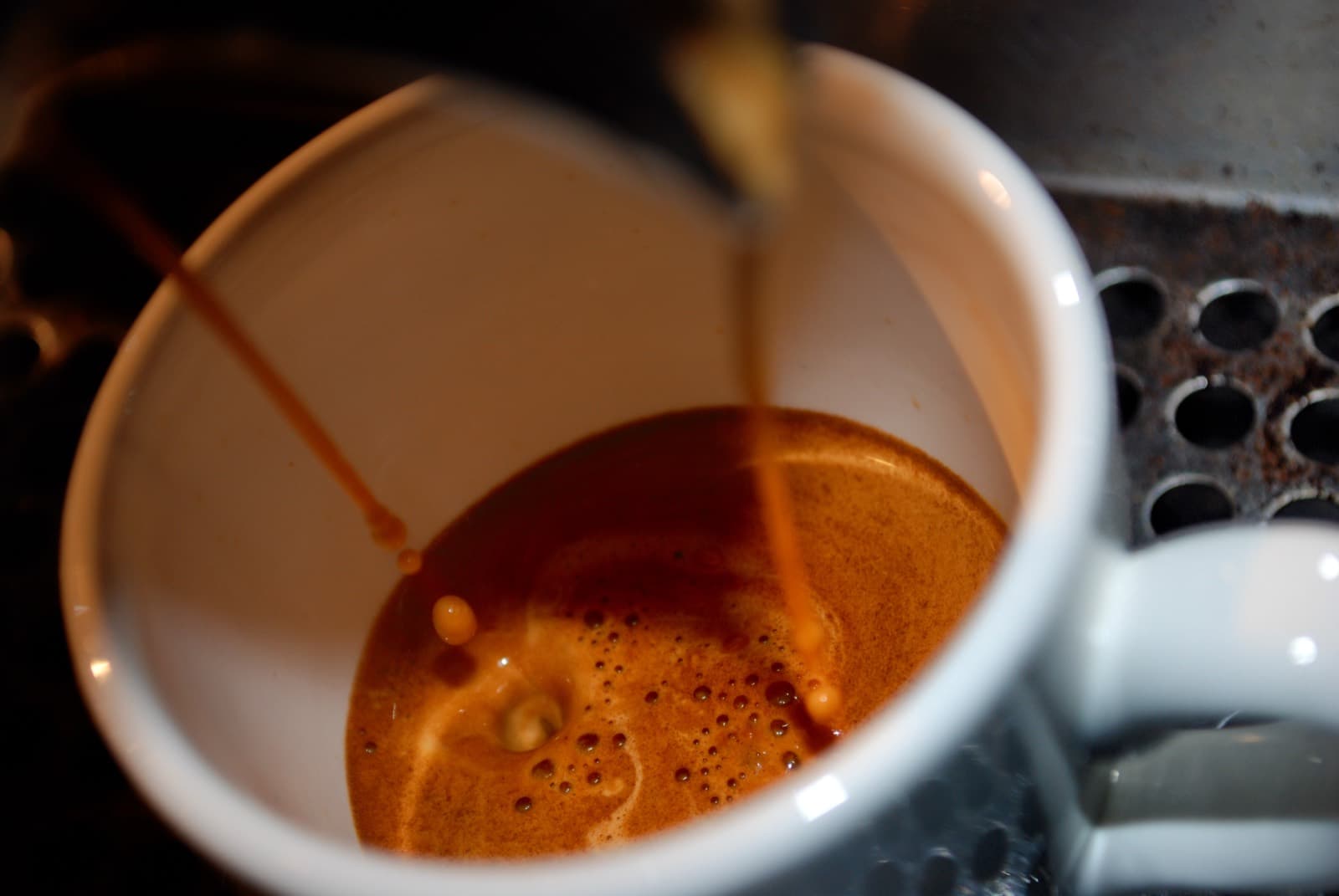
Real caffeine levels in espresso, tea, matcha, cold brew and energy drinks; the 400 mg/day ceiling from FDA and EFSA; the 6-hour cut-off before bedtime; and how an event bar builds a late-night coffee and tea menu.
Quick summary
A healthy adult can take in around 400 mg of caffeine a day without raising safety concerns — a figure that both the U.S. Food and Drug Administration and the European Food Safety Authority (EFSA) arrive at independently. The problem is that almost nobody knows how much they are actually drinking, because two cups both called "a coffee" can differ threefold.
This article gives three things a bar or a bartender can act on: the real caffeine content of each drink category, safe ceilings broken out by group (adults, pregnant women, adolescents), and how to work backwards from a guest's bedtime to the hour your bar should stop serving coffee.
| Metric | Value / ceiling | Source |
|---|---|---|
| The ceiling not generally associated with negative effects in healthy adults | 400 mg/day | FDA and EFSA agree |
| Safe for one sitting, roughly 3 mg per kg of body weight | 200 mg single dose | EFSA, 2015 |
| The ceiling for pregnant and lactating women | 200 mg/day | EFSA and ACOG give the same number |
| The level proposed for children and adolescents | 3 mg/kg body weight/day | EFSA |
| Caffeine's half-life in adults; during pregnancy it is on average 8.3 hours longer. | 3–7 hours | Frontiers in Psychiatry, 2017 |
How long does caffeine stay in the body?
Caffeine does not clear in half an hour. A comprehensive review in Frontiers in Psychiatry records that caffeine has a relatively long half-life of 3–7 hours in adults, peaking in saliva about 45 minutes after ingestion and in serum after about 2 hours. In practice, a 3 p.m. coffee still leaves roughly half its caffeine in your system at 8 p.m.
That figure swings hard between individuals and situations. The same review notes the half-life of caffeine is on average 8.3 hours longer during pregnancy and may be as much as 16 hours longer, while oral contraceptives tend to double it. Liver disease, which lowers P450 activity, also stretches clearance.
For a bartender the consequence is simple: there is no single correct dose for every guest. The same cold brew leaves one person pleasantly alert and another with a racing heart at 2 a.m. That is precisely why official guidance states ceilings rather than recommended intakes.
How much caffeine is actually in each cup?
Short answer: about 80 mg in an espresso, about 90 mg in a filter or phin coffee, about 50 mg in a cup of black tea, about 80 mg in a 250 ml can of energy drink. The spread matters more than the average — the FDA reports that a regular brewed coffee at 12 fluid ounces (about 355 ml) contains 113 to 247 milligrams of caffeine, more than a twofold gap between two cups of the same size.
The table below merges two independent data sets: EFSA works from European serving sizes, the FDA standardises everything to 12 fl oz. Reading both columns makes the cause obvious — the variance comes from cup size, coffee-to-water ratio and contact time, not from the bean variety most people blame.
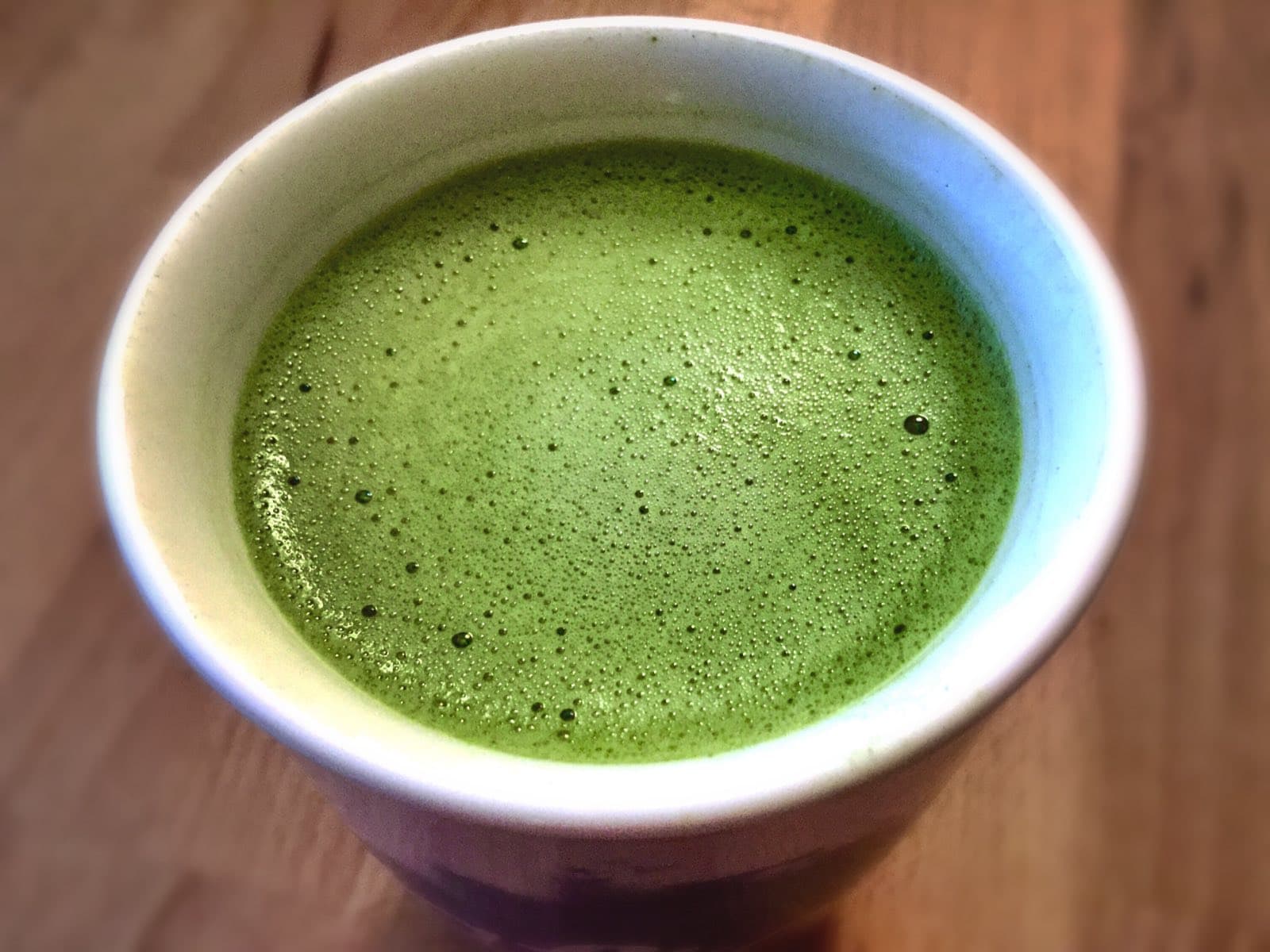
A note on tea and matcha: matcha is powdered leaf consumed whole, so per gram of leaf it delivers more caffeine than a tea bag — but the gram weight per cup is small, so the final number usually lands between black tea and coffee. If your bar serves matcha latte or Thai green milk tea, file them under "contains caffeine" when advising guests, not alongside fruit juice.
| Drink | EFSA serving | Caffeine (EFSA) | Caffeine / 12 fl oz (FDA) |
|---|---|---|---|
| Espresso | 60 ml | ~80 mg | — |
| Filter / phin coffee | 200 ml | ~90 mg | 113–247 mg |
| Green tea | — | — | ~37 mg |
| Black tea | 220 ml | ~50 mg | ~71 mg |
| Caffeinated soft drink | 355 ml (one cola can) | ~40 mg | 23–83 mg |
| Energy drink | 250 ml (one can) | ~80 mg | 41–246 mg |
| Plain chocolate | 50 g | ~25 mg | — |
| Milk chocolate | 50 g | ~10 mg | — |
Safe ceilings differ by group
There is no single number for everyone. EFSA splits its advice four ways and separates single doses from daily totals: single doses of caffeine up to 200 mg — about 3 mg per kilogram of body weight — do not raise safety concerns for healthy adults, and neither do intakes up to 400 mg per day consumed throughout the day, except for pregnant women.
For pregnancy, two independent bodies land on the same figure. EFSA puts 200 mg per day from all sources as raising no safety concerns for the foetus. The American College of Obstetricians and Gynecologists concludes that moderate caffeine consumption, less than 200 mg per day, does not appear to be a major contributing factor in miscarriage or preterm birth. Two sources, one 200 mg mark — solid enough to advise a guest on.
For children and adolescents, EFSA proposes 3 mg/kg body weight per day for habitual consumption. The FDA cites the American Academy of Pediatrics position that medical experts advise against energy drinks for children and teens because of the levels of sugar and caffeine. At a family event, that is the technical reason to build a genuinely separate caffeine-free branch of the menu, not merely a polite one.
| Group | Single dose | Per day | In cups (derived) | Source |
|---|---|---|---|---|
| Healthy adults | ≤ 200 mg (~3 mg/kg) | ≤ 400 mg | ~4 cups of 200 ml filter coffee | EFSA, FDA |
| Pregnant / lactating women | — | ≤ 200 mg | ~2 cups of 200 ml filter coffee | EFSA, ACOG |
| Children & adolescents | 3 mg/kg | 3 mg/kg | 40 kg child → ~120 mg ≈ 1.5 cups | EFSA |
| Caffeine-sensitive / on medication | no separate ceiling | no separate ceiling | — | FDA advises consulting a clinician |
Caffeine and sleep: the six-hour cut-off
If you take one operational number from this article, take six hours. A placebo-controlled trial published in the Journal of Clinical Sleep Medicine gave 400 mg of caffeine at three points — at bedtime, 3 hours before and 6 hours before — and concluded that caffeine taken 6 hours before bedtime has important disruptive effects on sleep and provides empirical support for sleep hygiene recommendations to refrain from substantial caffeine use for a minimum of 6 hours prior to bedtime.
The effect size is not trivial: the study recorded total sleep time falling by 1.1 to 1.2 hours at all three timing conditions relative to placebo. A guest's 4 p.m. coffee at your event can cost them more than an hour of sleep that night, even if they report feeling perfectly fine.
The table below works backwards from bedtime to a service cut-off. It is derived from half-life arithmetic rather than measured, but it is enough to set a bar rule: after this hour, switch to decaf, herbal tea or mocktails.
| Consumed at | Initial dose | Remaining at 22:00 | Remaining at 01:00 | Verdict for an 23:00 bedtime |
|---|---|---|---|---|
| 12:00 noon | 200 mg (two double espressos) | ~66 mg | ~33 mg | Fine — 11 hours before bed |
| 15:00 | 200 mg | ~100 mg | ~50 mg | Borderline — exactly at the 6-hour cut-off |
| 17:00 | 200 mg | ~132 mg | ~66 mg | Risky — inside the 6-hour window |
| 20:00 | 150 mg (one large energy drink) | ~132 mg | ~76 mg | Very risky — over an hour of sleep lost |
Energy drinks: the hardest category to control
Energy drinks are the one menu item where the person pouring usually has no idea how much caffeine is going into the glass. The National Center for Complementary and Integrative Health records caffeine in these products at 70 to 240 mg in a 16-oz drink and 113 to 200 mg in an energy shot — a threefold spread between two products of the same category.
The labelling situation is worse. The same source states plainly that the amounts of caffeine in energy drinks vary widely, that the actual caffeine content may not be identified easily, and that there is no requirement to declare the amount of caffeine on the label whether the product is marketed as a beverage or as a dietary supplement. For a bar, the working rule is: if you cannot read the milligrams on the can, treat it as 200 mg.
One safety note worth stating outright, because guests ask: EFSA assessed that at alcohol doses leading to a blood alcohol content of about 0.08% — the level at which a person is considered unfit to drive in many countries — a single caffeine dose of up to 200 mg is unlikely to mask the subjective perception of intoxication. Caffeine does not sober anyone up, and no bar should sell that idea.
How a bar puts these numbers to work
The first move is turning a ceiling into a clock time. If the event ends at 22:00 and guests typically sleep around 23:30, your coffee cut-off belongs at 17:30 — six hours earlier. After that point the bar keeps serving hot drinks, but shifts to herbal infusions, decaf or warm milk. The experience survives; the guest's night does too.
The second is labelling the menu honestly. Three tiers is enough: high caffeine (espresso, cold brew, phin coffee), moderate caffeine (black tea, matcha, milk tea), caffeine-free (juices, mocktails, herbal teas, sodas). The third tier has to be a real branch with drinks people want, not a water station — see how we build it in mocktails and popular event drinks.
The third is quantity planning. When you size a coffee service for an event, count it as its own line rather than folding it into total beverages, because coffee clusters into two narrow windows — arrival and post-dinner — instead of spreading evenly. The hour-by-hour method is in how to calculate guest drink consumption, and slotting these tiers into a full menu is covered in how to build an event drinks menu.
The fourth is brewing technique. The 113–247 mg spread the FDA reports for one cup size comes from grounds-to-water ratio and contact time. A cold brew steeped 12–18 hours at a strong ratio sits at the top of that range; a Vietnamese iced milk coffee built on a small phin with condensed milk and ice sits near the bottom. If you want to control caffeine, control the recipe — not the cup size.
Caffeine is not something to strip out of a menu — it is something to count. A bar that knows how many milligrams are in each of its drinks, and knows the hour it should stop pouring them, is the difference between professional service and pouring on instinct.
FAQ
How much coffee per day is safe?
For healthy adults, the FDA and EFSA both cite 400 mg of caffeine a day as an amount not generally associated with negative effects. The FDA translates that to roughly two to three 12-fluid-ounce cups of coffee. The ceiling does not apply to pregnant women, children, or people on medication or with underlying conditions.
Do pregnant women have to give up coffee entirely?
Not necessarily. EFSA and ACOG both put 200 mg per day from all sources as raising no safety concerns — roughly two 200 ml cups of filter coffee. But caffeine's half-life during pregnancy is on average 8.3 hours longer, so the same dose lingers far longer. The final call belongs with the treating clinician.
Does matcha have less caffeine than coffee?
Per cup, usually yes. EFSA's reference figures are about 50 mg for a 220 ml cup of black tea versus about 90 mg for a 200 ml cup of filter coffee. Matcha sits between the two because the whole leaf is consumed, but the powder weight per cup is small. Matcha is still a caffeinated drink and cannot be grouped with juices or herbal infusions.
Does an afternoon coffee really ruin sleep?
Yes, and the measured effect exceeds what people report feeling. The placebo-controlled trial by Drake and colleagues (2013) gave 400 mg of caffeine at bedtime, 3 hours before and 6 hours before, and recorded total sleep time dropping 1.1 to 1.2 hours at all three points relative to placebo. That is the basis for the six-hour cut-off.
How many coffees is one energy drink worth?
It depends on the can, and that is the problem. NCCIH records 70 to 240 mg of caffeine in a 16-oz drink — anywhere from less than one cup of coffee to nearly three. There is no requirement to declare caffeine on the label, so when you cannot read the milligrams, assume the high end.
Does coffee sober you up?
No. EFSA assessed that at a blood alcohol content around 0.08%, a single caffeine dose of up to 200 mg is unlikely to mask the subjective perception of intoxication. Caffeine can make someone feel more awake but does not speed up alcohol clearance.
Sources
U.S. Food and Drug Administration — "Spilling the Beans: How Much Caffeine is Too Much?" (Consumer Updates): https://www.fda.gov/consumers/consumer-updates/spilling-beans-how-much-caffeine-too-much
European Food Safety Authority (EFSA) — Caffeine topic page, summarising the Scientific Opinion on the safety of caffeine published 27 May 2015: https://www.efsa.europa.eu/en/topics/topic/caffeine
Temple JL et al. — "The Safety of Ingested Caffeine: A Comprehensive Review", Frontiers in Psychiatry, 26 May 2017: https://pmc.ncbi.nlm.nih.gov/articles/PMC5445139/
Drake C, Roehrs T, Shambroom J, Roth T — "Caffeine Effects on Sleep Taken 0, 3, or 6 Hours before Going to Bed", Journal of Clinical Sleep Medicine, 2013;9(11):1195-1200: https://pmc.ncbi.nlm.nih.gov/articles/PMC3805807/
American College of Obstetricians and Gynecologists (ACOG) — Committee Opinion "Moderate Caffeine Consumption During Pregnancy": https://www.acog.org/clinical/clinical-guidance/committee-opinion/articles/2010/08/moderate-caffeine-consumption-during-pregnancy
National Center for Complementary and Integrative Health (NCCIH), NIH — "Energy Drinks": https://www.nccih.nih.gov/health/energy-drinks
Last updated: 29/07/2026. General information only; not a substitute for individual medical advice.
Planning an event?
Get a free quote
Tell us about your event and our team will recommend the right package and send a detailed quote — no commitment.