Drink recipes
Cold Brew Coffee: How to Brew It and the Truth About Acidity
bartender.com.vn · 22/07/2026 · 9 min read
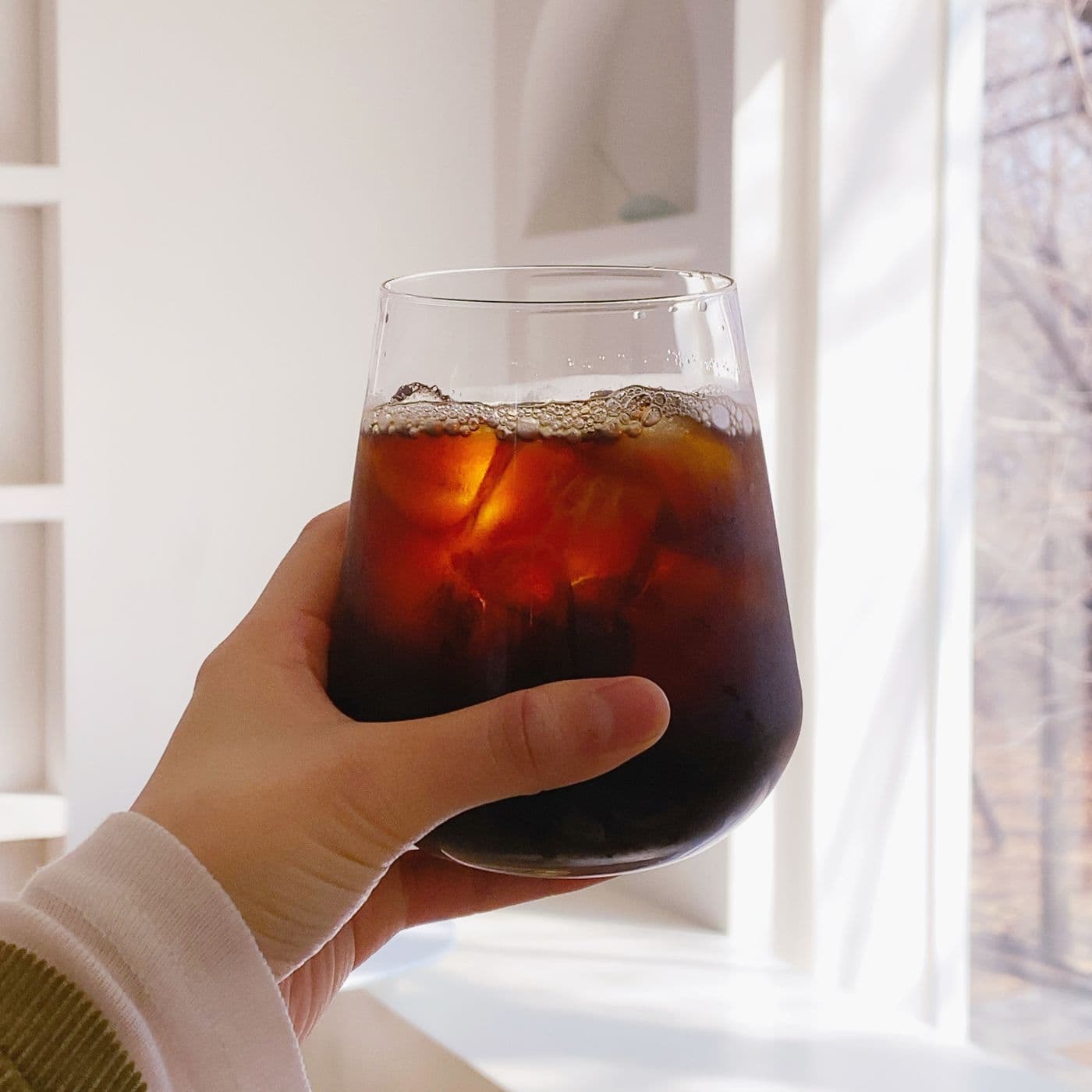
Cold brew is coffee steeped in room-temperature water for hours. A 2018 Scientific Reports study put cold and hot brew pH at 4.85–5.13, plus USDA data.
TL;DR
Last updated: 22 July 2026.
The parameters to work from: 35.0 g of coffee : 350 mL of filtered water (a 1:10 ratio), steeped for 7 hours at a room temperature of 21–25 °C, then filtered through a Hario V60 paper filter — exactly the process used in Rao and Fuller, Scientific Reports 2018.
On acidity: that same study measured the pH of cold brew and hot brew made at the same grind-to-water ratio and found them COMPARABLE, both within 4.85 to 5.13. The real difference lies elsewhere: hot brew had higher concentrations of total titratable acids and higher antioxidant activity than cold brew.
On caffeine: USDA records 40 mg per 100 g for brewed coffee and 212 mg per 100 g for restaurant-prepared espresso; the FDA cites 400 mg a day for most adults as an amount not generally associated with negative effects. Cold brew itself has no standardised record, so this article gives no caffeine figure for it.
Cold brew is alcohol-free and suits every guest. Every figure here is presented neutrally with its source and is not used to claim any medical benefit.
| Fact | Figure | Source |
|---|---|---|
| pH of cold brew versus hot brew | 4.85–5.13 — comparable | Rao & Fuller, Scientific Reports 2018 |
| Total titratable acids | Hot brew higher than cold brew | Rao & Fuller, Scientific Reports 2018 |
| Ratio and brew time in the study | 35 g coffee : 350 mL water, 7 hours, 21–25 °C | Rao & Fuller, Scientific Reports 2018 |
| Caffeine in brewed coffee | 40 mg/100 g — espresso 212 mg/100 g | USDA FDC 171890 & 171891 |
| Reference caffeine level for adults | 400 mg a day | FDA |
What is cold brew? (quick answer)
Cold brew is ground coffee steeped directly in room-temperature (or cold) water for several hours and then filtered — no boiling water at any stage. The Scientific Reports (2018) study describes the cold brewing process as steeping at a room temperature of 21–25 °C for 7 hours before filtering.
Three things often get confused: cold brew is steeped cold from the start; ordinary iced coffee is brewed hot and poured over ice; and Japanese iced coffee is brewed hot straight onto ice. Only the first is cold brew.
Without heat, extraction is far slower — which is why cold brew is counted in hours, not minutes. In the same study, the hot brew control took just 6 minutes in a French press at the same coffee-to-water ratio.
This guide covers pH and acid figures from peer-reviewed research, USDA caffeine tables and the FDA reference levels, a suggested ratio-and-time table, six steps to brew at home, storage per FDA guidance, and a troubleshooting table.
Is cold brew less acidic than hot coffee? What the data says
Straight answer: by pH, NO — cold brew and hot brew measure almost the same. Rao and Fuller (Scientific Reports, 2018) brewed cold and hot samples from the same light roast beans at the same grind-to-water ratio and found the pH of both groups within a range of 4.85 to 5.13.
What really differs is the acid measured by titration: the hot brew samples had higher total titratable acids and also higher antioxidant activity. The authors suggest the hot brew method tends to extract more non-deprotonated acids than the cold brew method, and that those acids may be responsible for the higher antioxidant activity seen in hot brew samples.
In other words, the "smoother" impression many people describe does not come from a lower pH. These are results from one study on light roast beans from Brazil, two regions of Ethiopia, Colombia, Myanmar and Mexico under one specific set of brewing parameters — they should not be generalised to every bean, roast level or steep time.
A neutral note: these are chemical properties of the brewed liquid, not medical advice, and are not used to claim health benefits or harms.
| Parameter | Cold brew | Hot brew (control) |
|---|---|---|
| Coffee-to-water ratio | 35.0 g : 350 mL (1:10) | Same coffee-to-water ratio as cold brew |
| Water temperature | Room temperature, 21–25 °C | Water heated to boiling |
| Brewing vessel | 32-ounce Mason jar with a screw-top lid | French press carafe |
| Brew time | 7 hours | 6 minutes |
| Filtration | Hario V60 paper filter | Hario V60 paper filter |
| Bean origins | Light roast: Brazil, two regions of Ethiopia, Colombia, Myanmar, Mexico | Same origins |
| Measure | Result |
|---|---|
| pH of cold and hot brew samples | Comparable, ranging from 4.85 to 5.13 |
| Total titratable acids | Hot brew higher than cold brew |
| Antioxidant activity | Hot brew higher than cold brew |
| Correlation of total CQA with antioxidant activity | Weak in hot brew coffee |
| Brewing water | Filtered municipal tap water, total hardness 174 mg/L, pH 7.5 |
Caffeine in coffee: USDA figures and the FDA reference levels
Straight answer: per USDA FoodData Central, brewed coffee prepared with tap water contains 40 mg of caffeine per 100 g, while restaurant-prepared espresso contains 212 mg per 100 g — more than five times as much, because espresso is far more concentrated.
A simple conversion from the USDA figure: a 240 g serving of brewed coffee holds roughly 96 mg of caffeine (40 mg × 2.4). That is arithmetic on the USDA number, not a measurement of any particular cup.
What about cold brew? Searching FoodData Central for "cold brew coffee" returns Branded records — figures declared by individual packaged brands — rather than a standardised SR Legacy record like "coffee, brewed". Caffeine in cold brew therefore varies by brand, by brewing ratio and by dilution, with no single number. This article gives no caffeine figure for cold brew because there is no standardised source to cite.
On intake, the FDA cites 400 mg of caffeine a day for most adults as an amount not generally associated with negative effects, while stressing that sensitivity to caffeine varies widely between people. This is reference information, not a substitute for medical advice.
| Per 100 g | Coffee, brewed (FDC 171890) | Espresso, restaurant-prepared (FDC 171891) |
|---|---|---|
| Caffeine | 40 mg | 212 mg |
| Energy | 1 kcal | 9 kcal |
| Water | 99.39 g | 97.8 g |
| Protein | 0.12 g | 0.12 g |
| Total fat | 0.02 g | 0.18 g |
| Carbohydrate | 0.0 g | 1.67 g |
| Potassium | 49 mg | 115 mg |
| Magnesium | 3 mg | 80 mg |
| Item | Figure cited by the FDA |
|---|---|
| Daily amount for most adults | 400 mg — not generally associated with negative effects |
| Conversion the FDA gives | About two to three 12-fluid-ounce cups of coffee |
| Energy drinks | 54–328 mg of caffeine per 16 fluid ounces |
| Some other energy drink brands | 41–246 mg of caffeine per 12 fluid ounces |
| Pure, highly concentrated caffeine | The FDA estimates toxic effects such as seizures with rapid consumption of around 1,200 mg |
Ratio and brew time — a suggested recipe
Straight answer: the safest starting point is a 1:10 ratio — 100 g of ground coffee per litre of water — because that is exactly the ratio used in the Scientific Reports 2018 study (35.0 g coffee : 350 mL water), steeped for at least 7 hours at a room temperature of 21–25 °C.
From there you adjust to taste. The table below is a SUGGESTED recipe and craft experience: only the 1:10 at 7 hours row is taken from the cited study; the other rows are directions for adjustment, not measured data.
Minimum kit: a grinder (coarse setting), a kitchen scale, a glass jar with a lid, a cone and paper filters (the study used a Hario V60 paper filter), and a clean glass bottle to keep the finished concentrate cold.
| Style | Coffee : water | Time | Note |
|---|---|---|---|
| Study reference point | 1:10 (35 g : 350 mL) | 7 hours at 21–25 °C | Figures taken from Scientific Reports 2018 |
| Ready to drink, lighter | 1:12 – 1:15 | Longer than the 7-hour mark if it tastes thin | Suggested — taste and adjust, not a measurement |
| Stronger, for milk drinks | 1:8 – 1:10 | From the 7-hour mark upwards | Suggested — a strong concentrate to dilute when serving |
| Steeping in the fridge | Keep your current ratio | Longer than at room temperature | Craft experience — colder water extracts more slowly |
| Grind size | Coarse | — | Craft experience — a fine grind turns cloudy and harsh |
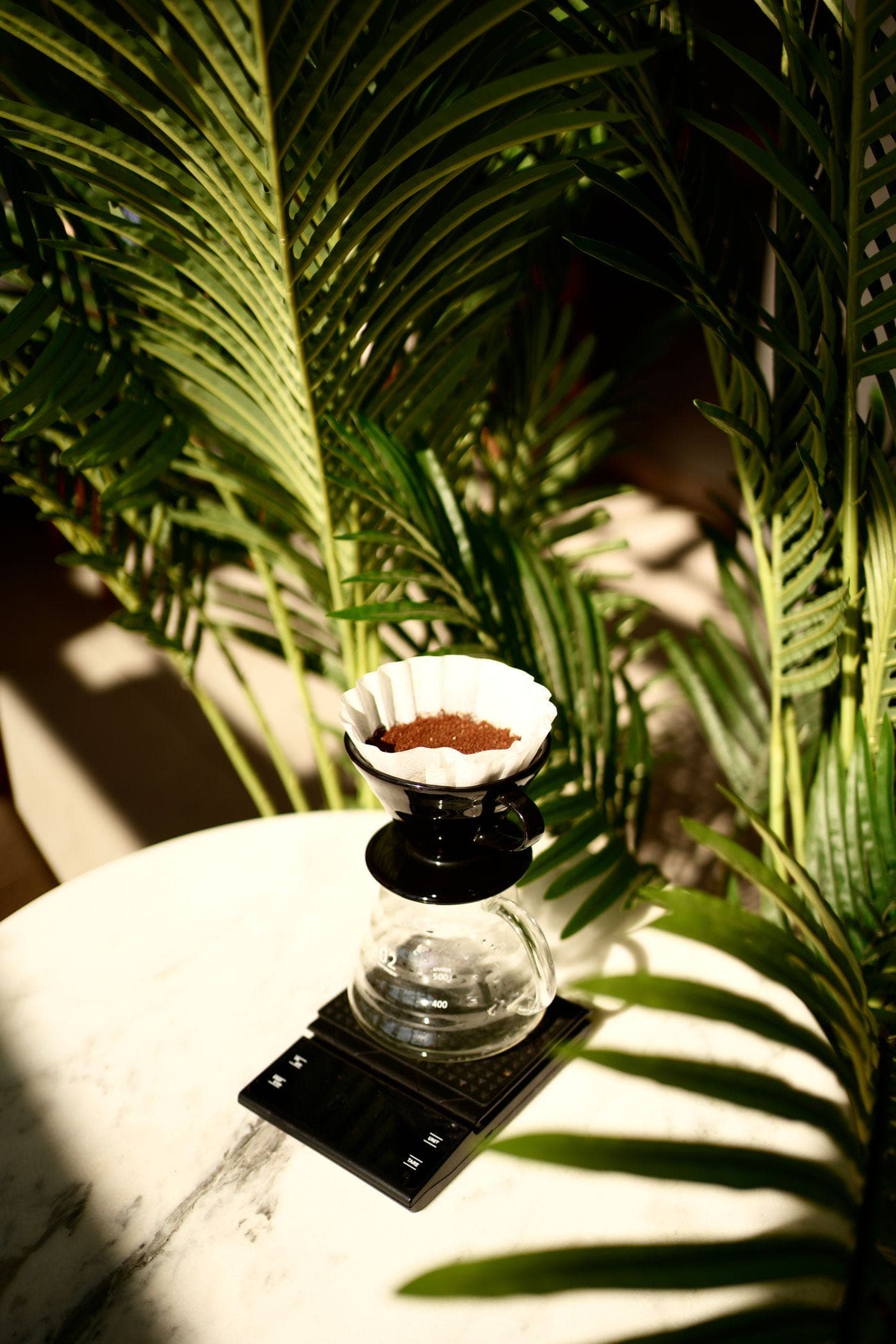
Six steps to brew cold brew at home
Straight answer: the six steps below follow the process described in the study — weigh to a 1:10 ratio, steep at room temperature for at least 7 hours, then filter through paper.
1. Grind coarse: a coarse grind gives a clearer, less harsh concentrate; too fine and it clogs the filter and turns cloudy.
2. Weigh to the ratio: use 1:10 as the benchmark — for example 35 g of coffee to 350 mL of water, exactly as in the study.
3. Wet the grounds evenly: put the grounds in a glass jar, pour in room-temperature water and stir gently so every particle is wet.
4. Cover and steep: seal the jar and leave it at room temperature for at least 7 hours (the study steeped for 7 hours at 21–25 °C).
5. Filter out the grounds: pass it through a paper filter — the study used a Hario V60 — and do not squeeze the bed, which adds harshness.
6. Chill and serve: pour the concentrate into a clean bottle, seal it and refrigerate immediately; dilute with water or milk and add ice only when serving.
Storage and food safety
Straight answer: once filtered, cold brew is a ready-to-drink beverage and must be kept cold — the FDA advises keeping the refrigerator at 40 °F (about 4.4 °C) or below and the freezer at 0 °F.
The reason is direct: also per the FDA, at room temperature the numbers of bacteria that cause foodborne sickness can double every 20 minutes, and chilling food to proper temperatures is one of the best ways to slow that growth. The FDA also notes that few refrigerator controls show actual temperatures, so a freestanding appliance thermometer is worth using.
On shelf life: this article gives NO specific number of days for home-made cold brew, because there is no standardised source to cite. Cafés and food businesses must follow their own food-safety procedures; at home, the safe principle is continuous refrigeration, a clean sealed bottle, and checking smell and appearance before drinking.
| Item | Figure cited by the FDA |
|---|---|
| Refrigerator temperature | 40 °F (about 4.4 °C) or below |
| Freezer temperature | 0 °F |
| Bacterial growth at room temperature | Can double every 20 minutes |
| Monitoring temperature | Use a freestanding thermometer, as few refrigerators show actual temperatures |
Troubleshooting
Straight answer: nearly every fault in a batch of cold brew comes down to four things — grind size, ratio, steep time and filtration. The table below is craft experience, not measured data.
| Symptom | Common cause | Fix |
|---|---|---|
| Thin, weak concentrate | Ratio too dilute or steeped too briefly | Return to the 1:10 benchmark and at least 7 hours, then taste and adjust |
| Harsh, astringent taste | Grind too fine, or the bed was squeezed | Grind coarser; let it drip through the paper filter without pressing |
| Cloudy with sediment | Under-filtered or too coarse a mesh | Filter through paper; run it through a second time if sediment remains |
| Watery once iced | Melting ice dilutes the drink | Brew a stronger concentrate to allow for melt, or use coffee ice cubes |
| Off smell or stale taste | Broken cold chain or an unclean bottle | Keep the fridge at 40 °F (about 4.4 °C) or below per the FDA; use a clean, sealed bottle |
Variations and serving behind the bar
Straight answer: because cold brew yields a strong, stable concentrate, bars treat it as a base ingredient — diluted with water, milk or juice per glass, rather than brewed to order like hot coffee.
Black cold brew: dilute the concentrate with cold filtered water to taste and pour over ice — the bean character stays intact.
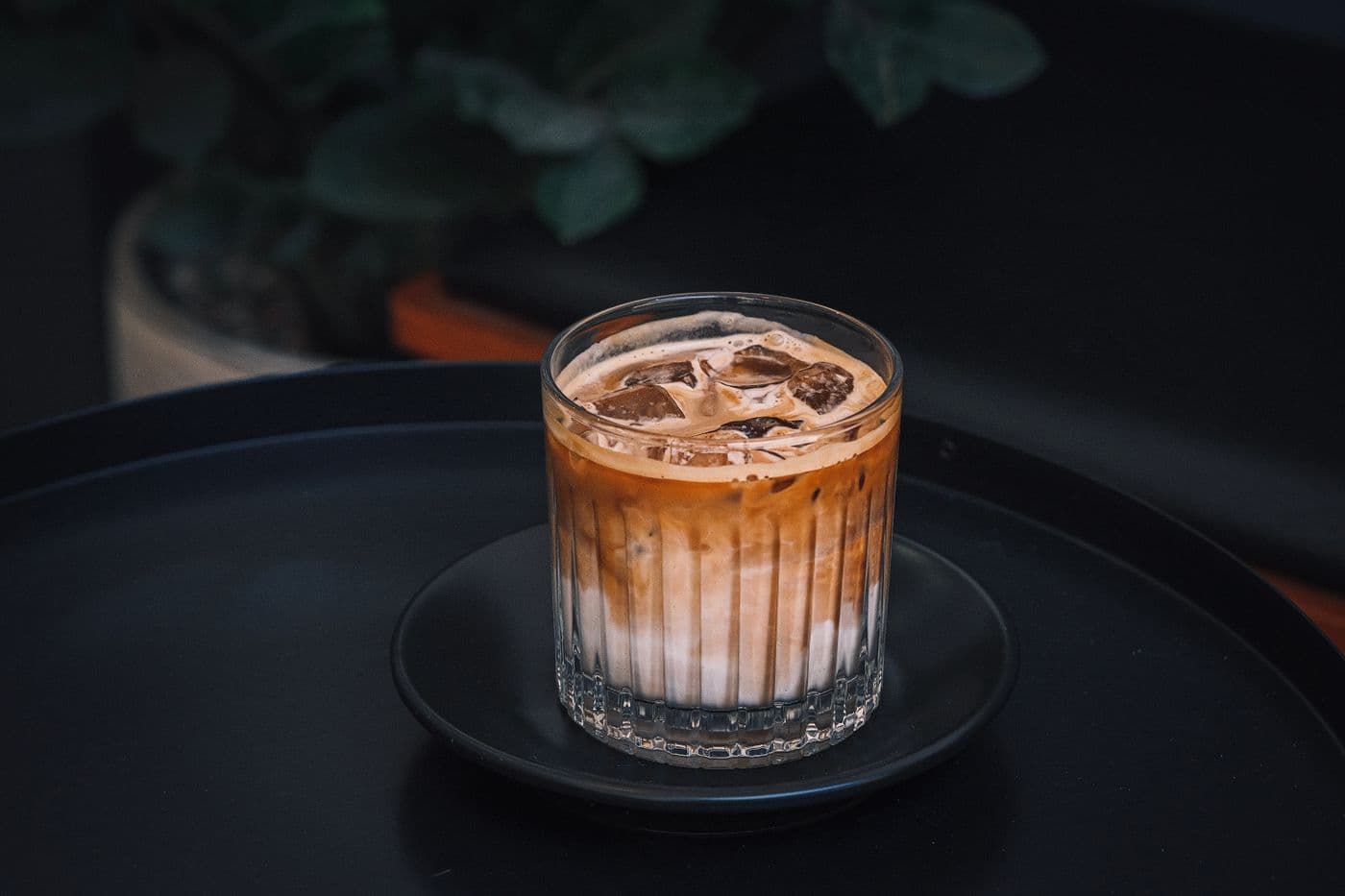
Cold brew with milk: pour the concentrate over cold milk and ice for the brown-and-white layering shown above; stir before drinking.
Cold brew tonic or soda: pour the concentrate over sparkling water and ice for a bright, bubbly glass — still entirely alcohol-free.
Bar operations: brew in batches at one agreed ratio, label each bottle with the steep-start and filter times, keep the cold chain unbroken, and dilute only on order so every glass is consistent.
In short: cold brew is not "less acidic" coffee — the Scientific Reports 2018 study puts its pH on par with hot brew at 4.85 to 5.13; what it really delivers is a strong, stable concentrate, steeped 7 hours or more at a 1:10 ratio and kept properly cold.
FAQ
Does cold brew contain alcohol?
No. Cold brew is just ground coffee and water, optionally with milk, sugar or sparkling water — entirely alcohol-free.
Is cold brew less acidic than hot coffee?
Not by pH. The Scientific Reports (2018) study measured cold brew and hot brew at the same grind-to-water ratio and found both within 4.85 to 5.13; the difference is that hot brew had higher total titratable acids.
What ratio and steep time should I use?
Start from the study benchmark — 35 g of coffee to 350 mL of water (1:10), steeped 7 hours at a room temperature of 21–25 °C — then taste and adjust.
Does cold brew have more caffeine than regular coffee?
There is no single figure. USDA has standardised records for brewed coffee (40 mg/100 g) and espresso (212 mg/100 g), but cold brew appears on FoodData Central only as Branded records, so the content depends on each producer’s ratio and dilution.
How should cold brew be stored safely?
Bottle it clean and sealed right after filtering and refrigerate immediately; the FDA advises keeping the refrigerator at 40 °F (about 4.4 °C) or below, because at room temperature foodborne bacteria can double every 20 minutes.
References
Rao, N. Z. & Fuller, M. "Acidity and Antioxidant Activity of Cold Brew Coffee". Scientific Reports, volume 8 (2018). DOI 10.1038/s41598-018-34392-w. Accessed 22 July 2026. https://www.nature.com/articles/s41598-018-34392-w
U.S. Food and Drug Administration — "Spilling the Beans: How Much Caffeine is Too Much?". Accessed 22 July 2026. https://www.fda.gov/consumers/consumer-updates/spilling-beans-how-much-caffeine-too-much
U.S. Food and Drug Administration — "Refrigerator Thermometers: Cold Facts about Food Safety". Accessed 22 July 2026. https://www.fda.gov/food/buy-store-serve-safe-food/refrigerator-thermometers-cold-facts-about-food-safety
USDA FoodData Central — "Beverages, coffee, brewed, prepared with tap water" (FDC ID 171890) and "Beverages, coffee, brewed, espresso, restaurant-prepared" (FDC ID 171891). Accessed 22 July 2026. https://fdc.nal.usda.gov/
The pH, acid, caffeine and storage-temperature figures in this article come from the four sources above. Ratios and steep times beyond the 1:10 at 7 hours benchmark, along with the grinding, filtering and troubleshooting tips, are a suggested recipe and craft experience, not measured data.
The four source addresses above appear as plain text rather than clickable links — copy and paste them into your browser to read the sources in full.

Planning an event?
Get a free quote
Tell us about your event and our team will recommend the right package and send a detailed quote — no commitment.