Wine
Wine Basics: Grape Varieties, Styles & Reading the Label
Pinkybee · 25/06/2026 · 10 min read
Video: ArtHouse Studio / Pexels
The five main wine families (red, white, rose, sparkling, fortified) differ in how they are made; knowing grapes, regions and how to read a label helps you choose with confidence.
The Five Main Wine Families and What Sets Them Apart
By structure, wine is divided into three broad groups: still wine — with no bubbles, sparkling wine — with bubbles, and fortified wine. Of these, still wine is the largest group, covering every wine that has no fizz (source: WSET — A guide to wine types and styles). In everyday conversation, however, people usually distinguish wine by color: red, white and rosé. Understanding both ways of categorizing — by structure and by color — is the key to reading labels and choosing wine with more confidence.
The difference in color comes from grape skins and how the juice contacts those skins during fermentation. Red wine is made from black (dark-skinned) grapes fermented together with the skins; it is the skins that give the deep red color and the tannins responsible for that characteristic drying, astringent feel in the mouth. White wine is made from white grapes fermented without skin contact, so it typically ranges in color from pale lemon to golden, tastes fresh and is usually lighter than red. Rosé sits in between: its pink color comes from a short period of contact between the dark skins and the juice, so its hue can range from a very pale pink to a deep salmon (source: WSET, MasterClass, Wikipedia — Rosé).
The remaining two groups are defined by process. Sparkling wine gets its bubbles from a second fermentation that produces CO2 gas, which is then trapped in the bottle (source: Wikipedia — Sparkling wine). Fortified wine is made by adding grape-distilled spirit to wine that has already fermented or is still fermenting; historically, this was a way to preserve wine before modern preservation technology existed (source: WSET). So the five families most people encounter — red, white, rosé, sparkling and fortified — are really a blend of the color-based and structure-based classifications, which makes the overall framework for understanding wine far more coherent.
Grasping these five families is the foundation for diving deeper into grape varieties and styles later in this article. To understand why the same grape can yield different styles depending on where it is grown, see Old World & New World (/blog/ruou-vang-old-world-new-world); the origins of these wine families are told in History of Wine (/blog/lich-su-ruou-vang). Please note: this content is intended only for those aged 18 and over and encourages responsible enjoyment; those who do not or cannot drink can still explore wine through its cultural, sensory and historical dimensions, or choose non-alcoholic beverages.
How grape skins shape colour and structure
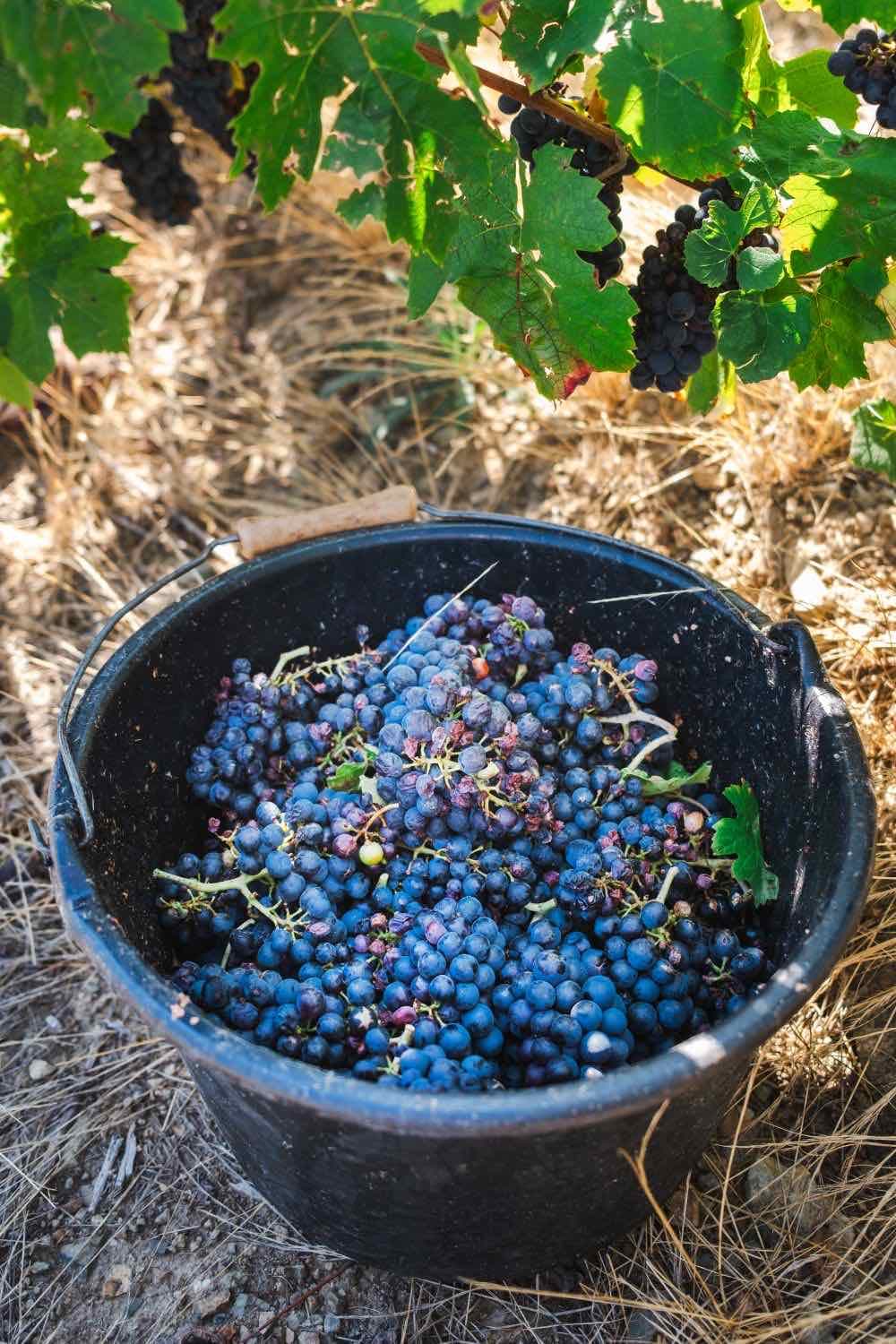
The short answer: most of a red wine's colour and structure comes from the grape skins. According to WSET, red wine gets its colour and tannins chiefly because the juice is fermented together with the skins; tannin is a compound that comes from the skins, seeds and sometimes the stems, forming the structural 'backbone' of the wine — that firm, slightly drying sensation on the palate (source: WSET — A guide to wine types and styles).
Rosé is a clear illustration of how skin-contact time matters. In the maceration method, dark-skinned grapes are crushed and the skins are left in contact with the juice for a short time — typically around 2 to 20 hours — before being pressed away; the longer the skins steep, the deeper the colour (source: Wikipedia — Rosé). Another approach is saignée, meaning 'bleeding': some of the pink juice is drawn off in the early stage of red winemaking, the bled-off juice ferments separately into rosé, and at the same time the remaining red wine becomes more concentrated (source: Wikipedia — Rosé). Note that simply blending red wine into white wine to create a pink colour is restricted in most winemaking regions and is forbidden by law in France, with the exception of Champagne (source: Wikipedia — Rosé).
From these sensory elements, a wine's style is described by its body and its sweetness. By body, wines are classed as light, medium or full; by sweetness, there is dry (the most common), medium and sweet (source: WSET). Grasping the 'skin → colour → tannin → body' axis lets you read a wine systematically rather than relying on instinct alone. You can also explore the companion pieces in this series: Wine basics (/blog/tim-hieu-ruou-vang-co-ban), Tasting and appreciating wine (/blog/thuong-thuc-tham-ruou-vang), Old World and New World (/blog/ruou-vang-old-world-new-world), The history of wine (/blog/lich-su-ruou-vang) and Wine and health (/blog/ruou-vang-va-suc-khoe).
This content is cultural and sensory knowledge, intended for those aged 18 and over, and upholds a spirit of responsible enjoyment. Anyone who cannot consume alcohol can opt for non-alcoholic choices and still enjoy the culinary experience.
Sparkling and fortified wines: two special techniques
Sparkling and fortified wines are two distinctive branches of the wine world, each tied to a particular technique that fundamentally reshapes the sensory character of the glass. In sparkling wine, the fine bubbles are not naturally present but arise from a second fermentation: yeast and sugar are added to a base wine, the yeast converts the sugar and produces CO2 that dissolves under pressure, creating the characteristic fizz (source: Wikipedia — Sparkling wine).
There are several ways to carry out that second fermentation, and the method chosen determines the style of the bubbles. The traditional method performs the second fermentation directly in the sealed bottle; the dead yeast cells are then worked down to the neck through riddling and removed through disgorgement, while the CO2 is retained. The tank method (also called Charmat) carries out the second fermentation in a pressure-resistant stainless steel tank, after which the wine is chilled, filtered clear and bottled. The simplest and cheapest approach is to pump CO2 directly into the wine, but this produces large bubbles that dissipate quickly (source: Wikipedia — Sparkling wine). To preserve the fizz, sparkling wine should be served chilled (source: WSET).
Fortified wine follows a different path: during winemaking, grape-derived spirit is added, so these wines generally carry a higher alcohol level than ordinary wine. Depending on when fermentation is stopped, the result can lean dry or sweet, producing a wide sensory spectrum (source: WSET). It is precisely this distinctive technique that gives fortified wine a structure and longevity that differ from conventionally fermented wine.
Understanding these two techniques helps you read labels and choose wine with more confidence, continuing what we covered in Understanding wine basics (/blog/tim-hieu-ruou-vang-co-ban) about grape varieties and styles. To go deeper, you can also read about Tasting and evaluating wine (/blog/thuong-thuc-tham-ruou-vang), the background in The history of wine (/blog/lich-su-ruou-vang) and Old World & New World (/blog/ruou-vang-old-world-new-world), as well as the perspective in Wine and health (/blog/ruou-vang-va-suc-khoe). This content is intended for those aged 18 and over and is oriented toward responsible enjoyment; if you cannot consume alcoholic beverages, you can absolutely choose non-alcoholic drinks and still enjoy the atmosphere and cultural story surrounding a glass of wine.
Popular grape varieties and their sensory styles
Understanding grape varieties is the first key to "reading" a bottle, because each variety carries its own sensory signature before climate, soil, and ageing leave their mark. Among the most widely planted varieties in the world are Cabernet Sauvignon and Merlot — according to Wikipedia data, each has a global planted area of roughly 260,000 ha (2004 figures) (source: Wikipedia — List of grape varieties, en.wikipedia.org/wiki/List_of_grape_varieties). Among white grapes, Chardonnay is recorded as the most widely planted white variety (source: Wine Folly; Bonterra).
On the sensory styles of red varieties: Cabernet Sauvignon is a natural cross between Cabernet Franc and Sauvignon Blanc, originating in France; wines from this grape tend to be full-bodied with firm tannins, evoking blackcurrant, dark cherry, and a touch of spice (source: Wikipedia; grape-variety descriptions). Merlot, by contrast, offers a fruitier style with smoother tannins and medium acidity, giving a soft mouthfeel with notes of red cherry and plum (source: grape-comparison material). These two complementary styles are why they so often appear side by side in many blended wines.
Chardonnay clearly illustrates how climate shapes style: in cooler climates it yields crisp wines leaning toward a mineral character, while in warmer regions the wine becomes richer and fuller (source: Wine Folly; Bonterra). Ageing in oak barrels can also add layers such as vanilla and butter to Chardonnay (source: grape-variety descriptions) — an example of how a single grape can deliver very different sensory experiences.
Finally, each variety is typically tied to classic regions that shaped its reputation: Bordeaux is famous for Cabernet Sauvignon and Merlot blends; Burgundy revolves around Pinot Noir and Chardonnay; the northern Rhône is associated with Syrah; and Rioja (Spain) is renowned for wines built on Tempranillo (source: Hillebrand Gori — World's top wine regions, hillebrandgori.com; WineandMore). To picture why the same grape differs across continents, see our Old World & New World piece (/blog/ruou-vang-old-world-new-world) and the overview Wine basics explained (/blog/tim-hieu-ruou-vang-co-ban). Note: this content is purely about knowledge and sensory appreciation, intended for those aged 18 and over; please enjoy responsibly, and anyone who does not drink can choose non-alcoholic alternatives.
Wine regions and the concept of terroir
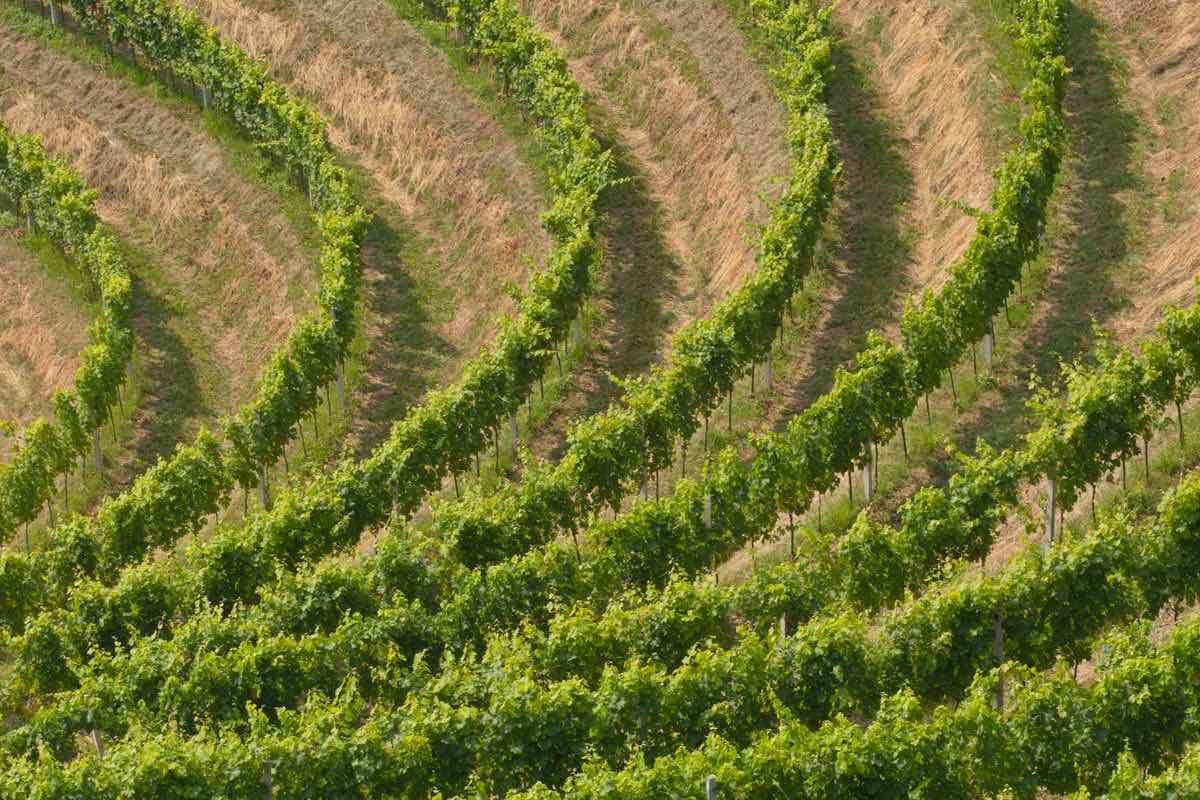
Terroir is the key to understanding why the same grape variety can yield wines with very different personalities. The word comes from the French "terre" (earth) and conveys a "sense of place": the idea that a wine's character is shaped by where the grapes are grown — including the soil, climate and topography of a specific site (source: WineandMore). In other words, a piece of land does not merely nourish the vine; it leaves its own imprint on the wine's aromas, flavors and structure.
Among the elements of terroir, climate plays a defining role in shaping a region's wine style. From sunny, warm Mediterranean climates to cooler areas, climatic conditions directly affect how ripe the grapes become and, through that, the style of the wine (source: WineandMore). This is precisely why the world wine map is so diverse — each region, thanks to its own natural conditions, leads a distinctive style of wine.
France is the classic example, with many landmark regions such as Bordeaux, Burgundy, Champagne, Rhône, Alsace, Provence and Loire, each associated with its own wine style (source: Hillebrand Gori). Italy is another powerhouse, with major producing regions including Veneto, Tuscany and Piedmont (source: Hillebrand Gori). In northern Spain, Rioja is the country's leading wine region, renowned for Tempranillo-based wines and a smoky character that comes from extended oak aging (source: Hillebrand Gori).
Understanding terroir helps you read labels and choose wines more deliberately — a foundation that ties into the other parts of this series: the historical context in History of Wine (/blog/lich-su-ruou-vang), the contrast between the two schools in Old World & New World (/blog/ruou-vang-old-world-new-world), the introductory overview in Wine Basics (/blog/tim-hieu-ruou-vang-co-ban) and how to perceive a wine when you taste it in Tasting & Appreciating Wine (/blog/thuong-thuc-tham-ruou-vang). This is cultural and educational content intended for those aged 18 and over; please enjoy responsibly, and anyone who cannot or prefers not to drink can choose from non-alcoholic options.
How to read a wine label: the basics
A label read correctly tells you three core things: what year the grapes were picked, where they were grown, and in what style the bottle was made. The vintage printed on the label is the year the grapes were HARVESTED — not the year of bottling or sale — so it reflects the weather of that particular growing season, which is why bottles from the same region can have a different character year to year (sources: Vincarta; BetterWineTaste). Note that a vintage is not always strictly from a single year: in the United States, federal rules since 2006 allow up to 15% of the blend to come from a year other than the one stated on the label (source: BetterWineTaste / TTB regulations).
The second key item is the appellation — a legally protected geographical indication that defines where the grapes are grown. Each appellation has its own rules on permitted grape varieties, yields, harvesting and ageing, so reading the appellation already gives you a fairly clear style framework (sources: Napa Valley; Wikipedia — Appellation). What this system is called varies by country: France uses AOC (managed by INAO, established in 1935); Italy uses DOC (1963 law, effective 1967); Spain uses Denominación de origen (1980 law); the US uses AVA, requiring 85% of the grapes to come from the region named on the label (source: Wikipedia — Appellation).
A very useful reading trick is to distinguish two labelling conventions. Many Old World bottles are labelled mainly by REGION/appellation, while many New World bottles are labelled by GRAPE VARIETY (varietal). Understanding this difference lets you guess the style in the bottle straight from the front label: one invites you to look up which varieties the region permits, the other tells you the leading grape outright (source: Wine Folly — How to read a wine label). To go deeper into these two schools, read on in Old World & New World (/blog/ruou-vang-old-world-new-world); for style and grape varieties see Wine basics explained (/blog/tim-hieu-ruou-vang-co-ban) and how to sense it in the glass in Tasting & appreciating wine (/blog/thuong-thuc-tham-ruou-vang).
Reading a label is sensory and cultural knowledge, not an invitation to drink. This content is intended for those aged 18 and over and promotes responsible enjoyment; anyone who does not or cannot drink can choose NON-ALCOHOLIC beverages and still enjoy the story and the shared table.
Storing Wine Properly at Home
To keep wine in its best condition at home, focus on three things: a cool and stable temperature, moderate humidity, and a storage position suited to the closure type. The ideal storage temperature range falls between about 7 and 18 degrees C (45 to 65 degrees F), with around 13 degrees C (55 degrees F) often considered optimal (source: Wine Spectator). More important than the exact number, however, is stability: the less the temperature fluctuates, the better it is for the wine, so avoid placing bottles near stoves, heaters, sunny windows, or anywhere the temperature swings throughout the day (source: Wine Spectator).
Humidity matters too. A safe humidity range for storing wine is roughly 50 to 80%, with about 60 to 70% generally regarded as ideal (source: Decanter, Wine Guardian). Humidity that is too low can dry out the cork, while a stable, well-aired spot helps bottles last longer over time.
As for bottle position, cork-sealed wines are typically stored lying down so the wine stays in contact with the cork, keeping it from drying out and shrinking, which reduces the amount of air entering the bottle; bottles with screw caps or glass/plastic closures do not need to lie flat (source: Wine Spectator, Ca'Lefort). A common step when serving is decanting — transferring the wine into another vessel before pouring: this lets the wine make contact with oxygen, softens tannins, opens up the aromas, and separates sediment, making it especially suitable for aged reds and vintage-style fortified wines (source: APWASI, The Organic Wine Company).
Understanding storage helps you preserve the character we discussed in earlier parts on grape varieties, styles, and reading labels. To go deeper, see the related article Enjoying & Tasting Wine (/blog/thuong-thuc-tham-ruou-vang) in this series. Note: this content is intended for those aged 18 and over and is oriented toward learning and responsible enjoyment; those who do not or cannot drink can choose non-alcoholic beverages to share in the food and drink culture.
Frequently asked questions (FAQ)
How many broad categories of wine are there?
By structure, wine falls into three broad groups: still (no bubbles), sparkling (with bubbles), and fortified (made by adding grape-derived distilled spirit). Still wine is the largest group, covering every wine without bubbles (source: WSET). To see how these styles emerged over time, read the History of wine article (/blog/lich-su-ruou-vang).
Why is red wine tannic while white wine is not?
Red wine is made from dark-skinned grapes fermented together with the skins; the skins give deep red color and tannin, the compound from skins, seeds and sometimes stems that creates a drying, grippy mouthfeel. White wine is made from white grapes fermented without skin contact, so it is fresher and usually lighter (source: WSET, MasterClass). Regional style differences are covered in the Old World and New World article (/blog/ruou-vang-old-world-new-world).
Is rose just red wine blended with white?
Most commonly it is made by maceration, dark-skinned grapes are crushed and the skins kept in contact with the juice for about 2 to 20 hours then pressed off, with longer contact giving deeper color; another method, saignee, bleeds off some pink juice early in red winemaking. Blending red directly into white is restricted in most wine regions and banned by law in France, except in Champagne (source: Wikipedia Rose).
Where do the bubbles in sparkling wine come from?
The bubbles come from a second fermentation that produces CO2 trapped in the bottle; the traditional method ferments inside the sealed bottle then removes the dead yeast through riddling and disgorgement, the tank (Charmat) method ferments in a pressurized steel tank before filtering and bottling, and the cheapest way simply injects CO2, giving large, fast-fading bubbles. Sparkling wine should be served cold to keep its fizz (source: Wikipedia Sparkling wine, WSET).
What do the vintage and appellation on a label mean?
The vintage is the year the grapes were harvested (not the year bottled or sold) and reflects that season's weather; an appellation is a legally protected geographic indication that sets which grapes are allowed, yields, harvesting and aging rules (for example France uses AOC since 1935, the US uses AVA requiring 85% of grapes from the named area). Whether a label reads by region (Old World) or by grape variety (New World) is discussed in the Old World and New World article (/blog/ruou-vang-old-world-new-world) (source: Vincarta, Wikipedia Appellation, Wine Folly).
How should wine be stored and decanted?
Ideal storage temperature is about 7 to 18 degrees C (around 13 degrees C is often considered optimal), with stability and minimal fluctuation mattering most; humidity around 50 to 80% (ideally 60 to 70%); cork-sealed bottles are best stored horizontally to keep the cork from drying out. Decanting aerates the wine, softens tannins, opens aromas and separates sediment, suiting aged reds and vintage-style fortified wines (source: Wine Spectator, Decanter, APWASI). For how to taste and assess what you pour, see the Tasting and evaluating wine article (/blog/thuong-thuc-tham-ruou-vang). Note: this content is knowledge-oriented, intended for those 18 and over, please drink responsibly; those who cannot drink can choose non-alcoholic beverages.
References
WSET — A guide to wine types and styles — https://www.wsetglobal.com/knowledge-centre/blog/2023/october/03/how-many-wine-types-and-styles-are-there
Wikipedia — Sparkling wine — https://en.wikipedia.org/wiki/Sparkling_wine
Wikipedia — Rose (wine) — https://en.wikipedia.org/wiki/Ros%C3%A9
Wikipedia — Appellation — https://en.wikipedia.org/wiki/Appellation
Wikipedia — List of grape varieties — https://en.wikipedia.org/wiki/List_of_grape_varieties
Decanter — Best humidity for storing wine — https://www.decanter.com/learn/advice/best-humidity-for-storing-wine-ask-decanter-458610/
Wine Spectator — How to store wine: temperature, humidity and more — https://www.winespectator.com/articles/how-to-store-wine-temperature-humidity-coolers-and-more
Hillebrand Gori — World's top wine regions — https://www.hillebrandgori.com/media/publication/top-wine-regions-of-the-world
Planning an event?
Get a free quote
Tell us about your event and our team will recommend the right package and send a detailed quote — no commitment.