Wine
The Art of Appreciating and Tasting Wine
Pinkybee · 25/06/2026 · 10 min read
Video: ArtHouse Studio / Pexels
Tasting wine follows three sensory steps: see the color, smell the aroma, taste the flavor and structure. Knowing serving temperature, glassware, decanting and pairing principles deepens mindful, moderate enjoyment.
The sensory process: three steps — look, smell, taste
Wine tasting is a structured sensory process, not just raising a glass to your lips. According to Wikipedia, it is commonly divided into four stages: appearance, aroma 'in glass', the sensation 'in mouth', and finally the finish or aftertaste (Wine tasting — Wikipedia). A more memorable framing is the 'five S' framework: see, swirl, sniff, sip, savor (Wine tasting — Wikipedia). Mastering this sequence lets a taster move from the overall impression down to the most subtle layers of perception.
The most surprising thing for newcomers: most of a wine's 'flavour' actually comes from the sense of smell rather than taste. Notes of fruit, earth, flowers, herbs, minerals and wood are all perceived through the olfactory bulb, not the tongue (Aroma of wine — Wikipedia). This is precisely why the 'smell' step cannot be skipped, and why swirling the glass matters so much — it releases aroma molecules for the nose to receive before you take a sip.
The 'taste' step goes well beyond the taste buds on the tongue. When wine enters the mouth, aromas are further released by body heat and travel along the retronasal passage up to the olfactory receptors — and this is where the truly complex flavour experience begins (Aroma of wine — Wikipedia). In other words, looking gives the first impression, smelling opens up the aromatic picture, and tasting is where smell and taste combine into a whole. To build foundational knowledge of wine before diving into sensory evaluation, you can read Wine Fundamentals (/blog/tim-hieu-ruou-vang-co-ban); the broader picture of how to enjoy wine is in Enjoying & Evaluating Wine (/blog/thuong-thuc-tham-ruou-vang).
This content is for those aged 18 and over and is intended for knowledge and sensory appreciation, not to encourage drinking. Please enjoy responsibly; those who cannot drink alcohol can apply the same look - smell - taste process to NON-ALCOHOLIC beverages to train their senses.
Look: color, clarity and "wine legs"
Before smelling or tasting, a wine taster always begins with the eyes. Tilt the glass about 45 degrees over a white background (a napkin, paper or tabletop) and observe under neutral light - daylight or white light, avoiding yellow lamps that distort the hue. This observation step assesses three things: color, clarity/cloudiness and the viscosity of the liquid (per Wine tasting, Wikipedia). It is purely a sensory exercise within the framework of appreciation knowledge, with no connection to encouraging consumption.
There are three main aspects to note. First is the color at the core of the glass. Second is the rim where the liquid meets the side of the glass - called the meniscus - where the hue gradually fades and often reveals the most subtle clues about style. Third is viscosity, expressed through what tasters commonly call 'wine legs' (viscosity): after gently swirling the glass and letting it settle, the streaks of liquid running down the side are the sign of that viscosity (per Wine tasting, Wikipedia).
Why does the looking step matter? Because color and clarity offer clues before the nose and palate get involved. The two core visual assessment criteria are clarity and varietal character - the color itself hints at the age and style of the bottle (per Wine tasting, Wikipedia). A crystal-clear liquid with a defined hue tells a different story from one that is cloudy or dull. Reading these signals is the foundation for moving on to smelling and tasting with intention.
This is a chapter in our 'Wine appreciation & tasting' guide. For the broader picture, you may also read: Wine basics (/blog/tim-hieu-ruou-vang-co-ban), History of wine (/blog/lich-su-ruou-vang), Old World & New World (/blog/ruou-vang-old-world-new-world) and the Wine & health perspective (/blog/ruou-vang-va-suc-khoe). This content is intended for those aged 18 and over; please enjoy responsibly. Those who do not drink can absolutely choose non-alcoholic beverages to share in the sensory experience.
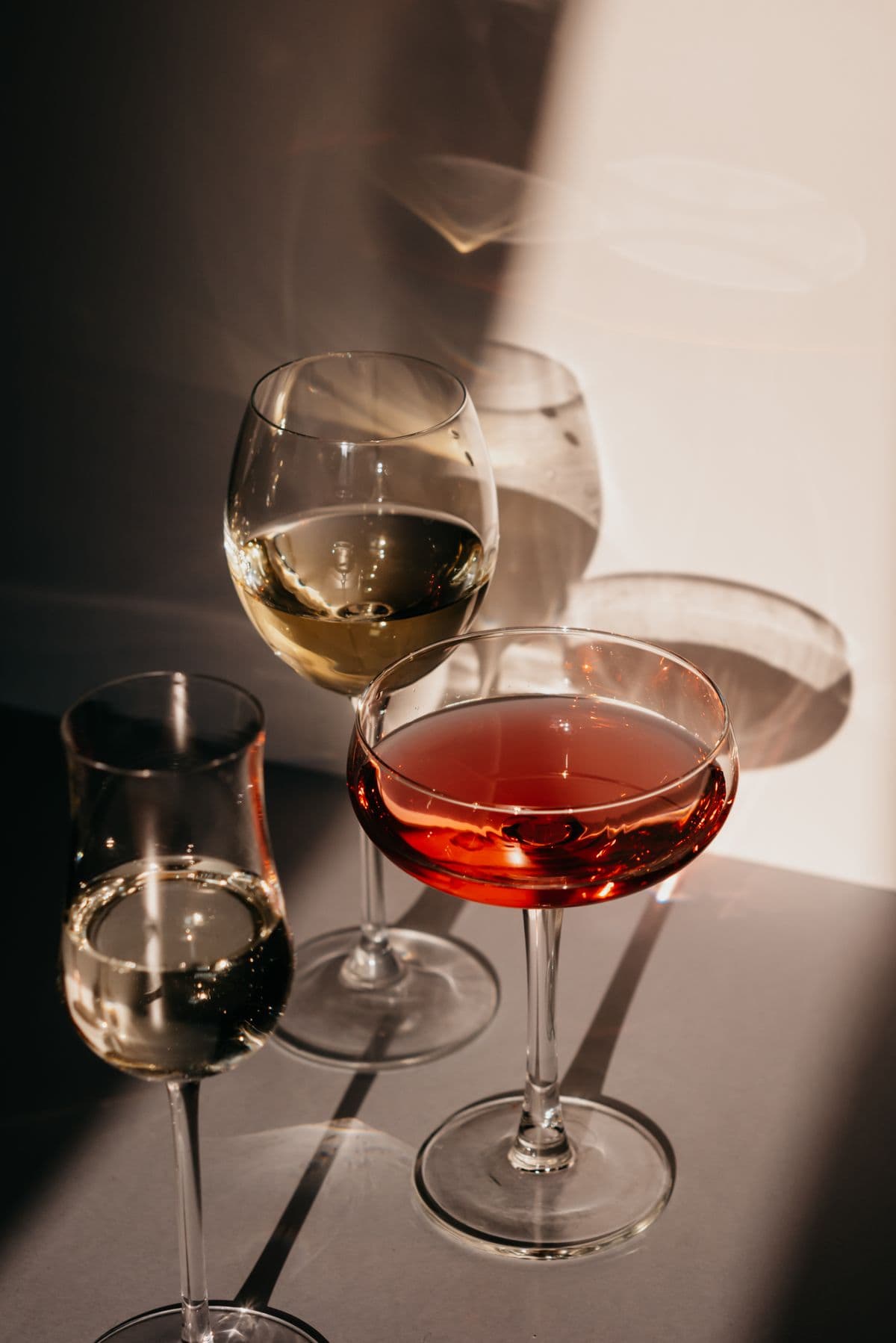
Smell: primary, secondary and tertiary aromas
Smell is where most of what we call the "taste" of wine actually happens, and professionals in Burgundy traditionally sort aromas into three families so a glass can be read layer by layer. Primary aromas are the scents that come from the grape variety itself; secondary aromas arise during fermentation; and tertiary aromas only develop over time as the wine is aged in bottle or in oak. These layers do not stand apart but sit on top of one another, and recognising each one is the most rewarding part of "smelling" (per Wikipedia, "Aroma of wine").
This is also why the trade splits its vocabulary in two. "Aroma" refers to the scents tied to the grape variety — that is, the primary group; while "bouquet" refers to the smells that form later, from fermentation and ageing, through chemical reactions among acids, sugars, alcohol and the phenolic compounds in the wine (Wikipedia, "Aroma of wine"; "Wine tasting"). When someone says a wine has a "lovely bouquet," they usually mean the complexity accumulated over time, not the original grape scent.
On technique, a tip experts often repeat: before swirling, take one gentle sniff so you don't miss the most delicate aromas — they vanish quickly once the wine is disturbed. Only then do you swirl: the motion increases the surface area in contact with air and speeds up the evaporation of aroma molecules, helping the secondary and tertiary layers "open up" more clearly (Wikipedia, "Wine tasting"). As you bring your nose to the glass, good practice is to alternate short, quick sniffs with long, slow ones — this lets your sense of smell catch both the fleeting top notes and the deeper base without fatiguing.
This is just the sensory step in the wider journey — you can read more about pouring, letting wine breathe and serving temperature in the overview "Tasting & Appraising Wine" (/blog/thuong-thuc-tham-ruou-vang), the grape and regional foundations in "Wine Basics" (/blog/tim-hieu-ruou-vang-co-ban) and "Old World & New World" (/blog/ruou-vang-old-world-new-world), and the background in "A History of Wine" (/blog/lich-su-ruou-vang). One important note: wine is an alcoholic beverage, intended only for those aged 18 and over and to be enjoyed responsibly; anyone who cannot drink can fully share this same aromatic experience with non-alcoholic beverages. The health perspective is discussed separately in "Wine & Health" (/blog/ruou-vang-va-suc-khoe).
Tasting: flavor, structure and the finish
When wine enters the mouth, the first thing to listen for is not 'good or bad' but texture. The tongue registers four foundational elements: body gives a sense of presence, sweetness suggests richness or oiliness, acidity brings freshness, and tannin creates a drying, astringent grip. Reading flavor as a map of sensations — rather than a single aroma — is the shift from merely drinking to truly tasting, in the spirit of the tasting craft (per Wine tasting, Wikipedia).
Wine flavor also unfolds over time: it has an opening, a mid-palate, and a finish. A simple yet revealing question for self-assessment is how long the wine lingers in the mouth after you swallow — the length of the finish is often read as a sign of depth. This temporal sequence explains why a single sip can 'tell' different stories at different moments.
The 'structure' of a wine is precisely how four forces interweave: tannin creates the dry grip, acid supplies freshness, and together with alcohol and body they form the framework and overall balance (per Wine tasting, Wikipedia). In assessment, one does not score each element in isolation but looks at integration, complexity, expressiveness, and above all the balance among acid, tannin and alcohol — none overpowering the others.
This piece belongs to the Tasting & evaluating wine series; for the bigger picture, visit Wine basics (/blog/tim-hieu-ruou-vang-co-ban) for the foundations, or Old World & New World (/blog/ruou-vang-old-world-new-world) to understand how style shapes what you feel on the palate. Note: this content is sensory knowledge intended only for those aged 18 and over and encourages responsible enjoyment; those who do not drink can still train their sensory skills with non-alcoholic beverages.
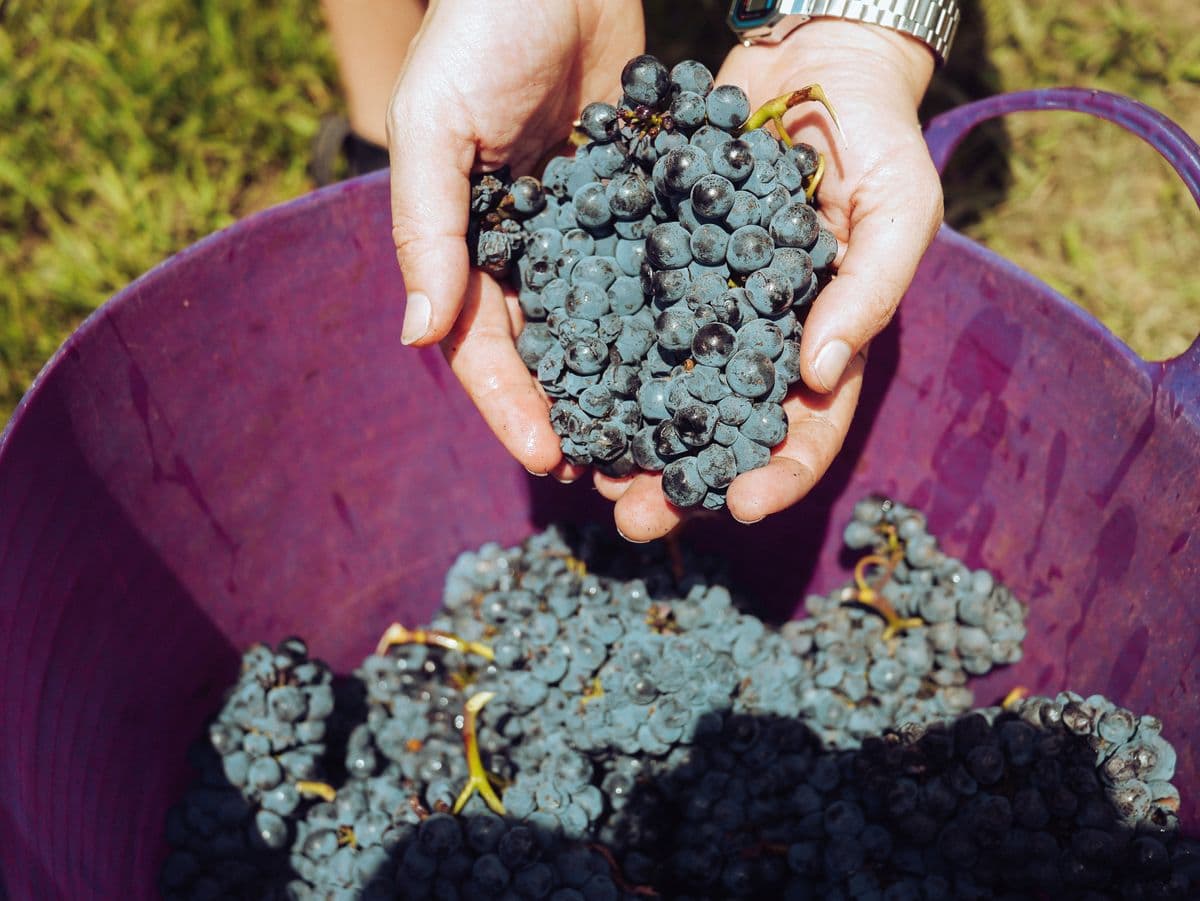
Serving Temperature and the Role of the Glass
Two seemingly technical factors — pouring temperature and glass shape — actually determine much of what your nose and palate perceive, even before quality enters the conversation. According to professional serving guides (Wine Serving Temperature Guide — The Wine Cellarage; Wine tasting — Wikipedia), red wine is best served slightly below room temperature, around 13-18°C (55-65°F): lighter reds suit the cooler end of this range, while full, bold reds belong at the warmer end so their aromas can fully develop. White wine is served a touch above refrigerator temperature, around 7-13°C (45-55°F) — light whites cooler to preserve their fresh acidity, fuller whites warmer to let aromas open up. Sparkling wine needs to be very cold, around 2-7°C (35-45°F), to keep its freshness and fine bubbles.
Why does temperature matter so much? It governs how quickly aromatic compounds evaporate: serve too cold and the aromas stay locked away; too warm and the experience loses balance. Put differently, the same bottle poured at two different temperatures can deliver two markedly different olfactory and gustatory experiences (Aroma of wine — Wikipedia). This is why connoisseurs tend to pour modest amounts and let the bottle gradually settle toward its ideal range rather than filling the glass all at once.
Glass shape is the second factor, and its influence on perception is far greater than many assume (Why Shape Matters — RIEDEL; Examining the Science Behind Wineglass Shapes — SevenFifty Daily). A glass with a narrower aperture channels aromas toward the nose, whereas a glass that is widest right at the rim is considered the least ideal because it lets the aromas escape. A wider bowl increases contact with oxygen, helping release the bouquet — the wine's complex web of aromas. By the same principle, a wide, round Burgundy-style bowl highlights delicate floral and earthy notes, while a large Bordeaux-style bowl with a tapered rim guides the wine smoothly across the palate. Choosing the right glass is not fussiness; it is how you let a bottle express its true character.
This article is part of our wine-knowledge series: you can read more about tasting and evaluating wine at /blog/thuong-thuc-tham-ruou-vang, foundational knowledge at /blog/tim-hieu-ruou-vang-co-ban, the Old World & New World picture at /blog/ruou-vang-old-world-new-world, the historical thread at /blog/lich-su-ruou-vang, and a perspective on wine & health at /blog/ruou-vang-va-suc-khoe. Note: this content is intended for those aged 18 and over and promotes responsible enjoyment; those who cannot or prefer not to drink can still enjoy this sensory culture through non-alcoholic beverage options.
Decanting: When and Why
Straight to the point: decanting (pouring wine into a separate vessel) serves two distinct purposes — separating an aged wine from the sediment that has settled at the bottom of the bottle, and aerating a young, still-'closed' wine so its flavours can open up. Knowing which purpose you need determines how you handle the bottle, because the two cases are almost opposite in technique (A Practical Guide to Decanting Wine — Stonestreet Wines, stonestreetwines.com/decanting.html; How to Serve Wine: Decanting 101 — Wine Spectator, winespectator.com/articles/how-to-serve-wine-decanting).
The first case is separating sediment. Aged red wines and Vintage Port naturally form sediment over their years of maturing — colour pigments and tannins precipitate and gradually settle to the bottom of the bottle (white wines rarely show this). If you stir this sediment up while pouring, the wine turns cloudy, tastes bitter and feels gritty, spoiling the sensory experience. So with an old, sediment-heavy bottle, stand it upright for 24 hours or more before opening to let the sediment settle fully to the bottom, then pour slowly and steadily into the decanter; you can shine a light beneath the neck of the bottle to watch the sediment creep forward and stop pouring at the right moment (Stonestreet Wines; Wine Spectator).
The second case is aeration. Aerating means exposing the wine to oxygen, which helps soften the tannic structure, release complex layers of aroma and let the flavours open up rather than remain tightly knit. This is typically what a young, tannic wine needs to express itself more fully on the nose (Aroma of wine — Wikipedia, en.wikipedia.org/wiki/Aroma_of_wine; Wine Spectator). Note that these two goals do not overlap: separating sediment calls for a gentle pour to keep the sediment undisturbed, while aeration deliberately invites more contact with oxygen.
Decanting is just one technical step in the whole sensory journey; for the wider picture, do read the companion chapters in this series: Tasting & Appraising Wine (/blog/thuong-thuc-tham-ruou-vang), Understanding Wine Basics (/blog/tim-hieu-ruou-vang-co-ban), History of Wine (/blog/lich-su-ruou-vang), Old World & New World (/blog/ruou-vang-old-world-new-world). This is knowledge and cultural content intended for those aged 18 and over; please enjoy responsibly, and anyone who does not drink can still choose non-alcoholic beverages to take part in the tasting experience.
Food pairing: the principle of balance
Pairing wine with food is not guesswork; it turns on two foundational strategies: congruent and complementary. The congruent approach seeks shared aroma compounds between wine and dish so they resonate and amplify one another, while the complementary approach uses opposing characteristics to pull the pairing back toward balance. Once you grasp these two axes, you can actively predict whether a match will lift both partners or cancel them out, rather than pairing purely from habit (Food and Wine Pairing Principles — WineWiki by Wine with Seth, https://www.winewithseth.com/winewiki/food-and-wine-pairing-principles/).
The heart of balance lies in how tastes interact on the palate. A wine's acidity cuts through fat and salt, refreshing the palate between bites; conversely, salt and acid in the food soften the wine's tannin and acidity, making it feel smoother and fuller. For tannic reds that leave a drying, astringent sensation, protein-rich dishes such as grilled meats are natural partners: the protein softens the tannins and brings the wine into a more supple, agreeable state (Food and Wine Pairing Principles — WineWiki by Wine with Seth, https://www.winewithseth.com/winewiki/food-and-wine-pairing-principles/).
Two elements call for caution: sweetness and umami. Sweetness in the dish heightens the perception of bitterness, acidity and the warming sensation of alcohol in the wine, so the safe rule is that the wine should be at least as sweet as what it accompanies. Umami-rich dishes amplify tannin, bitterness and acidity, which can make a powerful bottle taste harsh; in those cases a lighter or well-aged wine is usually the safer choice (Food and Wine Pairing Principles — WineWiki by Wine with Seth, https://www.winewithseth.com/winewiki/food-and-wine-pairing-principles/). This content is intended for those aged 18 and over; please enjoy responsibly and know when to stop — anyone who cannot or prefers not to drink can choose non-alcoholic options and still savour the meal.
Pairing is one link in the wider sensory journey. To understand why tannin, acidity or aroma behave the way they do, read further in Wine fundamentals (/blog/tim-hieu-ruou-vang-co-ban) and Tasting & evaluating wine (/blog/thuong-thuc-tham-ruou-vang); to place wine styles in their regional context, see Old World & New World (/blog/ruou-vang-old-world-new-world) and The history of wine (/blog/lich-su-ruou-vang); and for a perspective on moderation and health, visit Wine & health (/blog/ruou-vang-va-suc-khoe).
Enjoying in Moderation and Responsibly
The heart of wine tasting lies in one word: slow. You sip in small amounts, giving your palate and sense of smell time to perceive and then remember. It is a pursuit of the quality of a sensory experience, not quantity. When you swirl the glass to release the aromatics, breathe in deeply to identify each layer of aroma, then let the wine linger across the palate (Wine tasting — Wikipedia, https://en.wikipedia.org/wiki/Wine_tasting; Aroma of wine — Wikipedia, https://en.wikipedia.org/wiki/Aroma_of_wine), a single small sip can tell an entire story of a land, a grape and the hands that made it. True tasting is therefore, in itself, a reminder of moderation.
Wine is an alcoholic beverage, and it comes with limits that are not up for negotiation: it is only for those aged 18 and over, never drink and drive, and always drink responsibly in accordance with Vietnamese law. Every serving technique, glass choice or food pairing introduced in this series serves one purpose only — to elevate the quality of perception within a measured framework, never to encourage drinking more.
Table culture excludes no one. Those who cannot drink, or who simply choose not to, can fully share in the collective joy through NON-ALCOHOLIC options — from fresh juices and herbal teas to thoughtfully crafted alcohol-free drinks. It is the presence and the conversation around the table that make a gathering, not the glass in your hand.
If you wish to go further on this journey of knowledge, explore the companion articles in this series: A History of Wine (/blog/lich-su-ruou-vang), Old World & New World (/blog/ruou-vang-old-world-new-world), Wine Fundamentals (/blog/tim-hieu-ruou-vang-co-ban), Enjoying & Tasting Wine (/blog/thuong-thuc-tham-ruou-vang) and Wine & Health (/blog/ruou-vang-va-suc-khoe). Understanding deeply so that you may enjoy more finely and more moderately — that is the complete destination for a wine lover.
Frequently asked questions (FAQ)
What are the steps in tasting a glass of wine?
A common framework is four stages — appearance, aroma in glass, sensation in mouth, and finish; you can remember it as the 'five S's': see, swirl, sniff, sip, savor. This is a sensory experience for people aged 18 and over, so sip slowly and drink responsibly. To grasp the fundamentals first, read Wine basics (/blog/tim-hieu-ruou-vang-co-ban).
Why is it said that most of a wine's 'taste' actually comes from the nose?
Notes of fruit, flower, earth, herb, mineral and wood are perceived through the olfactory bulb rather than the taste buds; once wine is in the mouth, body heat releases further aromas that travel via the retronasal pathway to the olfactory receptors — and that is where the complex experience of flavour truly begins. The tongue mainly senses texture, sweetness, acidity and tannin.
What is the difference between 'aroma' and 'bouquet'?
Aroma refers to the scent characteristic of the grape variety, while bouquet is the scent that forms through fermentation and ageing. Burgundy specialists classify aromas as primary (from the grape), secondary (from fermentation) and tertiary (developing during bottle or oak ageing). Swirling increases the surface area and speeds the evaporation of aroma molecules — but it is wise to take one gentle sniff before swirling so as not to miss the most delicate aromas.
At what temperature should wine be served?
Red wine slightly below room temperature, around 13–18°C (light reds at the cooler end, full-bodied reds a touch warmer); white wine around 7–13°C (lighter whites cooler to preserve acidity, fuller whites a little warmer); sparkling wine very cold, around 2–7°C to keep its bubbles and freshness. Glass shape matters too: a narrower aperture funnels aromas toward the nose, while a glass widest at the rim is considered the least ideal.
When does wine need to be decanted?
Decanting serves two purposes — separating an older wine from the sediment that has settled, and aerating a young, 'closed' wine so its flavours open up. Aged reds and Vintage Port naturally throw sediment as they age; stand the bottle upright for 24 hours or more so the sediment falls to the base, then pour slowly and steadily, perhaps shining a light beneath the neck to watch the sediment — stirring it up makes the wine cloudy and gritty.
What principles guide pairing wine with food, and what about people who cannot drink alcohol?
The two foundational strategies are congruent (matching shared aroma compounds) and complementary (using contrast to reach balance); a wine's acidity cuts through fat and salt, while the protein in grilled meat softens tannin. The spirit of wine tasting is the quality of the experience, not the quantity — and people who cannot drink alcohol can fully take part in table culture through NON-ALCOHOLIC drink choices. Learn more in Wine & health (/blog/ruou-vang-va-suc-khoe).
References
Wine tasting — Wikipedia — https://en.wikipedia.org/wiki/Wine_tasting
Aroma of wine — Wikipedia — https://en.wikipedia.org/wiki/Aroma_of_wine
How to Serve Wine: Decanting 101 — Wine Spectator — https://www.winespectator.com/articles/how-to-serve-wine-decanting
Why Shape Matters — RIEDEL — https://www.riedel.com/en-us/riedel/why-shape-matters
Examining the Science Behind Wineglass Shapes — SevenFifty Daily — https://daily.sevenfifty.com/examining-the-science-of-wineglass-shapes/
Wine Serving Temperature Guide — The Wine Cellarage — https://winecellarage.com/wine-serving-temperature-guide/
Food and Wine Pairing Principles — WineWiki by Wine with Seth — https://www.winewithseth.com/winewiki/food-and-wine-pairing-principles/
A Practical Guide to Decanting Wine — Stonestreet Wines — https://www.stonestreetwines.com/decanting.html
Planning an event?
Get a free quote
Tell us about your event and our team will recommend the right package and send a detailed quote — no commitment.