Wine
Old World vs New World Wine: Two Philosophies
Pinkybee · 25/06/2026 · 10 min read
Video: Coverr / Pexels
Old World (Europe) centers terroir and tradition, labeling by region; New World foregrounds grape variety and the winemaker, labeling by varietal. Two philosophies, one alcoholic drink.
The Two Concepts: What Are Old World and New World Wine?
In short: "Old World" wine refers to wine made mainly in Europe and the regions around the Mediterranean that have a long winemaking history — including North Africa and the Near East; while "New World" wine refers to wine produced outside the traditional grape-growing regions of Europe and the Middle East (Wikipedia, Old World wine; New World wine). These are classifications by geography and tradition, not two fundamentally different types of wine.
On the Old World side, the list of countries is broad: France, Italy, Spain, Portugal, Germany, Austria, Greece, Hungary, Georgia, Armenia, Croatia, Romania, Switzerland and more (Wikipedia, Old World wine). On the New World side are names such as Argentina, Australia, Chile, South Africa, New Zealand, the United States (especially California), Canada and Brazil (Wikipedia, New World wine). One caveat: the term does not describe a single uniform style — even within the borders of one Old World country, very different kinds of wine are made (Wikipedia, Old World wine).
So where does the real dividing line lie? Less on the map than in winemaking philosophy: the Old World tends to let tradition and terroir — the combined influence of a region's soil, climate and topography — lead the way, whereas the New World places greater emphasis on science and the active role of the winemaker (Wikipedia, Old World wine). Because this dichotomy has more and more exceptions, some experts even ask whether we should keep using the "Old" and "New" pairing at all (Decanter).
To see the full picture, you can also read other articles in this section: History of Wine (/blog/lich-su-ruou-vang), Old World & New World (/blog/ruou-vang-old-world-new-world), Wine Basics (/blog/tim-hieu-ruou-vang-co-ban), Tasting & Appreciating Wine (/blog/thuong-thuc-tham-ruou-vang) and Wine & Health (/blog/ruou-vang-va-suc-khoe). Note: wine is an alcoholic beverage; this content is intended only for those aged 18 and over and encourages responsible enjoyment. Those who cannot or prefer not to drink can always choose non-alcoholic options.
History: why this division exists
The split between the "Old World" and the "New World" did not arise from quality, but from the flow of history: it marks the moment when the grapevine and winemaking know-how followed colonial expeditions across the oceans. Between roughly the 17th and 19th centuries, Spanish and English colonists carried viticulture and winemaking techniques to South Africa, Australia, New Zealand and the Americas — thereby forming what came to be called "New World" wine (ScienceDirect, The worlds of wine). In other words, "New World" is the name for regions that received the craft of winemaking from outside during the colonial era, in contrast to the long-established cradle in Europe.
That journey has concrete milestones. In the Americas, efforts to plant vines began on Hispaniola during Columbus's second voyage in 1494; by 1503, King Ferdinand II had banned grape-growing on Hispaniola. It was not until 1524 that vineyards were successfully established in Mexico, and the Mission grape ("the missionary grape") became the first widespread variety, later spreading to Texas and California (Wikipedia, New World wine). In the southern hemisphere, South Africa began making wine in 1659 under the founder of Cape Town; Australia received vine cuttings from South Africa via the First Fleet in 1788 and began exporting wine in 1822 (Wikipedia, New World wine). This chain of events explains why winemaking traditions in these regions are measured in a few centuries, rather than the millennia of Europe.
Meanwhile, the "Old World" carries a heritage accumulated across many generations. The distinctly European concept of terroir was cultivated over centuries by Benedictine and Cistercian monks in Burgundy: they closely observed each individual plot and drew the boundaries of the terroirs — and many of those boundaries still exist today (Wikipedia, Terroir). At the same time, Old World wine was traditionally made by countless small producers as a drink to accompany everyday meals, so the tradition of pairing wine with food took shape gradually over generations (Wine with Seth, WineWiki). This difference in historical depth and approach is the very root of why we speak of two "worlds."
To see the full picture, you can also read the overview piece Old World & New World (/blog/ruou-vang-old-world-new-world) in this series, or go further back to the origins with The history of wine (/blog/lich-su-ruou-vang); newcomers should start with Wine basics (/blog/tim-hieu-ruou-vang-co-ban). Please note: wine is an alcoholic beverage intended only for those aged 18 and over, and should be enjoyed responsibly; those who do not drink can absolutely choose non-alcoholic beverages and still fully appreciate this cultural story.
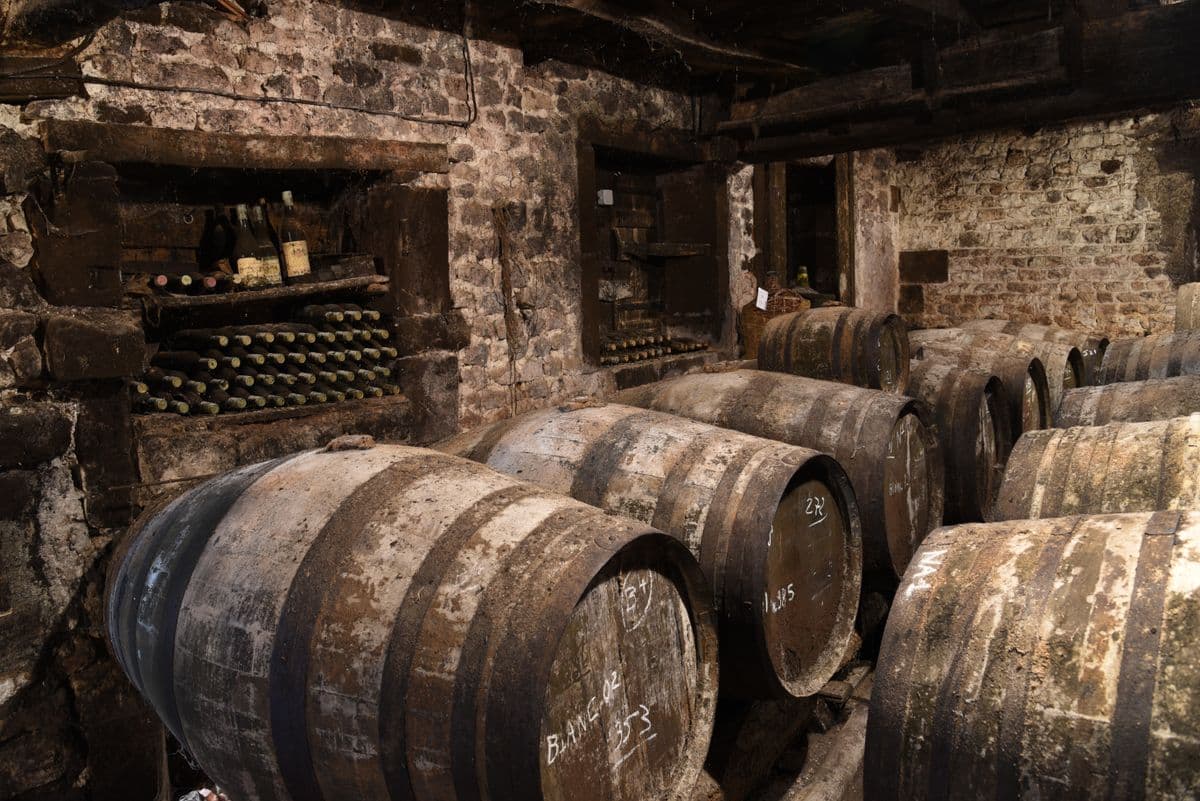
Terroir: the soul of the Old World philosophy
If you had to compress the Old World wine philosophy into a single word, it would be *terroir*. It is a French term for a "sense of place" — capturing the combination of soil, climate, topography and environment that gives a wine region its own, unrepeatable character (Wikipedia, *Terroir*; Wine Folly synthesis). Put differently, Old World winemakers believe the glass on the table tells the story not of a brand, but of a piece of land.
The idea runs far deeper than "good soil" or "plenty of rain." France's INAO institute defines terroir as the interaction between a geographic space, a human community and physical-biological factors — not merely a soil type or rainfall figure (French Wine Authority). Terroir also resolves into layered climates stacked on top of each other: the macroclimate of a large region (for example Côte de Nuits), the mesoclimate of a single village (for example Vosne-Romanée), and the microclimate of an individual vineyard, even a single row of vines (Wikipedia, *Terroir*). This meticulous layering is why the Old World wine map is drawn by place rather than by grape variety.
From this faith in place grows a distinctive farming philosophy: minimal intervention, so the vineyard can "speak for itself." Old World winemakers tend to limit human impact so the wine faithfully reflects the natural conditions of the site; even the wild (ambient) yeast present in the cellar is regarded as part of the terroir rather than something to be eliminated (Wine with Seth; synthesis). This is precisely the philosophical divergence from the New World that the previous chapter set up — see also our piece Old World & New World (/blog/ruou-vang-old-world-new-world).
It is only honest to note that terroir remains a scientifically debated concept. Many studies show that soil and microclimate do influence the composition of the grapes; yet Professor Mark Matthews (UC Davis) argues that terroir is accepted largely on the strength of traditional belief, not yet backed by rigorous data (Wikipedia, *Terroir*). Grasping both the cultural weight and the scientific limits of terroir will sharpen how you taste — we suggest also reading Tasting & evaluating wine (/blog/thuong-thuc-tham-ruou-vang) and Wine basics (/blog/tim-hieu-ruou-vang-co-ban) in this same series. Please note: this content is intended for those aged 18 and over and champions responsible, mindful enjoyment; those who cannot or prefer not to drink can still explore wine knowledge through alcohol-free beverage options.
Style: climate, ripeness, and what the glass reveals
The core difference between the two wine "worlds" comes down to climate and grape ripeness — and you can read it straight from the glass. New World growing regions are typically warmer than Central and Northern Europe, so the grapes ripen more fully and yield fuller-bodied wines with higher strength and a leaning toward ripe-fruit aromatics (Wikipedia, "New World wine"). Old World wines, by contrast, mirror cooler climates and tend to be more restrained, more mineral in character, and notably food-friendly (synthesis of WineWiki / Old World vs New World comparisons).
Production philosophy also shapes the sensory profile. The Old World tradition favors wild-yeast fermentation and extended maceration, which often gives wines with more tannin, a more austere structure, and a need for longer bottle aging before the layers open up (Wikipedia, "Old World wine"). That is why many classic bottles are not immediately easy-drinking on opening but reveal their best after years. The foundational idea behind all of this is terroir — the interplay of soil, climate, and place that stamps each bottle with a regional signature (Wikipedia, "Terroir").
That said, the stylistic line is blurring and should not be treated as a hard geographic rule. In blind tastings, even seasoned tasters find it very hard to separate an Oregon Pinot Noir from a Gevrey-Chambertin, or a dry Rheingau Riesling from a Clare Valley bottle (Decanter, opinion piece). Decanter also notes that some modern Bordeaux reach strength levels comparable to a New World style, making the Old–New divide even harder to pin down (Decanter). The lesson: judge by what is actually in the glass, not by the geographic label.
Understanding style helps you pick a glass that fits your taste and your plate. For the regional roots, see The History of Wine (/blog/lich-su-ruou-vang) and the Old World & New World comparison (/blog/ruou-vang-old-world-new-world); to build the basics, read Wine Fundamentals (/blog/tim-hieu-ruou-vang-co-ban) and train your palate with Tasting & Appreciating Wine (/blog/thuong-thuc-tham-ruou-vang); for a balanced perspective, see Wine & Health (/blog/ruou-vang-va-suc-khoe). Note: this content is for those aged 18 and over and is oriented toward responsible enjoyment; those who cannot or prefer not to drink can fully enjoy the table atmosphere with non-alcoholic options.
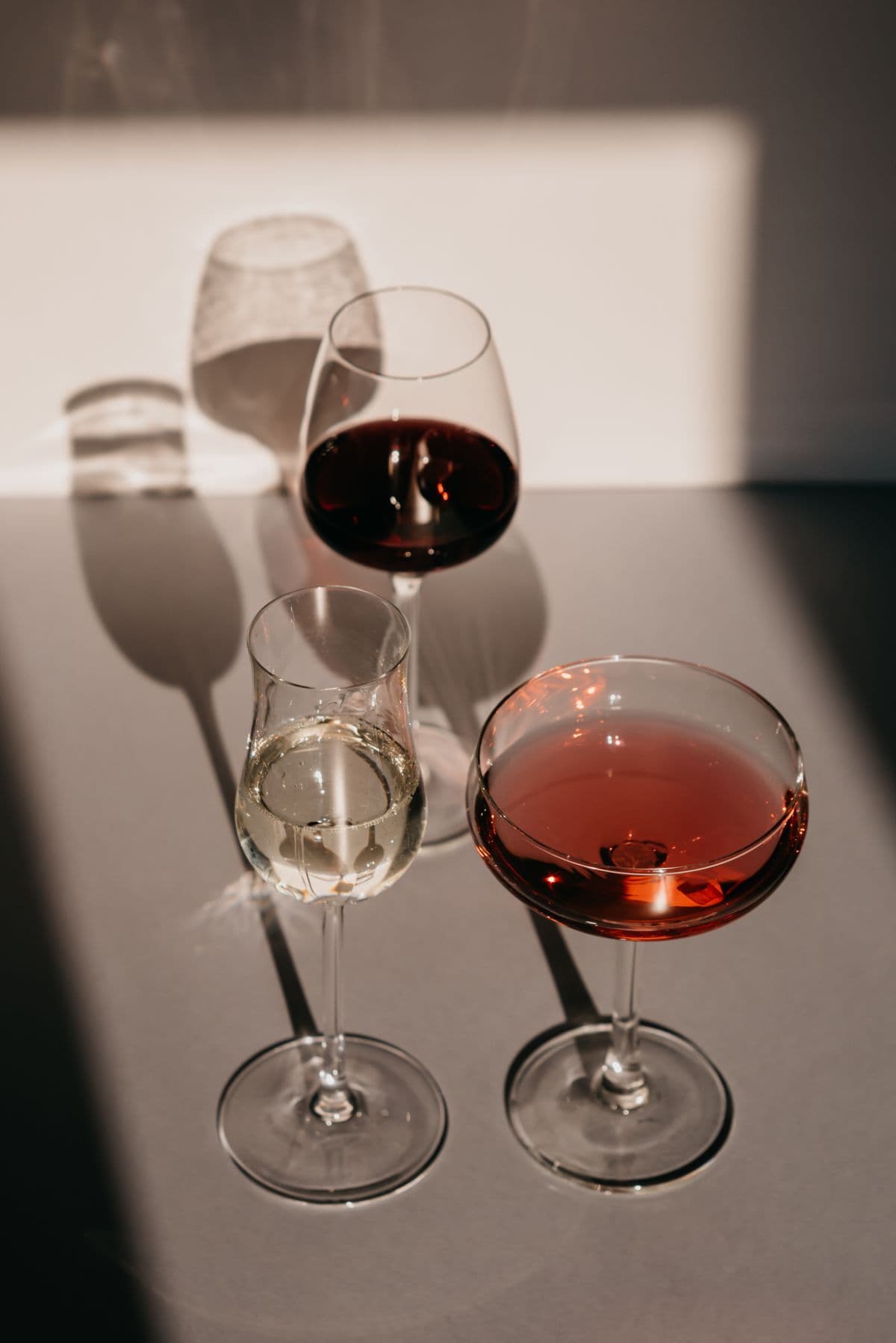
Naming conventions: by region or by grape variety
You can read the philosophy straight off the label: the Old World tends to name a wine after its region/appellation, while the New World names it after the dominant grape variety. This is not a mere formality — it is how the two traditions answer one question: what defines a wine, the place or the grape? (source: Old World wine, Wikipedia, https://en.wikipedia.org/wiki/Old_World_wine; New World wine, Wikipedia, https://en.wikipedia.org/wiki/New_World_wine).
In the Old World, the label carries the region rather than the grape, because the tradition holds that place (terroir) matters more than variety. Hence names like Gevrey-Chambertin and Montrachet (France), Chianti (Italy), or Rioja (Spain) — all regions/appellations. A telling example: Pauillac, Margaux, and Saint-Julien are all French appellations made chiefly from Cabernet Sauvignon, yet the label shows only the place name; the drinker is expected to know the grape behind it (source: Old World wine, Wikipedia; Terroir, Wikipedia, https://en.wikipedia.org/wiki/Terroir).
Conversely, the New World names wines after the leading grape — whichever variety plays the main role gives the wine its name, such as Pinot Noir, Sangiovese, Tempranillo, or Cabernet Sauvignon. This labelling style spread during the 1960s–1970s, partly because newer wine regions lacked Europe's long-standing tradition of tying names to specific places, so the grape became an easy, recognisable cue for buyers (source: New World wine, Wikipedia).
In short, the labelling difference mirrors the philosophical one: the Old World foregrounds place, the New World foregrounds transparency and easy recognition by grape — neither is 'more correct', just two ways of telling a story about the same drink. Learning to read the label lets you taste with more nuance; explore related pieces in this series: Old World & New World (/blog/ruou-vang-old-world-new-world), Wine basics (/blog/tim-hieu-ruou-vang-co-ban), and Tasting & appreciating wine (/blog/thuong-thuc-tham-ruou-vang). This content is for readers aged 18 and over; please drink responsibly, and if alcohol is not for you, non-alcoholic options let you enjoy wine culture all the same.
Wine region laws: AOC, DOC, DO and yield limits
The short answer: what most distinguishes the Old World is its appellation systems — the regional wine laws that strictly define what is allowed. France has AOC (Appellation d'Origine Contrôlée), Italy has DOC/DOCG, Spain has DO, and Portugal also has DOC (Old World wine — Wikipedia). These are not decorative labels but binding legal frameworks that tie a wine tightly to the very land that produced it.
These systems regulate quite comprehensively: the grape varieties permitted, the growing and trellising methods, the maximum yield for each region, and even the winemaking techniques allowed (Old World wine — Wikipedia). The underlying philosophy is that an appellation assumes the soil where the grapes are grown imparts a quality unique to that location — and this very notion of terroir, central to AOC, became a model that many countries around the world have copied (Terroir — Wikipedia).
A subtle point few notice: yield limits are not there to make life hard for growers but to protect quality. Overly fertile soil gives high yields but diluted flavour, so France's top appellations deliberately cap maximum yields — for example, Romanée-Conti AOC limits output to 35 hectolitres per hectare (Terroir — Wikipedia). The fewer the bunches per vine, the more concentrated the flavour; here regulation acts as a quality filter rather than an administrative barrier.
By contrast, the New World is generally less regulated, giving winemakers more freedom to experiment with new technology and techniques in both grape-growing and winemaking (New World wine — Wikipedia). These two approaches — a tradition-bound framework anchored to place on one side, an open space for experimentation on the other — are the core difference you will sense when reading about Old World & New World (/blog/ruou-vang-old-world-new-world). To understand the foundation of why place matters so much, see History of wine (/blog/lich-su-ruou-vang) and Wine basics (/blog/tim-hieu-ruou-vang-co-ban); to see how these differences show up in the glass, read Tasting & appreciating wine (/blog/thuong-thuc-tham-ruou-vang). This is cultural and knowledge content intended for those aged 18 and over; if you cannot drink or are driving, you can still explore wine as a cultural subject and choose non-alcoholic drinks — and always drink responsibly (see Wine & health — /blog/ruou-vang-va-suc-khoe).
Blurring Boundaries and Responsible Enjoyment
Today the line between the Old World and the New World is blurring — in both geography and style. Globalization through travel, media, multinational vineyard ownership, technical innovation and shifting consumer tastes has made the two categories far less distinct than they once were (Decanter, opinion piece: "Should we stop talking about Old and New World wine?"). The short answer: "Old" and "New" are increasingly best understood as two reference philosophies, not two rigid pigeonholes.
The clearest sign is a swapping of styles. Some New World winemakers now speak of restraint and a desire to "express a sense of place" — a spirit long tied to the classical notion of terroir (Terroir — Wikipedia). Conversely, some Old World producers have moved toward more approachable, riper-fruited styles. Both sides learn from and drift toward each other, smudging the border between them ever further (Decanter, opinion piece).
Climate change is another driver: every wine region on earth is changing, and as New World winemakers seek out cooler subregions, classifying wines into the two traditional camps becomes harder still (Decanter, opinion piece). Drawing on the sources, the finest wines today often transcend both categories — worth enjoying for what they are, not for an "Old" or "New" label. To go deeper, read Old World & New World (/blog/ruou-vang-old-world-new-world), History of Wine (/blog/lich-su-ruou-vang), Wine Basics (/blog/tim-hieu-ruou-vang-co-ban) and Tasting & Appreciating Wine (/blog/thuong-thuc-tham-ruou-vang).
One important note: wine is an ALCOHOLIC beverage. All of the above is cultural and educational in nature, intended for people aged 18 and over; please enjoy responsibly. Those who cannot drink, are pregnant, are driving, or abstain for health reasons can choose NON-ALCOHOLIC drinks and still fully savor the story of place and people. You may also wish to read Wine & Health (/blog/ruou-vang-va-suc-khoe) for more context.
Frequently asked questions (FAQ)
What do "Old World" and "New World" mean in wine?
Old World refers to wine made mainly in Europe and the Mediterranean regions with long winemaking histories — France, Italy, Spain, Portugal, Germany, Austria, Greece, Hungary, Georgia, Armenia and more (Wikipedia, Old World wine). New World refers to wine produced outside those traditional grape-growing regions — such as Argentina, Australia, Chile, South Africa, New Zealand, the USA, Canada and Brazil (Wikipedia, New World wine). These are not two uniform styles but two reference frames of philosophy: the Old World lets tradition and terroir lead, while the New World emphasizes science and the winemaker's role. See more in our History of wine article at /blog/lich-su-ruou-vang.
When did New World winemaking emerge?
Between the 17th and 19th centuries, Spanish and British colonists brought viticulture and winemaking to South Africa, Australia, New Zealand and the Americas (ScienceDirect, The worlds of wine). Grape-growing efforts in the Americas began at Hispaniola during Columbus's second voyage in 1494; a successful vineyard was established in Mexico in 1524 with the Mission grape. South Africa began winemaking in 1659; Australia received vine cuttings from South Africa with the First Fleet in 1788 and started exporting wine in 1822 (Wikipedia, New World wine). Learn the fundamentals at /blog/tim-hieu-ruou-vang-co-ban (Wine basics).
What is terroir and why does the Old World value it so highly?
Terroir is a French word for a "sense of place" — the combination of soil, climate, topography and environment that gives a wine region its distinct character (Wikipedia, Terroir). The concept was developed over centuries by Benedictine and Cistercian monks in Burgundy, who mapped out individual terroir boundaries — many of which still exist today. Terroir spans several climate layers: macroclimate (a large region), mesoclimate (a village) and microclimate (an individual vineyard). Note: Professor Mark Matthews (UC Davis) argues that terroir is accepted largely on the basis of traditional belief and is not yet rigorously supported by data (Wikipedia, Terroir).
How do Old World and New World wines differ on the palate?
New World vineyards are often in warmer climates, producing riper grapes, higher-alcohol, full-bodied wines that lean toward ripe-fruit aromas (Wikipedia, New World wine); Old World wines tend to be more restrained, mineral and food-friendly, reflecting cooler climates. Yet the line is blurring: in blind tastings it is hard to separate an Oregon Pinot Noir from a Gevrey-Chambertin, or a dry Rheingau Riesling from a Clare Valley bottle (Decanter). Judge by the palate rather than treating geography as absolute. Learn how to taste at /blog/thuong-thuc-tham-ruou-vang (Tasting and appreciating wine).
Why do Old World labels show a region while New World labels show a grape variety?
The Old World names wines by region/appellation (e.g. Gevrey-Chambertin, Chianti, Rioja) because place is considered more important than variety — for example Pauillac, Margaux and Saint-Julien are all made from Cabernet Sauvignon, yet the label shows only the region (search, Old World naming). The New World names wines by their dominant grape (Pinot Noir, Tempranillo, Cabernet Sauvignon...), a labelling practice popularized in the 1960s-1970s due to the lack of place-bound tradition (Wikipedia, New World wine). This difference directly mirrors the philosophy: the Old World trusts place, the New World prizes transparency and easy recognition by grape.
Is the Old World versus New World divide still clear in today's wine?
Globalization, technical innovation, multinational vineyard ownership and climate change have blurred the line in both geography and style (Decanter). Some New World makers now speak of restraint and "expressing a sense of place," while some Old World makers have shifted to riper, more approachable styles; the divide is best understood as two reference philosophies, not two rigid boxes. Note: wine is an ALCOHOLIC beverage — this content is cultural and educational, intended for those 18 and over; please enjoy responsibly, and those who cannot drink may choose NON-ALCOHOLIC options. See also /blog/ruou-vang-va-suc-khoe (Wine and health).
References
Old World wine — Wikipedia — https://en.wikipedia.org/wiki/Old_World_wine
New World wine — Wikipedia — https://en.wikipedia.org/wiki/New_World_wine
Terroir — Wikipedia — https://en.wikipedia.org/wiki/Terroir
Should we stop talking about Old and New World wine? — Decanter — https://www.decanter.com/wine-news/opinion/the-editors-blog/should-we-stop-talking-about-old-and-new-world-wine-2291/
Terroir in French Wine: Soil, Climate, and Place — French Wine Authority — https://frenchwineauthority.com/french-wine-terroir-explained
The worlds of wine: Old, new and ancient — ScienceDirect — https://www.sciencedirect.com/science/article/pii/S2212977418300619
Old World vs. New World Wine: Style, Philosophy — WineWiki by Wine with Seth — https://www.winewithseth.com/winewiki/old-world-vs-new-world-wine/
Real Differences: New World vs Old World Wine — Wine Folly — https://winefolly.com/deep-dive/new-world-vs-old-world-wine/
Planning an event?
Get a free quote
Tell us about your event and our team will recommend the right package and send a detailed quote — no commitment.