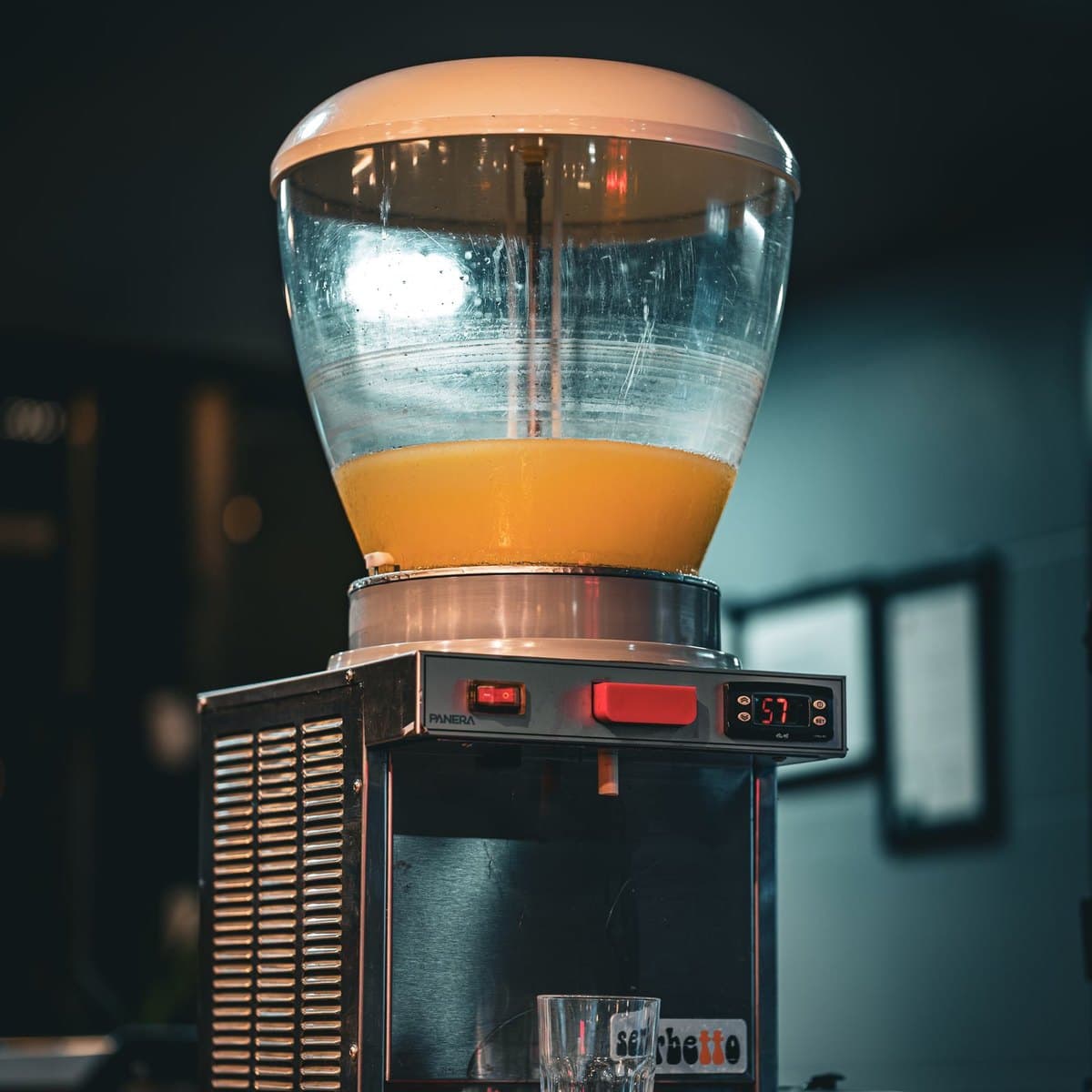
A non-alcoholic beverage counter with juicer and dispenser

General Beverage Preparation

General Beverage Preparation

Coffee, tea, blended drinks, smoothies, nut milks, juices and yoghurt — the full non-alcoholic range.

60hours
5weeks
8hTheory
50hPractice
2hTest

A 60-hour programme over 5 weeks with 50 hours of practice. This is the alcohol-free module: learners master beverage machinery and tools, produce both everyday and nutritional drinks, and design a beverage menu.

Tuition6.000.000₫ / learner

Training objectives

  • Explain ingredient selection, the use of tools and machinery, and mixing techniques for each drink type.
  • Distinguish between non-alcoholic and alcoholic beverages.
  • Describe the preparation process for general beverages.

Learning outcomes

  • Operate the tools and machinery used for a range of beverages.
  • Apply preparation techniques for everyday drinks and nutritional drinks.
  • Design a beverage menu.
  • Demonstrate responsibility, honesty and a high level of discipline.

Roles after the course

  • Beverage staff at cafés and hotel/restaurant bars
  • Self-employment or a start-up in beverage preparation and retail

Programme content

Lesson 1

Overview of general beverage preparation

04 hours
Theory 01hPractice 03h
Objectives
  • Describe the characteristics of non-alcoholic drinks and the role of the beverage maker.
  • Draw a bar-counter layout.
  • Ensure the safety of people and equipment.
Content
  • Overview of general beverage preparation
  • Bar-counter organisation chart
  • The role of the beverage maker
Lesson 2

Coffee fundamentals

11 hours
Theory 01hPractice 10h
Objectives
  • Understand extraction with the traditional Vietnamese phin and the espresso machine; know the recipes and ratios of common coffee drinks.
  • Perform phin brewing, salted-cream foaming and egg-cream whipping fluently, and operate the espresso machine and grinder.
  • Build the habit of precise measurement and of keeping tools and the bar area clean.
Content
  • In-depth theory
  • Recipes and practical workflow
  • Salted coffee and bạc xỉu
Lesson 3

Refreshment drinks

16 hours
Theory 02hPractice 13hTest 01h
Objectives
  • Understand base-tea characteristics, the principle of layered drinks and creaming ingredients.
  • Brew tea to technique, operate equipment confidently, and produce tea, blended-ice and boba drinks to standard.
  • Follow time and temperature procedures; maintain hygiene and safety while preparing drinks.
Content
  • Modern fruit drinks
  • Soda and mojito
  • Ice blended
  • Modern milk tea
  • Cream cheese foam and macchiato
Lesson 4

Nutritional and healthy drinks

13 hours
Theory 02hPractice 11h
Objectives
  • Understand ingredient pairing, slow-juicing technology and the properties of nuts and seeds.
  • Prepare and store ingredients correctly; operate juicers and blenders confidently.
  • Apply food-safety and hygiene rules strictly.
Content
  • Green smoothies
  • Smoothies
  • Nutritional nut milks
Lesson 5

Practical: juices and yoghurt

16 hours
Theory 02hPractice 13hTest 01h
Objectives
  • Describe the preparation process for juices and yoghurt.
  • Perform juice and yoghurt preparation.
  • Ensure the safety of people and equipment.
Content
  • Lemonade
  • Orange juice
  • Watermelon juice
  • Single-layer juice
  • Two-layer juice
  • Three-layer juice
  • Yoghurt drinks

Admission requirements

Learners aged 15 and above, literate (able to read and write), and in good health.

Certificate issued by

Nhan Dao Vocational SchoolHo Chi Minh City Department of Education and Training

Assessment & certification

Continuous assessment (regular + periodic tests) combined with a final examination on a 10-point scale. A score of 5.0 or above qualifies the learner for course completion and an elementary vocational certificate.

Tuition effective from 1 August 2026 per Notice TB-153 dated 23 July 2026 issued by Nhan Dao Vocational School.

General training objectives

  • Train practitioners for the restaurant and hotel service trade with occupational competence matching the training level.
  • Develop ethics, health and professional responsibility.
  • Enable learners to find work, create their own work, or progress to a higher qualification after completion.

Key areas of emphasis

  • Core techniques
  • Hygiene and safety

Completion requirements

All required assessment scores completed; a final examination score of 5.0 or above; and not subject to criminal prosecution at the time of the final examination.

Reference materials

  • Smith, J., Bartending basics: A comprehensive guide to cocktail creation, Beverage Press, 2020.
  • Phạm, K., Kỹ thuật pha chế cocktail cơ bản, 2023.
  • Hà Nam Khánh Giao – Nguyễn Văn Bình, Giáo trình Nghiệp vụ nhà hàng, NXB Tổng hợp TP.HCM, 2021.
  • Brown, T., Innovative cocktail recipes for the modern bartender, Mixology Hub, 2021.

Ahead of regulation

Why a vocational certificate matters

01

Rules are tightening

The 2025 Employment Law (in force 1 Jan 2026) requires a national vocational skills certificate for safety-sensitive occupations for the first time — the list may widen over time.

02

Star-rated hotels

Under TCVN 4391:2015, a food-and-beverage or bar supervisor needs an elementary, intermediate or college vocational qualification; holders of other certificates must complete a conversion course.

03

Hiring advantage

Holding a certificate early makes applications and promotion easier — especially for people already working who need to formalise their skills.

Beyond the certificate

A structured route to employment

  • Digital skills profileskills profile plus practice and performance video.
  • Hiring networkbars, cafés, restaurants and hotels across Bartender.com.vn.
  • A real competition stagereferral to Saigon Bartender Connect; top learners get hiring priority.
  • Post-graduation trackingwe record the employment rate to measure the programme.
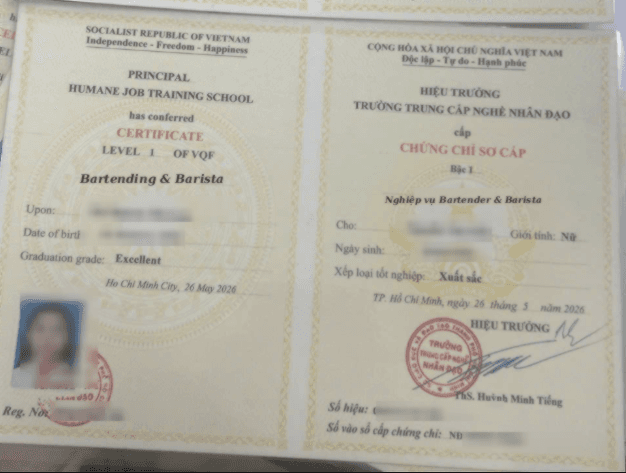
Sample bilingual elementary vocational certificate issued by Nhan Dao Vocational School
Sample elementary certificate · Vietnamese – English

Frequently asked questions

How much does General Beverage Preparation cost and when does the price apply?

6.000.000₫ per learner. Tuition effective from 1 August 2026 per Notice TB-153 dated 23 July 2026 issued by Nhan Dao Vocational School.

How long is the programme?

60 hours over 5 weeks — 8h theory, 50h practice and 2h assessment, across 5 lessons.

Who can enrol?

Learners aged 15 and above, literate (able to read and write), and in good health.

What do I receive on completion?

An elementary vocational certificate issued by Nhan Dao Vocational School (Ho Chi Minh City Department of Education and Training). Continuous assessment (regular + periodic tests) combined with a final examination on a 10-point scale. A score of 5.0 or above qualifies the learner for course completion and an elementary vocational certificate.

Enrol in this programme

Leave your details — our admissions team will call you back to confirm the schedule, tuition and paperwork.

Zalo