The bartending craft
The Bar Terminology Dictionary: 30+ Terms Every Bartender Should Know
Bartender.com.vn · 17/07/2026 · 10 min read
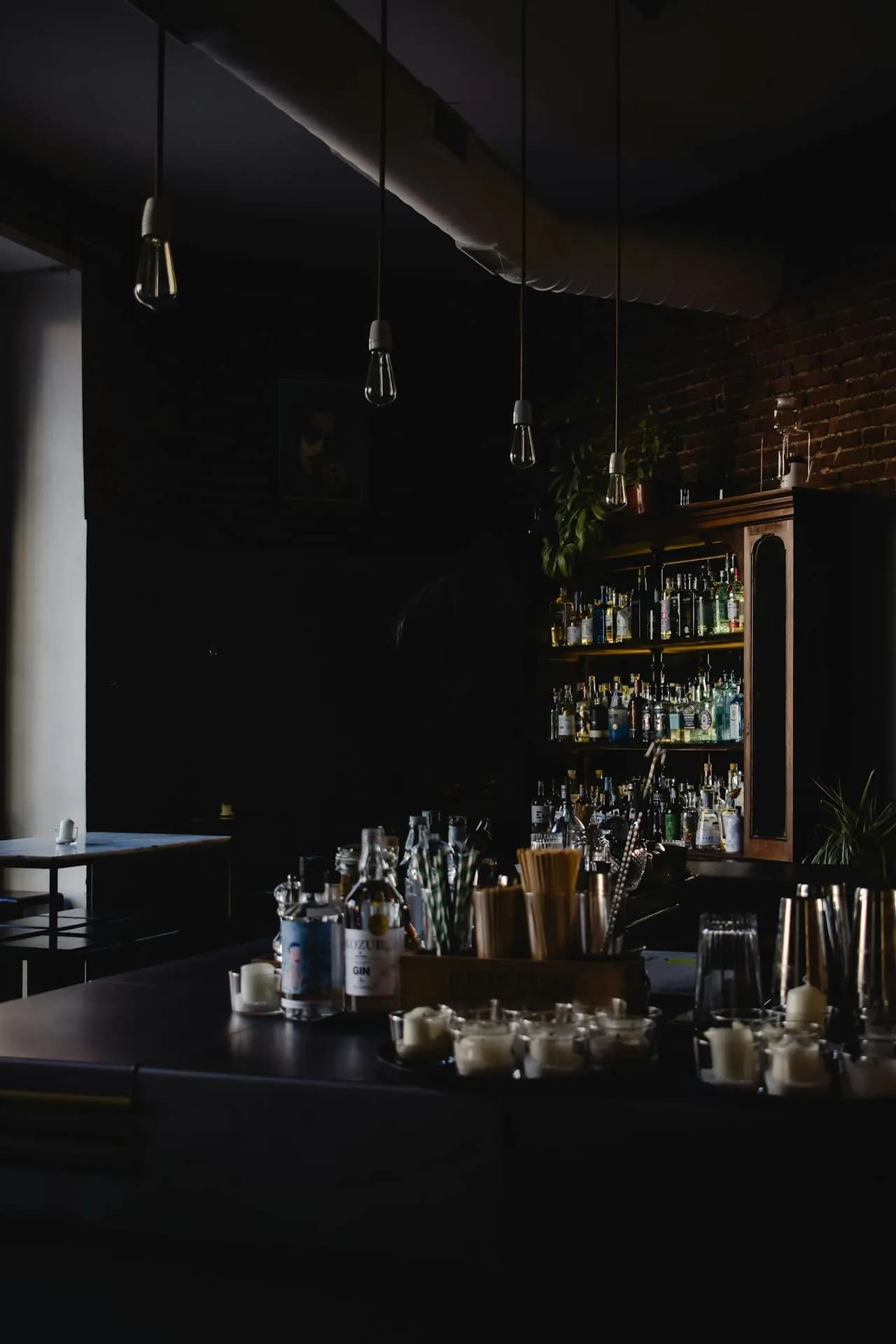
Neat, straight up, dirty, 86, mise en place… what do they mean? A glossary of 30+ bar terms, grouped by theme with clear, neutral definitions for anyone entering the bartending trade.
Why bartenders must master bar terminology
Knowing bar terminology lets you understand what a guest or colleague wants in just a word or two, instead of asking again during a rush. When a guest says "neat," "on the rocks," or "86 this item," a professional bartender reacts instantly. It is the shared language of the drink-service trade worldwide.
Most terms are English and are used almost as-is at bars in Vietnam. They fall into four main groups: serving styles, measures and mixing techniques, ingredients and garnish, and bar operations. Master these four groups and you have the core vocabulary to communicate smoothly behind the bar.
This article compiles 30+ terms as a quick-reference dictionary, defined neutrally based on original English sources and a Vietnamese trade source. Each group comes with a "Term — Meaning" table you can look up, save, or use as study material.
Group 1: Serving styles
Serving style describes the state a drink is delivered in: with or without ice, strained or not, which glass, diluted or not. Guests order these most directly, so learn them first.
Note three easily confused pairs. "Neat" is poured straight, served at room temperature, no ice. "On the rocks" is served over ice cubes in the glass. "Straight up" (or just "up") is chilled with ice then strained off, so the drink is cold but there is no ice in the glass. All are "no ice in the glass," but neat is room temperature while up is cold.
"Dry" and "dirty" are recipe modifiers: "dry" means minimizing the aromatic fortified-wine component, while "dirty" means adding olive brine, making the drink cloudy and slightly salty. "Virgin" refers to a non-alcoholic version of a drink, synonymous with a mocktail.
| Term | Meaning |
|---|---|
| Neat | Poured straight from the bottle, served at room temperature, no ice and nothing added |
| On the rocks | Served in a glass over ice cubes |
| Up / Straight up | Shaken or stirred with ice then strained, served in a stemmed glass with no ice, kept cold |
| Dry | Minimizing the aromatic fortified-wine component in the recipe; drier means less of it |
| Dirty | Adding olive brine to the drink, making it cloudy with a slightly salty taste |
| Back / Chaser | A small accompanying glass (water, soda, soft drink) sipped right after the main pour |
| Tall | Served in a tall glass with more mixer and a larger total volume |
| Short | Served in a low glass, small volume, little dilution |
| Virgin / Mocktail | A non-alcoholic version of a drink |
| Double | Twice the base-spirit amount versus the recipe's standard measure |
Group 2: Measures and mixing techniques
This group covers informal measuring units and foundational mixing actions. They appear in almost every recipe, so understanding them correctly helps you reproduce drinks consistently.
On measures, a "dash" is a very small amount, a few drops (about 1/8 teaspoon), often used for bitters. A "splash" is a bit of added mixer, roughly 1/8 ounce. "Top" or "top off" means filling the rest of the glass with mixer as the final step.
On technique, distinguish "build" (mixing directly in the serving glass) from "shake" and "stir" (mixing in a separate tool). "Muddle" is pressing ingredients to extract oils and flavor; "float" is gently pouring a layer that sits on the surface. "Strain" filters out ice when pouring, while "double strain" adds a fine mesh to remove small particles.
| Term | Meaning |
|---|---|
| Dash | A very small amount, a few drops (about 1/8 teaspoon), often used for bitters |
| Splash | A bit of added mixer, roughly 1/8 ounce |
| Top / Top off | Filling the rest of the glass with mixer as the final step |
| Float | Gently pouring a layer of an ingredient so it sits on the surface, creating a visible separate layer |
| Muddle | Pressing or crushing ingredients (herbs, fruit) with a muddler to extract oils and flavor |
| Build | Mixing directly in the serving glass, usually starting with ice then adding ingredients |
| Shake | Shaking ingredients with ice in a shaker |
| Stir | Gently stirring with ice using a bar spoon, keeping the drink clear |
| Strain | Filtering out ice and solids when pouring into the glass |
| Double strain | Straining through two layers (a strainer plus a fine mesh) to remove all fine particles |
| Chill | Cooling the glass before serving, with ice or in a refrigerator |
| Jigger | A double-sided measuring tool, typically 1 ounce on one side and 1.5 ounces on the other |
| Free pour | Measuring by feel and counting rhythm, without a measuring tool |
Group 3: Ingredients and garnish
This group describes what goes into the glass besides the base spirit, and how the look is finished. Garnish is not only for appearance; it can also add aroma through citrus-peel oils or herbs.
"Garnish" is the finishing decoration, which may be a fruit slice, an olive, a cherry, or an herb sprig. "Twist" is a thin strip of orange or lemon peel, squeezed or twisted over the surface to release aromatic oils. "Rim" is the glass edge coated with salt, sugar, or seasoning by wetting the rim and dipping it.
"Bitters" is a bitter herbal preparation used just a few drops at a time to add aromatic depth. "Base," or base spirit, is the component that defines a drink's character, while "mixer" is the diluting and flavoring ingredient such as soda, soft drink, juice, or tonic.
| Term | Meaning |
|---|---|
| Garnish | The finishing decoration (fruit slice, olive, herb) that adds appeal and sometimes aroma |
| Twist | A thin strip of orange or lemon peel, squeezed or twisted over the surface to release aromatic oils |
| Rim | The glass edge coated with salt, sugar, or seasoning by wetting it and dipping |
| Bitters | A bitter herbal preparation used a few drops at a time to add aromatic depth |
| Base / Base spirit | The base component that defines the character of the drink |
| Mixer | The diluting and flavoring ingredient: soda, soft drink, juice, tonic |
| Vermouth | An aromatized fortified wine infused with herbs and spices, used as an ingredient in many recipes |
| Rimmer | A tray or tool holding salt or sugar to create the glass rim |
Group 4: Bar operations
This group is the internal language among staff on shift; guests rarely hear it, yet it determines the speed and smoothness of the whole bar. Understanding it helps you fit into the team and work in sync.
"Mise en place" (French for "setting in place") is preparing ingredients, tools, and garnishes in their proper spots before service. "Speed rail" is the bottle trough right by the bartender, holding the most-used items for fast work without walking off to fetch them.
The "well — call — premium" chain classifies drinks by how they are ordered and by tier: "well" is the low-cost common group used when a guest does not specify; "call" is when a guest names a specific type; "premium" (or top shelf) is the high-end group kept on the upper shelf. Finally, "86" means an item is out or cut, and "last call" is the notice for final orders before the bar closes.
| Term | Meaning |
|---|---|
| Mise en place | Preparing ingredients, tools, and garnishes in their proper spots before service |
| Speed rail | The bottle trough right by the bartender, holding the most-used items for fast work |
| Well | The low-cost common group kept in the speed rail, used when a guest does not specify a type |
| Call | When a guest names a specific type or brand |
| Premium / Top shelf | The high-end, high-quality group, usually kept on the upper shelf behind the bar |
| 86 | To signal an item is out or cut; also used to mean refusing service to a guest |
| Last call | The notice for final orders before the bar stops serving and closes |
Study tips and where to learn
The most effective way to learn is by group rather than word by word, because terms in the same group often appear together in one order. Master the four confusing pairs first: neat and up, well and call, build and shake, dash and splash. Then build reflexes by reading an order aloud and translating it into actions.
Terminology is only a language layer; to use it correctly, you need to understand the action behind it. If you are just starting, read the article "What is a barback" to grasp the bar-support role, and "6 foundational mixing techniques" in the Library to understand the build, shake, stir, muddle, strain, and float actions mentioned here.
At Bartender.com.vn, these terms are taught alongside hands-on bar practice in the bartending course, so learners understand the meaning and perform the action correctly from the start rather than memorizing by rote. You can review the course roadmap and content on the website to pick the level that fits you.
Frequently asked questions
How do "neat" and "straight up" differ?
Both are served in a glass with no ice, but neat is poured straight at room temperature, while straight up is chilled with ice then strained off, so the drink is colder.
What does "86" mean and when is it used?
"86" signals an item is out or cut. It is also used to mean refusing service to an unsuitable guest. It is an internal signal among staff on shift.
How do you tell "well," "call," and "premium" apart?
"Well" is the common group used when a guest does not specify; "call" is when a guest names a specific type; "premium" is the high-end group on the upper shelf. The three classify by ordering style and quality tier.
How much do "dash" and "splash" differ?
A "dash" is a very small amount, a few drops (about 1/8 teaspoon), usually for bitters. A "splash" is a bit more, roughly 1/8 ounce of mixer. Both are estimates, not exact units.
How important is "mise en place" for a new bartender?
Very important. Preparing ingredients, tools, and garnishes in place before the rush lets you mix fast, make fewer mistakes, and stay calm when it is busy. It is a professional habit to build from day one.
References
The definitions in this article were cross-checked against original English sources and one Vietnamese trade source, all verified accessible at the time of writing:
Bartending terminology — Wikipedia — https://en.wikipedia.org/wiki/Bartending_terminology
Bar Terms and Bartender Terminology — barsandbartending.com — https://barsandbartending.com/bar-terms-and-bartender-terminology/
Liquor Lingo 101: Learn to Speak like a Bartender — Provi — https://www.provi.com/blog/liquor-lingo-101-learn-to-speak-like-a-bartender
Nhung thuat ngu trong quay bar Bartender can biet — HotelJob.vn — https://www.hoteljob.vn/tin-tuc/nhung-thuat-ngu-trong-quay-bar-bartender-can-biet
Planning an event?
Get a free quote
Tell us about your event and our team will recommend the right package and send a detailed quote — no commitment.