The bartending craft
Where to Start Learning Bartending? A Roadmap for Beginners (2026)
Bartender.com.vn · 17/07/2026 · 10 min read
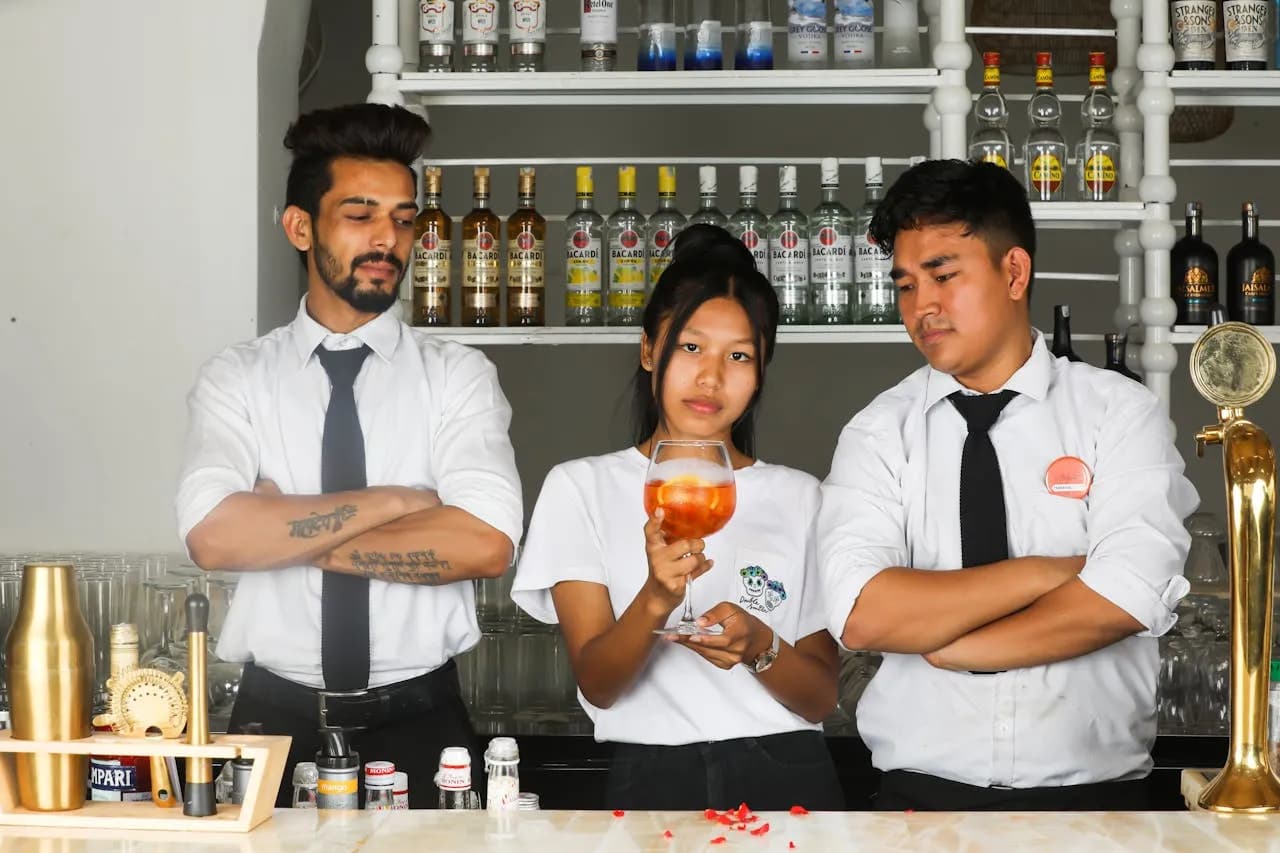
Beginners should start with fundamentals: understanding the tools, mastering core techniques (shaking, stirring, pouring, measuring) and practicing consistently, before chasing complex cocktails. This guide maps the path from zero to employed, compares self-study with formal courses, and covers cost, time and common mistakes.
Quick answer: start with fundamentals, not recipes
Learning bartending should begin with three layers of fundamentals, in this order: (1) getting familiar with the tools and the bar station, (2) mastering core techniques such as measuring, shaking, stirring, layering and garnishing, then (3) practicing repeatedly until the movements become reflex. This is the sequence most structured training programs in Vietnam follow, usually opening with a few weeks of overview and station familiarization before touching any cocktail.
The most common beginner mistake is learning backwards: rushing to copy 'photogenic' drink recipes online before your hands know the shaker and your eyes can gauge measures. You end up making one or two drinks by template without understanding why, and you cannot improvise or cope when an ingredient is missing.
In short: invest in core technique and consistency first. Once the foundation is solid, picking up new recipes or keeping up with drink trends is just a matter of time. If you are unsure what to buy to practice, read 'What is a basic bar tool kit' first to prepare the right essentials.
Self-study or a formal course?
Both paths lead into the profession, but they differ clearly in speed, depth of knowledge and entry opportunities. Self-study is flexible, nearly free and ideal for testing whether the job suits you. A formal course costs fixed money and time, but shortens the road thanks to hands-on correction, a tiered curriculum and often internship connections.
In practice many people take a hybrid route: self-study the theory and get familiar with tools at home to save money, then take a foundation course to receive direct guidance and technique correction. The table below offers a quick comparison so you can weigh it against your situation.
| Criteria | Self-study | Formal course |
|---|---|---|
| Cost | Very low, mainly tools and practice ingredients | Has tuition; varies by center and level (ask directly) |
| Time to basic competence | Not fixed, easily prolonged without a roadmap | Short with clear milestones via a tiered curriculum |
| Knowledge solidity | Prone to gaps and undetected technique errors | More solid thanks to direct technique correction |
| Technique correction | Self-review, hard to spot your own errors | Instructor observes and corrects on the spot |
| Job opportunity | Must build your own profile and seek internships | Often has internship links/referrals; provides certification |
| Best for whom | Those testing the trade, limited budget, high self-discipline | Those wanting a fast, solid, serious entry |
Foundation skills to have before you start
Before worrying about recipes, build the foundation skills every bar role needs. Most important are the senses: the ability to perceive taste (sour, sweet, bitter, salty, umami) and aroma to balance a drink. This can be trained through deliberate tasting and note-taking every day.
The second group is physical and mechanical: standing for long hours, quick and tidy hands, keeping the workspace clean, and working systematically when busy. The third is soft skills: communication, reading customers, staying calm under pressure and a willingness to learn. Bar-support job listings in Vietnam almost always favor candidates who are quick, diligent and eager to learn.
Finally, ingredient knowledge: understanding syrups, juices, fresh fruit and herbs, and how to prep and store them. For alcoholic drinks, practitioners must understand ingredient properties and comply with legal rules on advertising and service; this is knowledge to study seriously rather than pick up haphazardly.
From zero to employed: barback then bartender
In a real bar environment, the most common path is to start as a barback, then move up to bartender. Barback is an ideal entry position for those without experience: you help the bartender prep ingredients, restock ice, wash glassware, keep things clean and observe how the bar runs. It is a paid 'hands-on classroom.' If you want to understand this role in depth, read 'What is a barback.'
According to career sources in Vietnam, a barback typically accumulates around 6 to 12 months before being ready to become a bartender; in large hotels or highly competitive settings this can stretch to 1 to 2 years. The deciding factors are observation skills, proactively self-learning the menu and recipes, and a hardworking attitude.
Beyond bartender, the path opens to head bartender and management levels. The table below summarizes the stages so you can picture them; the figures are indicative and vary by venue.
| Stage | Main role | Reference experience |
|---|---|---|
| Barback | Prep ingredients, restock ice, wash glasses, keep clean, learn | Entry position |
| Bartender | Mix drinks, serve and interact with guests | After ~6–12 months as barback |
| Head bartender | Manage the bar, build menus, schedule, train staff | Usually several years of experience |
| Senior management (supervisor, F&B manager) | Run the department, operations, staffing, costs | Many years plus management skills |
Where to learn: self-study online, a center, or learn while working
There are three main channels. One is self-study online: videos, materials, trade books; the upside is autonomy and low cost, the downside is that no one corrects your errors. Two is a training center, where you get a tiered curriculum, hands-on guidance and usually practice on a real bar. Three is learning on the job as a barback, learning from colleagues while earning income.
The most effective approach is usually a combination: use online materials to grasp concepts and terminology, take a foundation course to standardize technique, then join a bar to build real reflexes. No channel replaces standing at a real bar, because only a real environment gives you the speed and pressure.
When choosing where to learn, prioritize places with plenty of practice hours per student, instructors with real bar experience, and internship support. Do not pick a place just for 'become a pro super-fast' advertising while ignoring practice quality.
Cost and time: think in ranges, not absolutes
On time: many foundation programs in Vietnam run from a few weeks to a few months to get you to basic competence, after which your skill keeps growing on the job. If you take the barback route, count on 6 to 12 months for the first stage. These are reference ranges, not guarantees; the pace depends on how often you practice.
On cost: tuition varies widely across centers, course levels and durations, so the right move is to ask the place you intend to study directly rather than trust a fixed number online. If you self-study, the biggest cost is the initial tool kit and ingredients to practice consistently.
On starting income: career sources in Vietnam note that the base pay for a bar-support role is typically in the range of a few million VND per month, not counting service charges and tips shared by the team. The exact figure varies by venue size and location, so treat it as a reference point.
Common beginner mistakes
First, learning recipes before technique. With a shaky foundation you only 'copy' template drinks without understanding the principles of balance, so you cannot improvise or troubleshoot.
Second, neglecting cleanliness and station tidiness. In a real environment, a messy station makes you slow and error-prone and loses you points with managers; conversely, clean and systematic habits impress from the barback role onward.
Third, impatiently skipping the barback stage because it 'looks like just cleaning.' In fact this is when you learn the rhythm of the bar, how to coordinate and observe the trade for free while getting paid. Fourth, chasing social-media trends while ignoring ingredient knowledge and the legal rules around alcoholic drinks, leading to mistakes you are not even aware of.
Learn properly with the bartending course at Bartender.com.vn
If you want to move fast and solid rather than fumble, a bartending course designed around a roadmap is worth considering. The bartending course at Bartender.com.vn follows exactly the foundation sequence described above: getting familiar with tools and the bar station, standardizing core techniques, then practicing with direct correction instead of leaving you to self-review.
The biggest advantage of learning properly is avoiding wrong habits from the very start, which are very hard to fix later. With a tiered curriculum and instructors observing at the bar, you progress along clear milestones with a real path into the trade, rather than practicing aimlessly without knowing what you lack.
Whether you choose self-study or a course, the principle is unchanged: solid foundation first, speed and recipes later. Starting right from day one is the biggest time-saver on the long journey of a bartending career.
Frequently asked questions
Can someone with no background and no talent learn bartending?
Yes. Training sources emphasize that the most important thing is not prior mixing ability but genuinely liking the work and being willing to practice. Taste perception, technique and service can all be trained from zero.
How long until I can work?
Many foundation programs in Vietnam get you to basic competence within a few weeks to a few months, after which skill grows on the job. Via the barback route, the first stage usually takes about 6 to 12 months before becoming a bartender. These are reference ranges depending on practice frequency.
Should I start with self-study or enroll in a course?
If you want to test the fit on a limited budget, self-study the theory and get familiar with tools first. If you want a fast, solid entry with technique correction, take a foundation course. Many people combine both to optimize.
Is it mandatory to be a barback first?
Not mandatory, but it is the most realistic and common path. Barback lets you learn the bar's rhythm, coordination and observe the trade while still earning, making it an excellent stepping stone for beginners.
What tools should I prepare to start practicing at home?
Start with a basic bar tool kit (shaker, measuring tool, stirring tool, strainer) and practice foundation movements like measuring, shaking, stirring and pouring. Read 'What is a basic bar tool kit' to prepare the right essentials before practicing.
References
Huong Nghiep A Au — Career development path for beverage mixing — https://www.huongnghiepaau.com/nhan-vien-pha-che
Hoteljob.vn — What is a Bar Back? Job description and current salary — https://www.hoteljob.vn/tin-tuc/bar-back-la-gi-mo-ta-cong-viec-bar-back-trong-khach-san-nha-hang-va-muc-luong-hien-tai
Hoc Pha Che Haffee — How long from zero to professional bartender? — https://hocphachehaffee.com/hoc-nghe-bartender-tu-con-so-0-den-chuyen-nghiep-trong-bao-lau/
American College of Viet Nam — What are Bartender and Barista? Where to study? — https://amcollege.edu.vn/bartender-va-barista-la-gi-hoc-nghe-bartender-o-dau/
Ly Pham — What is a Bartender? Work, skills and development path — https://lypham.vn/bartender-la-gi/

Planning an event?
Get a free quote
Tell us about your event and our team will recommend the right package and send a detailed quote — no commitment.