The bartending craft
What Is Flair Bartending? The A–Z of Performance Mixology
Bartender.com.vn · 17/07/2026 · 10 min read
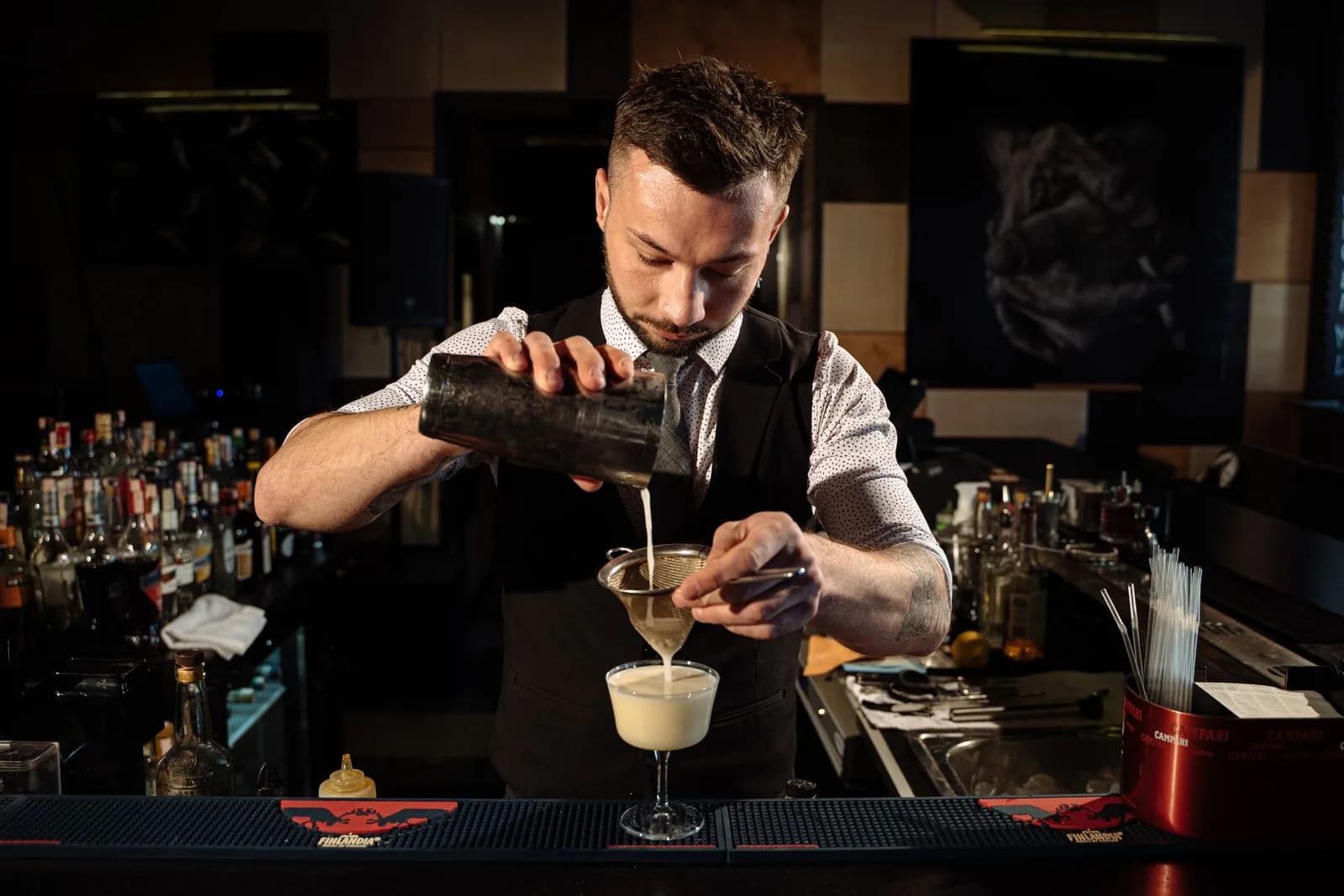
Flair bartending is the art of performing while making drinks by throwing bottles, juggling shakers and tools. Explore the definition, history, working vs exhibition flair, how to train, and safety.
What is flair bartending?
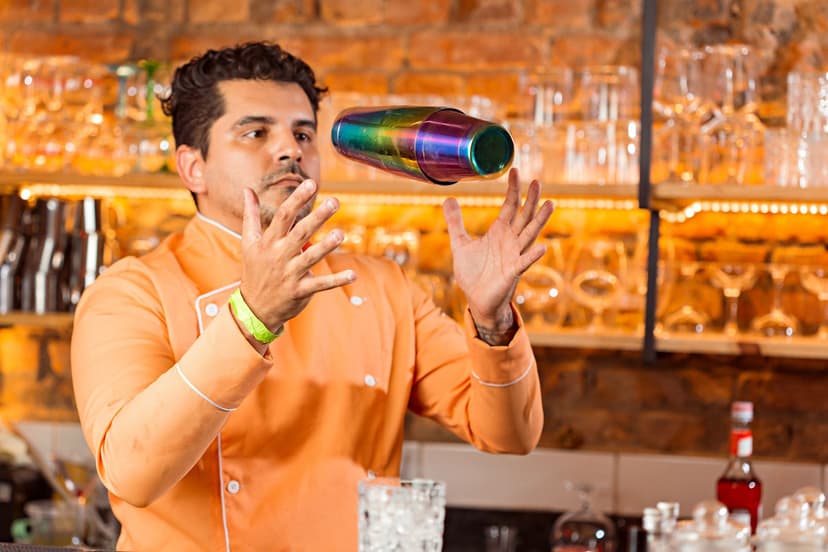
Flair bartending is a bartender's performance technique: making drinks while manipulating tools such as bottles, shakers, bar spoons and glasses with skillful, semi-acrobatic moves to entertain and impress guests. Because most of the skill revolves around tossing, throwing and catching bottles, the craft is often nicknamed "bottle flipping."
The essence of flair is not making the drink itself — any bartender can do that — but turning the act of mixing into a show. The bartender becomes an entertainer right at the bar, using rhythm, confidence and body control to draw guests into every move.
In the trade, flair is seen as what elevates a bartender from merely competent to a performer. If you want the bigger picture of the profession, read our library article "What is a bartender"; this piece dives specifically into the performance side.
History: from a 19th-century flame to the Hollywood screen
The earliest figure credited with the flair spirit is Jerry Thomas, a legendary bartender of the late 19th century. He was famous for pouring a stream of burning liquid back and forth between two metal cups to form an arc of fire — a flaming display that amazed guests and is regarded as the seed of bar showmanship.
Flair only truly became a trend in the mid-1980s. The T.G.I. Friday's restaurant chain played a big role: noticing staff juggling tools while mixing, it encouraged the practice and organized contests. In 1986 the first national competition, the "Bar Olympics," was held in Woodland Hills, California, and John "JB" Bandy was the standout winner.
The turning point that took flair to a global audience was the film Cocktail (1988), directed by Roger Donaldson and released on July 29, 1988, starring Tom Cruise. It was John Bandy himself who trained Tom Cruise and co-star Bryan Brown in the bottle-throwing moves. Panned by critics (it even won the Golden Raspberry for Worst Picture), Cocktail was still a box-office hit, grossing about US$171.5 million on a US$20 million budget, and made the image of the bottle-flipping bartender iconic.
From that foundation, flair grew into an organized competitive discipline. The Flair Bartender's Association (FBA) was formed in 1997; in 2005 the FBA launched the FBA Pro Tour series; and by 2008 the World Flair Association (WFA) was co-founded and gradually became the leading body for global flair competitions.
| Milestone | Event |
|---|---|
| Late 19th century | Jerry Thomas performs a flaming pour between two metal cups — the early flair spirit |
| Mid-1980s | T.G.I. Friday's encourages staff to juggle tools; flair becomes a trend |
| 1986 | First national contest "Bar Olympics" in Woodland Hills, California; John "JB" Bandy wins |
| 1988 | Film Cocktail released (July 29); Tom Cruise trained by John Bandy, taking flair global |
| 1992 | Quest for the Best Bartender — first open competition with an exhibition round |
| 1997 | Flair Bartender's Association (FBA) founded |
| 1999 | Quest adds a working flair round for the first time |
| 2005 | FBA launches the FBA Pro Tour series |
| 2008 | World Flair Association (WFA) co-founded |
How do working flair and exhibition flair differ?
Flair splits into two main branches, and understanding the difference helps you choose the right way to train. Working flair is performed during real service: tight moves that don't noticeably slow drink output, using bottles at various fill levels. The quality of the drink remains the priority, with flair as the garnish that delights guests.
Exhibition flair is what you see on the competition stage: long routines choreographed to music, using pre-set nearly-empty bottles that are easier to control and allow riskier, harder moves. Here the drink's quality barely matters — the score comes from difficulty, smoothness and the appeal of the show.
In practice, many strong bartenders train both: working flair to survive daily shifts, and exhibition flair to win competitions and build a personal brand. The table below summarizes the differences.
| Criteria | Working flair | Exhibition flair |
|---|---|---|
| Purpose | Serve guests quickly while keeping drink quality, plus visual appeal | Score on performance, showing maximum difficulty and creativity |
| Difficulty | Moderate; prioritizes reliability, few drops | High; many bottles, complex moves, accepts risk |
| Props | Real bottles at various fill levels, actual working tools | Pre-set nearly-empty bottles, tools optimized for show |
| Setting | A real bar, during service | Competition stage, with music and an audience |
| Judged/valued on | Speed, accuracy, guest experience | Difficulty, smoothness, entertainment, choreography |
Core skills and practice props
Flair is built on a few core skills: bottle flips, juggling multiple bottles, spinning and balancing tools, plus "blind pouring" — pouring the right measure without looking. Beginners usually start with one bottle, then progress to basic three-bottle juggling and more complex combinations.
The most important prop is the practice bottle: a weighted plastic bottle that mimics a real one, often filled with water to reproduce realistic weight and balance. Using plastic bottles early avoids breakage and injury. Only once the hands are conditioned do practitioners gradually move to glass.
Alongside bottles are the shaker (tin), bar spoon and pour spout — small details that determine the flight path of the liquid during a routine. Many people also train in front of a mirror or film themselves to catch posture and timing errors.
One thing people overlook: flair demands physical fitness and focus like a sport. The wrists, shoulders and hand–eye reflexes must be conditioned steadily; a serious session can leave you as sore as a light gym workout.
How to learn flair bartending properly
The sensible path is to master the fundamentals of mixing first, then layer performance on top. You need to be solid at building drinks, measuring and keeping the bar clean; flair only looks good when the craft core is strong — otherwise it becomes empty showmanship.
For flair technique, learn in order: master a single move until you almost never drop it before adding a new one; combine single moves into short sequences; only then choreograph a full routine. The golden rule is controlled repetition — a falling drop count is the true measure of progress.
Beginners should train with a plastic bottle and water, in an open space, away from glassware and bystanders. Reviewing video of each session is the fastest way to self-correct when you don't yet have a coach.
The flair community loves to share: many moves have their own names and spread through video. Learning from those ahead of you, joining group sessions or a guided class helps you avoid bad hand habits from the start.
Global flair competitions and community
Flair has a lively competitive ecosystem. Major events test different skills: some judge all four categories (accuracy, speed, working flair, exhibition flair), while others are pure exhibition flair focused on stage performance.
Among the most-cited arenas are Roadhouse (London) — often seen as the most prestigious and largest; Legends of Bartending (Las Vegas) and Quest (Orlando), long-running events that have since ended; plus the WFA Grand Slam system worldwide and events such as OlyBet Flairmania and the Nations Flair Challenge.
At its peak, major competitions could draw a thousand spectators and sizable prizes; top champions such as Tom Dyer (creator of the famous "Helicopter on the Tin") and Tomek Małek (three-time Roadhouse winner, 2009–2011) became names admired across the flair scene.
Today flair has a second arena: social media. Many moves spread through short videos, and the trend is shifting from flashy competition flair toward refined working flair, cleverly woven into upscale cocktail bars.
| Name | Place/Scope | Note |
|---|---|---|
| Roadhouse | London, UK | Regarded as the most prestigious and largest flair competition |
| Legends of Bartending | Las Vegas, USA | Once judged all four categories; discontinued |
| Quest | Orlando, USA | One of the oldest open competitions; discontinued |
| WFA Grand Slam | Global | Competition system of the World Flair Association (since 2008) |
| OlyBet Flairmania / Nations Flair Challenge | Latvia / Las Vegas | Major events on the international calendar |
Safety when practicing flair
Flair looks spectacular but carries risk, so safety must come first. The most basic rule: beginners always train with plastic bottles filled with water rather than glass bottles with real liquid. This removes the danger of breakage and cuts, and avoids waste.
Choose a spacious, non-slip area, away from glassware, mirrors and bystanders — a dropped bottle can fly farther than expected. Warm up the wrists and shoulders before training to reduce strain, since flair repeats many moves that load the hand joints.
Fire routines are for experienced practitioners in controlled environments only: they require safe distances, fire-fighting tools within reach, and absolutely no casual experimenting at home. Beginners should skip fire entirely until directly supervised.
Finally, progress gradually. Most injuries come from jumping to a move that is too hard before the hands are ready. Patience with each step is not only safer but also builds a stronger foundation and more durable progress.
Flair in the profession today, and a path at Bartender.com.vn
The current trend is no longer showing off as much as possible, but refined working flair: a few well-timed moves, enough to create a highlight without slowing the shift. This is the skill that makes a bartender stand out to guests and employers, and it also opens the door to competition if you want to go further.
The key thing to remember: flair is a performance layer set on a solid craft foundation. Before throwing bottles, you must be fluent in building drinks, measuring, serving and cleaning the bar. At the Bartender.com.vn library, the knowledge articles and mixology courses are designed so you build this core first, then develop performance skills safely and with a clear roadmap.
If you're just starting, read "What is a bartender" alongside this to grasp the profession overall, then return here to picture the performance branch clearly. Learning in the right order — craft first, flair second — is the most sustainable way to pursue a professional bartending career.
Frequently asked questions
Is flair bartending a separate profession?
Not exactly. Flair is a set of performance skills within the bartending profession that distinguishes a performing bartender from an ordinary one. You still need the mixing fundamentals; flair is the added layer.
What kind of bottle should beginners practice with?
A plastic practice bottle, usually filled with water to mimic the weight and balance of a real one. Only move to glass once your hands are conditioned and your moves are stable, to avoid breakage and injury.
Should I learn working flair or exhibition flair first?
Start with the fundamental working-flair moves because they are tight, safe and usable right away in a shift. Exhibition flair, with long routines choreographed to music, suits you better once the basics are solid and you want to compete.
How long does it take to learn flair?
There's no fixed number; it depends on practice frequency and individual aptitude. The general rule is to master each move until you almost never drop it before adding a new one; progress is measured by a falling drop count, not by weeks.
Which film made flair globally famous?
Cocktail (1988) with Tom Cruise, whose moves were trained by John Bandy. Despite criticism of its quality, the film was a big hit and turned the bottle-flipping bartender into a pop-culture icon.
References
Flair bartending — Wikipedia — https://en.wikipedia.org/wiki/Flair_bartending
Cocktail (1988 film) — Wikipedia — https://en.wikipedia.org/wiki/Cocktail_(1988_film)
Welcome to the World of Elite Flair — PUNCH — https://punchdrink.com/articles/welcome-to-world-of-elite-flair-bartending-competition/
Flair Bartending – Professional-grade mixology technique — CET — https://www.cet.edu.vn/ky-thuat-flair-bartending
Planning an event?
Get a free quote
Tell us about your event and our team will recommend the right package and send a detailed quote — no commitment.