The bartending craft
What Is a Bartender? The Craft, Skills, Pay & Career Path
Bartender.com.vn · 17/07/2026 · 9 min read

A bartender prepares and serves drinks at the bar counter. Learn the real duties, how the role differs from a barback, the skills required, pay in Vietnam and abroad, and the career ladder of the profession.
What is a bartender?
A bartender is a person who prepares and serves drinks at the bar counter — including cocktails, mocktails and mixed beverages — while managing the bar area and interacting directly with guests. It is a role within the food-and-beverage (F&B) service industry, typically found in restaurants, hotels, bars, pubs, lounges and nightlife venues.
The word 'bartender' combines 'bar' (the counter) and 'tend' (to attend or serve), literally meaning the person who tends and serves at the counter. The job therefore goes beyond mixing drinks to include running the bar, advising on the menu and creating a good guest experience.
Contrary to the image of someone 'just shaking a tin', a professional bartender blends mixing technique, drink knowledge, communication skills and bar-management thinking. That is why the role is regarded as a craft with a clear development path.
What does a bartender do? The real duties
A bartender's core job is preparing drinks to recipe and to order, making sure every glass leaving the counter is correct, attractive and consistent. They also take orders, recommend options to suit tastes, handle payments and keep service flowing during peak hours.
Beyond mixing, bartenders prep ingredients (cutting fruit, making syrups, preparing garnishes), check and maintain tools, clean the workstation and help with inventory. Many venues also task bartenders with researching, testing and adding new items to the menu.
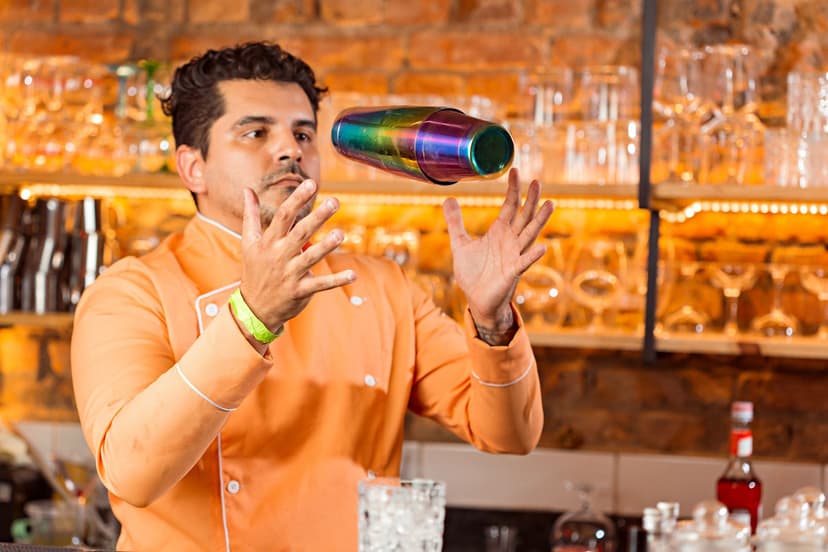
According to the U.S. Bureau of Labor Statistics (BLS) job description, bartenders serve drinks, verify guests' legal age, take payment and keep the bar clean and tidy. At venues that emphasize showmanship, flair (bottle and tin juggling) is also part of the guest experience.
Bartender vs barback vs server
The biggest difference between a bartender and a barback is customer contact and drink preparation. Bartenders work the counter, mix drinks, take orders and handle money; a barback is the bar's logistics assistant — restocking supplies, cleaning, preparing garnishes and hauling ice and stock so the bar stays ready. Barbacks rarely deal with guests directly and the role is often the entry point to becoming a bartender.
A server (waiter) differs from both: they take orders at the table and carry food and drinks from the kitchen and bar to guests, but do not mix drinks at the bar. In short: the barback preps, the bartender mixes and serves at the counter, and the server serves at the table.
Another commonly confused term is barista — a specialist in making coffee at a coffee counter. Bartenders and baristas differ in ingredients, tools and working hours. To understand the bar-assistant role in depth, see our 'What is a barback' article (/library/barback-la-gi).
Skills a bartender needs
The first foundation is mixing technique: shaking, stirring, muddling, layered pouring and precise measuring with a jigger. Alongside it comes drink knowledge — distinguishing ingredients, sensing and balancing flavors, and understanding recipe structure well enough to improvise.
The second skill group is people-focused: communication, listening, advising and handling situations so each guest leaves with a good experience. During rush hours, the ability to work under pressure, coordinate as a team and stay calm determines service quality.
At a higher level, a bartender needs bar-management thinking: inventory, controlling ingredient waste, complying with food-safety rules and responsible-service regulations. The table below summarizes the core skill groups.
| Skill group | Typical content |
|---|---|
| Mixing technique | Shake, stir, muddle, layered pour, measuring with a jigger |
| Drink knowledge | Distinguishing ingredients, sensing and balancing flavors, understanding cocktail/mocktail recipes |
| Bar tools | Using shaker, jigger, bar spoon, strainer, muddler; cleaning and maintenance |
| Communication & service | Listening, advising, handling situations, creating guest experience |
| Bar management | Inventory, waste control, food-safety hygiene, teamwork under pressure |
Bartender pay: Vietnam and abroad
In Vietnam, according to CareerViet, a bartender earns on average about VND 6 million/month, excluding allowances and guest tips; experienced bartenders can reach roughly VND 15–22 million/month. Actual figures vary widely by venue type (local bar, hotel, high-end resort), city and tip volume.
Internationally, Data USA shows U.S. bartenders earn on average about USD 33,100/year (2024 data, tips included). The BLS (May 2024) records a median hourly wage of about USD 16; note these figures already include tips, so base pay is usually lower.
On the outlook, Data USA projects U.S. bartender jobs to grow about 5.9% over the ten-year period, faster than the average across occupations. The common thread in both markets: tips and seniority create the largest income gaps.
| Market | Group | Reference level | Source / year |
|---|---|---|---|
| Vietnam | Average | ~VND 6 million/month (excl. tips) | CareerViet |
| Vietnam | Many years' experience | VND 15–22 million/month | CareerViet |
| USA (international) | Occupation average | ~USD 33,100/year (tips included) | Data USA, 2024 |
| USA (international) | Job growth | ≈5.9% over 2024–2034 | Data USA / BLS |
Career path: from barback to manager
The common career ladder runs through four steps: barback (bar assistant) → bartender (working the counter) → head bartender (running the shift, managing quality) → bar manager (operations, staffing, budget). Many people start as a barback to learn the workflow behind the bar before moving up to bartender.
At the head-bartender stage, beyond mixing you take on leadership: scheduling, training new staff, ensuring drink quality and sometimes handling inventory. As a bar manager, the work shifts toward administration — daily operations, staff schedules, budgets and regulatory compliance.
What drives fast promotion is not only technique but reliability, good communication and professionalism — the more your teammates and managers can depend on you, the faster you climb. The table below compares three key roles on the path.
| Criteria | Barback | Bartender | Head bartender |
|---|---|---|---|
| Main role | Bar logistics support | Mixing & serving guests | Running the shift, ensuring quality |
| Guest contact | Very little | Direct, frequent | Direct + handling complaints |
| Typical tasks | Restocking, cleaning, garnishes, hauling ice/stock | Mixing, taking orders, cashiering, menu advice | Scheduling, training, inventory, standardizing recipes |
| Experience | Beginner | Skilled in technique & process | Years plus leadership skills |
| Income | Base wage + shared tips | Wage + direct tips | Higher wage + management allowance |
Training to become a bartender
Bartending is a hands-on trade, so the common route is to take a foundational mixing course to learn technique, tools and bar workflow, then build speed and composure through real shifts on the floor. A vocational certificate helps when applying, but experience and attitude are what drive promotion.
A structured program usually starts with basics (shake, stir, muddle, measuring), ingredient and flavor knowledge, and tool use, then advances to menu building, bar management and service skills. Learning combined with many hours of practice behind the counter is the fastest way to master the craft.
If you want to start seriously, the bartending courses at Bartender.com.vn are designed to take learners from fundamentals to real counter-ready skills, combining drink theory with hands-on practice — suitable for both newcomers and those looking to move up in the trade.
Frequently asked questions
How do a bartender and a barista differ?
A bartender mixes and serves drinks at the bar (cocktails, mocktails, mixed beverages), often on evening shifts; a barista specializes in coffee at a coffee counter during the day. The two differ in ingredients, tools and hours.
How long does it take to learn bartending?
A foundational course usually lasts from a few weeks to a few months depending on intensity; but mastering speed, recipes and real bar handling takes several more months of on-the-job work.
Can you bartend without strong foreign-language skills?
Yes for local venues, but English helps you read international recipes, serve foreign guests and advance at upscale hotels and resorts.
Is a diploma required to be a bartender?
The trade prioritizes practical skill; a mixing certificate is an advantage when applying, but experience and attitude determine promotion.
Can women be bartenders?
Absolutely. According to Data USA, in 2024 women made up about 57.7% of the U.S. bartender workforce — this is a career open to both genders.
References
Data USA – Bartenders (employment & wage data) — https://datausa.io/profile/soc/bartenders
OysterLink – Bartender vs Barback: Key Differences — https://oysterlink.com/spotlight/bartender-vs-barback-must-know-differences/
OysterLink – Bartender Career Progression Roadmap — https://oysterlink.com/spotlight/bartender-career-progression-roadmap/
European Bartender School – The Ultimate Guide to the Barback Role — https://www.barschool.net/blog/what-is-a-barback
CareerViet – Bartender career guide — https://careerviet.vn/vi/talentcommunity/wiki-career/kham-pha-cam-nang-nghe-nghiep-cua-nhan-vien-bartender.35A51FBB.html
Huong Nghiep A Au – Overview of the bartender profession — https://www.huongnghiepaau.com/tong-quan-ve-nghe-bartender
CET – What is a bartender — https://www.cet.edu.vn/bartender-la-gi

Planning an event?
Get a free quote
Tell us about your event and our team will recommend the right package and send a detailed quote — no commitment.