Bartender
History and Culture of the Bartender: From Bar Counter to Craft
Pinkybee · 25/06/2026 · 11 min read
Video: cottonbro studio / Pexels
Bartending evolved from the 1806 definition of "cocktail" through the 19th-century golden age, Prohibition, tiki, the mid-century decline, the craft renaissance, and today's rising Vietnamese bar scene.
The Origins of the Craft and the Word "Cocktail"
The first written definition of "cocktail" as a drink appeared on 13 May 1806 in The Balance and Columbian Repository in Hudson, New York. When a reader wrote in asking "What is a cocktail?", editor Harry Croswell answered that it was "a stimulating liquor, composed of spirits of any kind, sugar, water, and bitters" — colloquially known at the time as a "bittered sling" (per wordhistories.net, Wikipedia and Difford's Guide). This is regarded as the conceptual cornerstone of an entire profession: deliberate mixing, with a formula and a name of its own — not merely pouring into a glass.
Yet the word "cocktail" itself ran ahead of the drink by some years. According to Wikipedia and Difford's Guide, the term first appeared in print in a sense other than a breed of horse in London, in The Morning Post and Gazetteer on 20 March 1798, within a satirical commentary connected to Prime Minister William Pitt. Across the Atlantic, "cocktail" in the sense of a drink was mentioned in The Farmer's Cabinet in 1803 (per Wikipedia). So well before the "official" 1806 definition, the name had been quietly circulating in the British and American press for nearly a decade.
The true origin of the word remains disputed to this day — and that is worth stating plainly rather than glossing over. The explanation the Oxford English Dictionary considers most credible traces back to the world of horses: a crossbred horse, or one with its tail docked so it stood up, was called a "cocktail," and from that sense of "mixed" or "mongrel" the term shifted to describe a mixed, multi-ingredient drink (per Difford's Guide and Wikipedia). Several rival theories coexist, but none has been proven conclusively; an honest chronicler of the craft presents this as an open question.
For today's practitioners, this story of origins carries a clear professional meaning: "cocktail" was from the very start a concept of technical and cultural blending — named, debated and documented. Understanding this conceptual cradle helps a newcomer see their work as part of a stream of knowledge stretching back more than two centuries. And as with any story involving drinks, it is complete only when paired with a spirit of responsible enjoyment, intended for those aged 18 and over — where a well-made alcohol-free mocktail deserves as much respect as anything the person behind the bar creates.
The 19th-Century Golden Age and Jerry Thomas
If one had to pick a single milestone marking the birth of the modern bartending profession, drinks historians usually point to 1862 — the year Jerry Thomas published 'How to Mix Drinks; or, The Bon Vivant's Companion'. According to the 1862 reprint materials and Wikipedia's 'Cocktail' entry, this is regarded as the first serious mixing manual published in America: for the first time, recipes that had only ever passed by word of mouth behind the bar were written down, systematized, and turned into knowledge that could be learned and handed on. That moment elevated tending a bar from a service job into a craft with its own method and identity.
What is intellectually fascinating is how the book defined the 'cocktail' category itself. According to the Bon Vivant's Companion reprint, the distinguishing element of this group of drinks was the presence of bitters — a seemingly small detail, yet it shows that a taxonomic way of thinking had already emerged very early. The original even included a guide to making cordials and syrups, because a skilled bartender of that era had to know not only how to mix but also how to produce the base ingredients. This is precisely the 'master the whole process' ethos that modern bartending still pursues.
For these reasons, posterity has crowned Jerry Thomas the 'father of mixology'. Historical accounts describe him turning mixing into a form of performance art, and at the height of his fame he was hired across the United States — evidence that a bartender's skill and personal style had become something with genuine brand value. For the first time in history, a bartender's name carried as much weight as the establishment he worked in.
The mixed-drink culture of this era quickly spread beyond America's borders. According to Wikipedia's 'Cocktail' entry, in 1869 William Terrington published 'Cooling Cups and Dainty Drinks' in England, showing the trend had reached Europe; and by the 1890s the term 'highball' appeared to denote a category of drinks combined with carbonated water. These linguistic milestones prove that by the close of the 19th century, mixing had acquired the terminology and classification of a true discipline. Of course, every historical story here is told from a cultural and professional angle — intended for adults 18+, emphasizing responsible enjoyment, and many of these techniques are today applied to craft refined non-alcoholic mocktails as well.
The Prohibition Era 1920–1933
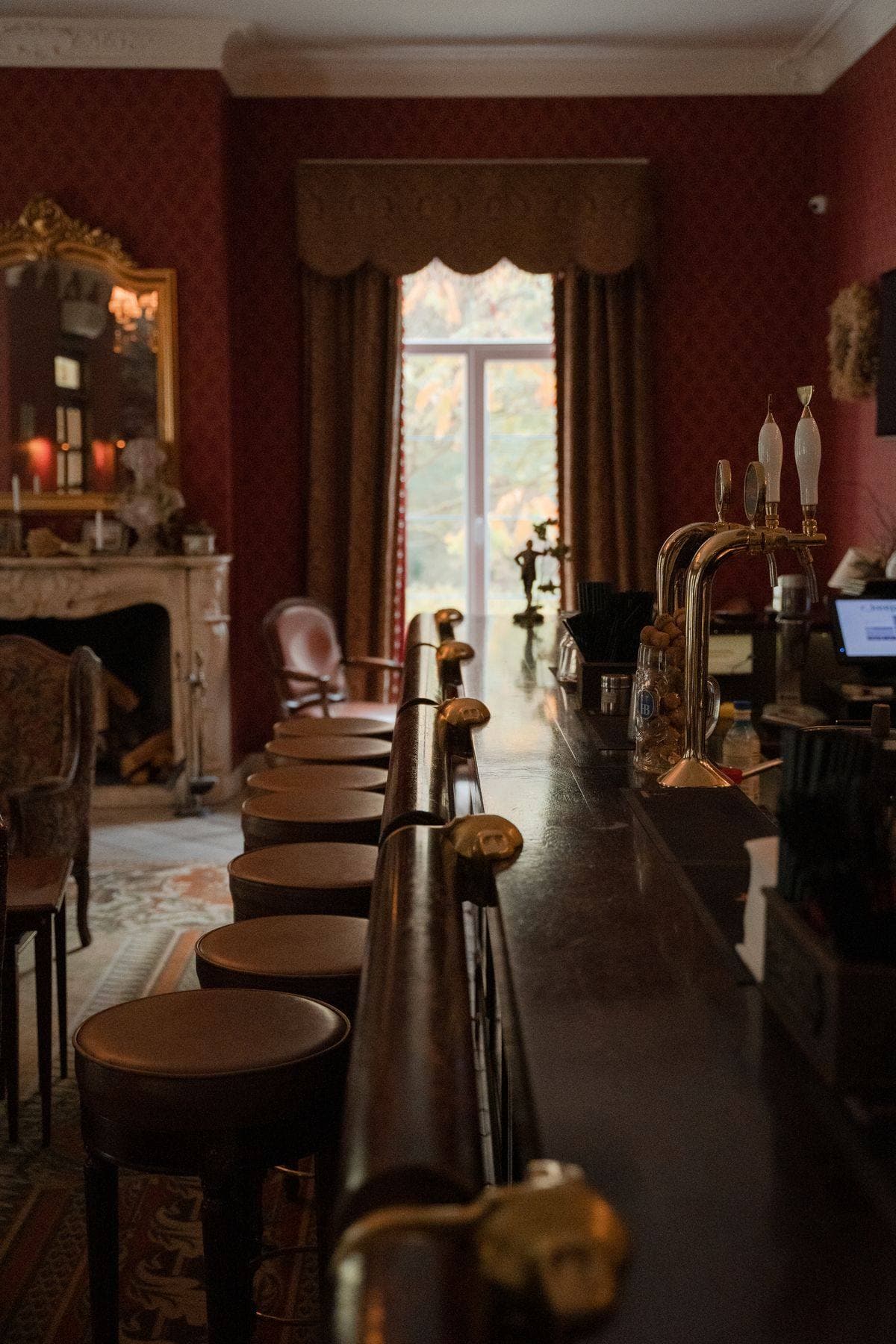
The greatest paradox in the history of bartending is this: the era of prohibition is precisely what pushed mixing culture to a new level. From 1920 to 1933, the 18th Amendment to the U.S. Constitution banned the manufacture, sale, and transportation of alcoholic beverages across the country. Rather than extinguishing demand, the ban simply drove it underground — giving rise to networks of secret bars (speakeasies) and a generation of mixers who had to improvise under harsh conditions. According to historical records of Prohibition and the Wikipedia entry on 'Cocktail,' this period reshaped both the craft and the palate of an entire nation.
Inside the speakeasies, the technique of mixing became a survival tool of the trade. The base ingredients on hand were often illicitly distilled, of poor quality and very harsh in taste, forcing mixers to invent ways of combining aromatics and sweet–sour balance to soften and round out a drink. Also according to the 'Cocktail' entry on Wikipedia, this period saw a notable shift in the dominant base of mixed drinks — a change that reflected the supply conditions of the prohibition years more than pure preference. It was precisely this pressure to 'mask the flavor' that forged the flavor-balancing mindset modern bartending still inherits.
The deepest consequence was perhaps a wave of professional migration. As America closed its doors to spirits, many leading mixers went to Europe to practice their craft, carrying their techniques and recipes with them. Harry Craddock moved to London and compiled 'The Savoy Cocktail Book' — one of the best-selling and most influential mixing collections ever. In the same era, Harry MacElhone practiced in Europe and tied his name to Harry's New York Bar in Paris, where many creations and techniques flourished. Several classic mixed drinks that emerged around this period still carry competing origin stories — such as the debate over 'who really created the Sidecar' — so they are best treated as unsettled anecdotes rather than fixed fact.
Looking back, Prohibition is proof that bartending always adapts and grows even in adversity. This is historical and cultural knowledge, not an encouragement to drink: today's craft upholds an 18+ spirit, responsible enjoyment, and always offers non-alcoholic options (mocktails) for those who want the experience without the alcohol.
The Tiki Wave and Themed Bars
The tiki wave began in 1934, when Donn Beach opened "Don the Beachcomber" in Hollywood, California. According to Wikipedia (the "Donn Beach" entry) and donbeachcomber.com, this was the starting point of an entire culture of themed bars: spaces staged around a romanticized vision of the "South Pacific," with elaborate rum-based drinks and a theatrical, visual style of storytelling. Tiki was never just about the drink — it was a complete experience, where interiors, lighting, and narrative came together to create an atmosphere of escape.
Just three years later, in 1937, Victor Bergeron's Trader Vic's opened in Oakland, California, and quickly became the second major tiki destination, laying the groundwork for a replicable themed-bar model. The names Donn Beach and Trader Vic later became tied to one of the industry's most famous disputes: who actually created the Mai Tai. According to Wikipedia (the "Mai Tai" entry) and PUNCH magazine, Trader Vic claimed he invented the drink in 1944 while serving a Tahitian couple from the Guild family, while Donn Beach maintained it had existed earlier; a lawsuit in the 1970s ruled in Trader Vic's favor. To this day, its origin is still regarded as "disputed."
From these two cradles, the tiki craze exploded through the 1940s and 1950s, spilling beyond the bar walls into themed parties, music, and fashion (per tiki history sources). It also marked the point at which bartending became more than mixing drinks — it became scene-setting, storytelling, and experience design, a "themed bar" mindset that still shapes how many modern drink venues operate. When exploring this heritage as a matter of professional knowledge, readers should approach it in an 18+, drink-responsibly spirit; for non-drinking guests, mocktail options fully preserve the tropical mood and showmanship at the heart of tiki culture.
The Mid-Century Decline
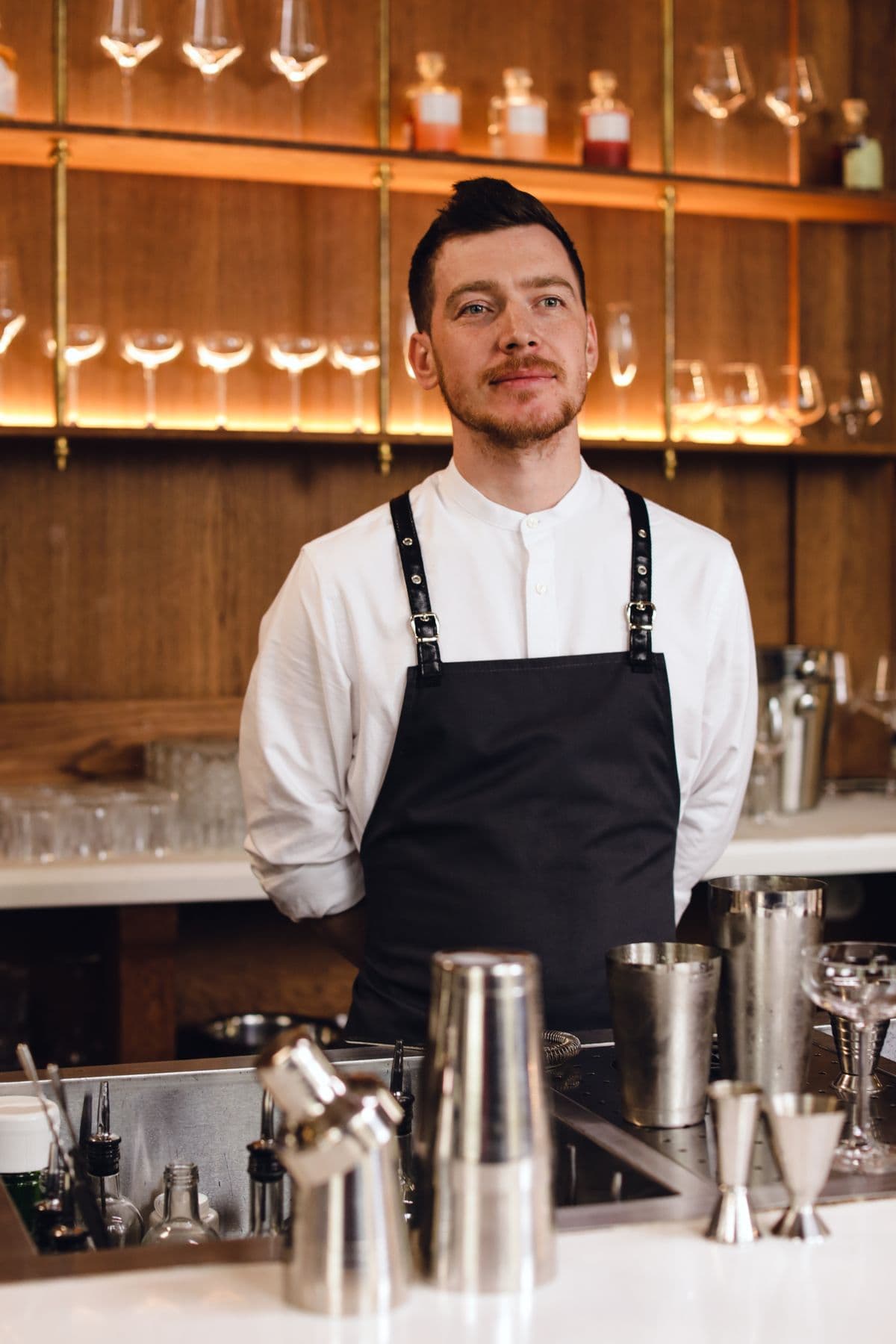
The mid-20th century was a period of rupture for the bartending craft in the United States: after Prohibition, the generation that had painstakingly codified the cocktail 'canon' had largely passed away, retired, or moved on to work in Europe. As a result, the chain of apprenticeship — which relied on senior bartenders mentoring newcomers hands-on — was severed, leaving much practical know-how without a complete path to the next generation.
This erosion ran so deep that many classic techniques and elements of mixing were all but 'forgotten' in the very place that had produced them. According to Wikipedia's 'Craft cocktail movement', when the revival eventually came, people in the trade had to track down and re-read Jerry Thomas's bartending guide from 1862 in order to relearn from scratch what earlier generations had once mastered — a vivid illustration of how quickly the knowledge of a craft can be lost.
The extent of this forgetting was also visible in the way certain classic ingredients and base styles once familiar to bartenders gradually vanished from the bar and from the collective memory of the trade; per the same Wikipedia source, some components grew so obscure that they were scarcely known through much of this stretch. The overall picture is one of a long, quiet decline: bartending lost much of its artisanal depth and identity, retreating into the background before being rekindled in later decades. It is also a reminder that the heritage of the craft is a body of knowledge to be documented, preserved, and taught responsibly — in the spirit of being 18+, enjoying in moderation, and always offering non-alcoholic options (mocktails) for those who prefer them.
The Modern Craft Cocktail Wave
The modern craft cocktail wave — often called the 'cocktail renaissance' — was the revival that brought bartending back to precision, fresh ingredients and historical knowledge. According to Wikipedia ('Craft cocktail movement'), it ran from the late 1980s to the late 2010s and began with individual bars and bartenders in Manhattan. Unlike the era of industrial mixing built on pre-made syrups and bottled blends, this wave restored the bartender to the role of a craftsperson: someone who knows the classic recipes, respects the balance of flavors, and treats every drink as a handmade product.
The starting milestone most often cited is 1987, when Dale DeGroff revived cocktail culture at the Rainbow Room in Manhattan. Per Wikipedia, it was Joe Baum who told him to go back and read Jerry Thomas's 1862 manual 'How to Mix Drinks' — the foundational text of the trade. DeGroff was later called the 'godfather' of the American cocktail renaissance, championing premium ingredients and fresh fruit juices over industrial mixes. That spirit of care was reinforced when Angel's Share opened in 1993 in New York, importing the meticulous discipline of Japanese bartending; and when Sasha Petraske opened Milk & Honey on December 31, 1999 at 134 Eldridge Street in the Lower East Side — a speakeasy-style bar built on precision and quiet, a deliberate counterpoint to the loud nightclubs of the late 1990s (per Wikipedia and PUNCH).
From those scattered sparks, craft cocktails gradually grew into an industry with its own community and infrastructure. In 2003, Tales of the Cocktail was founded — initially just to connect cocktail authors with their readers — before swelling into one of the most important annual industry events, according to Wikipedia. In the same period came an explosion of domestic ingredients: per Wikipedia, the number of operating distilleries in the United States rose from 24 in 2000 to more than 2,000 by 2020, a sign of how widely the demand for quality and variety had spread. The wave later went global and laid the foundation for today's generation of bartenders — including in Vietnam, where the craft is carrying that artisanal spirit forward. Of course, cocktail culture is a story for adults (18+): responsible enjoyment always matters more than quantity, and a well-made non-alcoholic mocktail can be a complete choice for anyone.
Bar Culture and the Vietnamese Context
Over roughly the past decade, Vietnam's bar and mixing culture has grown quickly and shaped an identity of its own: pairing international technique with local ingredients, aesthetics, and storytelling (per thedotmagazine.com, jovelchan.com, and Alcohol Professor). What stands out is not the copying of templates from Tokyo, London, or New York, but the way local practitioners reinterpret the spirit of the bar in a Vietnamese idiom — turning something once seen as 'imported' into a creative practice with local roots.
The rising stature of Vietnam's bar scene is reflected in its presence on the regional map. According to jovelchan.com, Vietnamese bars began appearing on Asia's 50 Best Bars fairly recently — the source notes from around 2021 — marking a shift in how the international trade regards the craft and ideas of practitioners at home. Several bars in Saigon and Hanoi have also featured for multiple consecutive years on the list's extended ranking (per thedotmagazine.com); we cite this qualitatively, following the source, and avoid inferring specific positions, since these rankings change from year to year.
The connecting thread is the trend of 'localization' — deliberately using Vietnamese ingredients and telling local stories rather than chasing ready-made formulas from major cities (per thedotmagazine.com). This is the lens most tightly bound to the Vietnamese bartender's craft: the profession is not merely the technique of mixing, but the ability to read regional culture and translate the flavors and memories of home into an experience behind the bar. Seen this way, practitioners in Vietnam are writing their own chapter in the global cultural history of the bar.
On the culture of the craft itself: this is a domain for adults aged 18 and over, tied to the spirit of responsible enjoyment. A Vietnamese identity behind the bar can be expressed just as fully through alcohol-free options — mocktails built on local ingredients, fruits, and aromatics — so that every guest can take part in the experience without an alcoholic drink.
Frequently asked questions (FAQ)
When did the word "cocktail" first appear?
As a drink, the first written definition on record dates to 13 May 1806 in The Balance and Columbian Repository (Hudson, New York): "a stimulating liquor, composed of spirits of any kind, sugar, water, and bitters"; the word itself (in a non-equine sense) already appeared in a London paper in 1798. Understanding these roots is the first step in learning the craft properly at the bartender.com.vn Academy.
Who is regarded as the "father of mixology"?
Jerry Thomas — in 1862 he published "How to Mix Drinks; or, The Bon Vivant's Companion", America's first serious cocktail book, which systematized knowledge that had been passed on by word of mouth and elevated bartending into a performance art. That "mix-and-make" spirit still underpins how the craft is taught today.
Why did Prohibition matter so much to the bartending profession?
The ban on producing, selling and transporting alcohol in the US from 1920 to 1933 pushed the trade into speakeasies and sent many top bartenders to work in Europe (Harry Craddock compiled "The Savoy Cocktail Book"), breaking the chain of knowledge transfer in America. This historical lesson is part of the profession's culture covered at the Academy.
Where did tiki culture come from?
In 1934 Donn Beach opened "Don the Beachcomber" in Hollywood, sparking the tiki movement; Trader Vic's opened in Oakland in 1937, and the tiki craze exploded through the 1940s–1950s into parties, music and fashion. This article references the cultural context only, emphasizing an 18+ mindset and responsible drinking.
What was the "cocktail renaissance"?
It was the wave that revived the craft from the late 1980s to the late 2010s, beginning in Manhattan — in 1987 Dale DeGroff brought cocktail culture back at the Rainbow Room (advised by Joe Baum to reread Jerry Thomas's 1862 book), and Sasha Petraske opened Milk & Honey at the end of 1999. Relearning from the "classics" is exactly how the bartender.com.vn Academy builds students' foundations.
Where does Vietnam's cocktail scene stand on the world map?
Vietnam's scene has grown rapidly over the past decade, blending international technique with local ingredients and storytelling, and has begun appearing on the extended Asia's 50 Best Bars list in recent years. This "localization" trend opens many career opportunities for bartender.com.vn Academy students, in a spirit of responsible drinking and offering non-alcoholic mocktails where appropriate.
References
Cocktail — Wikipedia — https://en.wikipedia.org/wiki/Cocktail
1806: earliest definition of 'cocktail' — Word Histories — https://wordhistories.net/2019/09/19/cocktail-earliest-definition/
Origins of the word Cocktail — Difford's Guide — https://www.diffordsguide.com/encyclopedia/2292/cocktails/origins-of-the-word-cocktail
Craft cocktail movement — Wikipedia — https://en.wikipedia.org/wiki/Craft_cocktail_movement
Donn Beach — Wikipedia — https://en.wikipedia.org/wiki/Donn_Beach
Mai Tai — Wikipedia — https://en.wikipedia.org/wiki/Mai_Tai
Don's Mai Tai, a Forgotten Tiki Cocktail, Makes a Comeback — PUNCH — https://punchdrink.com/articles/dons-mai-tai-don-beachcomber-tiki-tropical-cocktail/
Three Vietnamese Bars in Asia's 50 Best Bars — Jovel Chan — https://jovelchan.com/blog/three-vietnamese-bars-debut-in-asias-50-best-bars-
Planning an event?
Get a free quote
Tell us about your event and our team will recommend the right package and send a detailed quote — no commitment.