Mixing know-how
Ice for Drinks: How to Choose It, How Much to Order, How to Keep It Safe
bartender.com.vn · 27/07/2026 · 10 min read
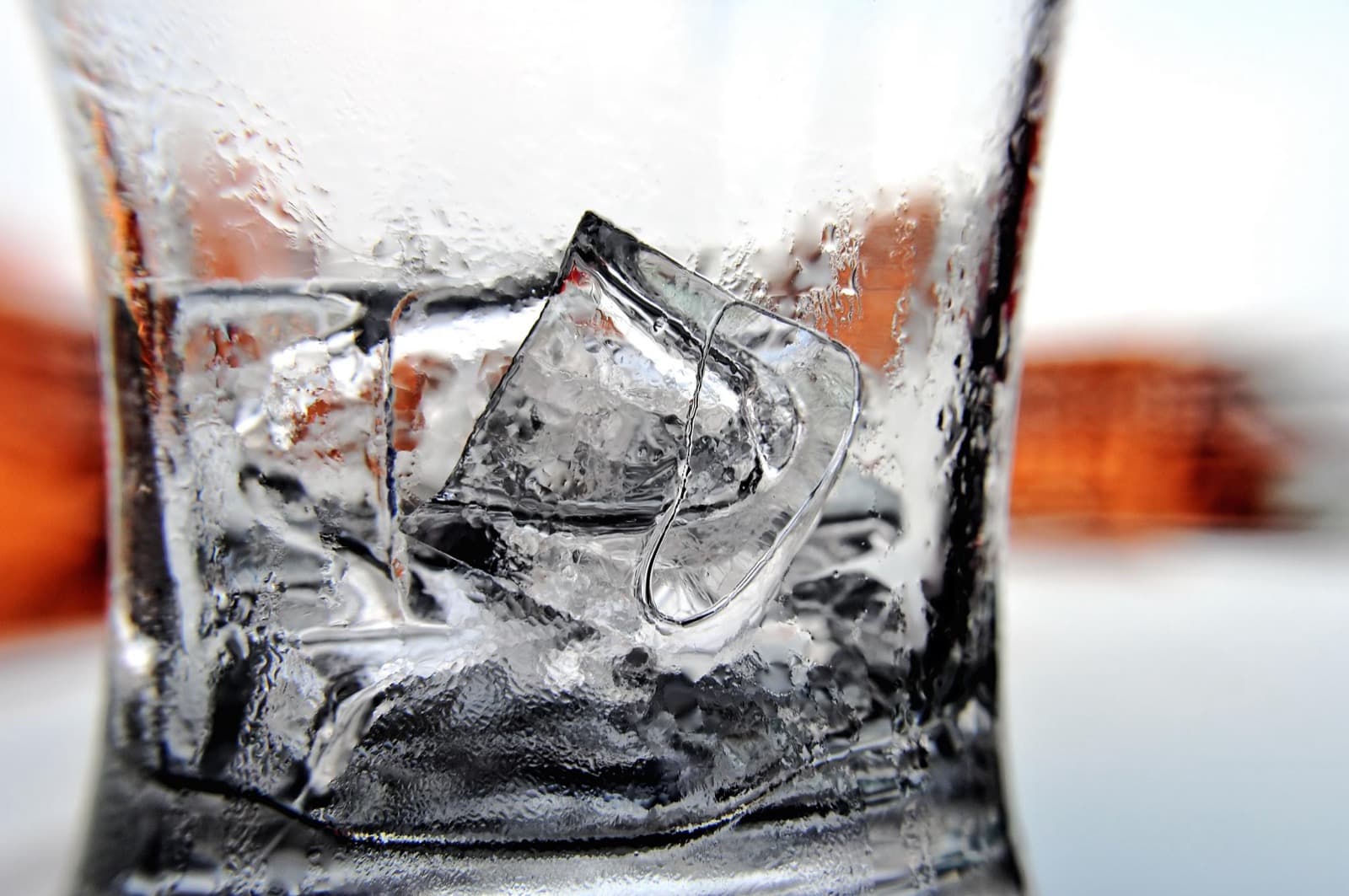
Ice is food under FDA rules. Why ice dilutes drinks, which type of ice to choose, how to size an ice order for an event, and ice contamination data from Vietnam.
TL;DR
Last updated: 27/07/2026.
Ice is the most overlooked ingredient in a drink, even though it fills most of the glass and shapes almost the entire drinking experience. Ice chills, it dilutes, and it holds temperature steady for as long as the guest holds the glass — and when it is handled badly, it is the shortest path for microorganisms to reach a guest's mouth.
The key legal and safety point: ice is not an accessory, it is FOOD. The U.S. Food and Drug Administration regulates packaged ice exactly as it regulates other foods, and requires that the water used to make it be safe and meet drinking-water standards.
The key operational point: big ice melts slowly, small ice melts fast. There is no single best ice — only the ice that matches the drink and the length of time the guest will spend with it.
The key warning: a field study in Binh Phuoc province, Vietnam in 2019 found that 51.9% of edible ice samples taken at production premises were microbiologically contaminated, mostly driven by staff hygiene and facility conditions. In other words, the risk lives in the PROCESS, not in the source water.
This article is written for cafes, for event bars and for people mixing at home. Every drink example here is NON-ALCOHOLIC.
| Fact | Figure | Source |
|---|---|---|
| What ice is, legally | FDA regulates packaged ice as a food | FDA (Food Facts, packaged ice) |
| Water used for ice | Must be safe and sanitary, e.g. meeting U.S. EPA drinking-water standards | FDA |
| Edible ice in Binh Phuoc, Vietnam (2019) | 51.9% (41/79) of samples contaminated; 49.4% with E. coli | Environmental Health Insights 2020 (PMC) |
| Ice from ice machines in catering, Italy | 45.5% of samples non-compliant with mandatory parameters; fungi isolated from 95.8% of samples | IJERPH 2020 (PMC) |
| Why contaminated water matters | Microbiologically contaminated drinking water is estimated to cause about 505,000 diarrhoeal deaths each year | WHO (drinking-water fact sheet) |
| Latent heat of fusion of water | About 334 J per gram — a standard physics textbook constant, NOT tied to a research source | General constant |
What ice actually is in a glass
Short answer: ice is FOOD — an ingredient that goes straight into a guest's mouth without any further cooking or sanitising step, so it has to be produced and handled to food standards.
This is not a figure of speech. In its Food Facts document on packaged ice, the FDA states that it regulates packaged ice in interstate commerce "as a food, just like other foods". You can read it directly in the FDA document on packaged ice safety.
A concrete set of requirements follows from that. Ice manufacturers must produce, hold and transport ice in clean and sanitary conditions, monitor the cleanliness and hygiene of employees, use properly cleaned and maintained equipment, and use water that is safe and sanitary — for example water that meets U.S. Environmental Protection Agency standards for drinking water.
The FDA also notes that ice can be made from tap water, spring water or purified water, and that "no matter the shape or the source, ice is considered a food by FDA". That is the mental shift to make: when you scoop ice with a drinking glass, you are handling food with the wrong tool.
From a mixing point of view, ice is also a hidden liquid ingredient. It is not written in the recipe, but as it melts it adds water to the glass and shifts sweetness, acidity and body. A recipe balanced without accounting for that meltwater is only correct for the first second.
Why ice chills so hard — and why every glass gets diluted
Short answer: ice chills powerfully not because it is cold, but because it must ABSORB a very large amount of heat to change from solid to liquid. That absorbed heat is what cools the drink — and the price you pay is meltwater in the glass.
Concretely: raising one gram of water by one degree Celsius takes a little over 4 J. Melting one gram of ice at 0 degrees Celsius into water at 0 degrees Celsius takes about 334 J — roughly eighty times more. (Both figures are standard physics textbook constants; we present them as background knowledge, not tied to a research source.)
The practical consequence is easy to verify behind the bar: when you stir or shake, most of the chilling comes from the layer of ice melting at the surface of each cube. The more surface area a piece of ice has, the faster it chills — and the faster it dilutes. Shaved and crushed ice chill almost instantly, and dilute almost instantly too.
So the rule for choosing ice is not that bigger is fancier. It is: match the melt rate to HOW LONG the guest will drink. A glass of iced tea finished in five minutes and an iced coffee nursed for forty minutes need different ice, even in the same glass.
One more effect that is often ignored: ice taken straight from a deep freezer at around minus 18 degrees Celsius thermally shocks and cracks when it meets a warm liquid, creating countless new fracture surfaces and melting noticeably faster. Professional bars temper ice for a few minutes until the surface turns slightly wet; from then on it melts evenly and more slowly.
On exact numbers: the dilution produced by each technique — stirring, shaking, building over ice — depends so heavily on ice temperature, cube size, time and room temperature that this article only ranks ice types RELATIVELY (see the table below) and labels that ranking as an industry estimate, not a laboratory measurement.
| Ice format | Character | Melt speed (estimate) | Best for |
|---|---|---|---|
| Large cube or sphere (4–6 cm) | Least surface area per unit volume, slowest melt | Slowest | Drinks nursed slowly: strong iced coffee, cold brew tea, built mocktails |
| Standard cube (2–3 cm) | The everyday output of a bar ice machine | Medium | Most drinks: juices, sodas, fruit teas; the house default |
| Nugget ice (soft, chewable pellets) | High surface area, porous, absorbs drink flavour | Fast | Soft drinks, sodas, fast-turnover drinks; guests who chew ice |
| Shaved or crushed ice | Enormous surface area, chills almost instantly | Very fast | Shaved-ice desserts, che, anything needing instant bite of cold |
| Shaking or stirring ice | Hard, dry-surfaced ice sacrificed in the tin | Not served | Chilling in the tin only — STRAIN IT OUT before pouring |
| Ice frozen from the drink itself (coffee ice, tea ice) | Melts without watering the drink down | Depends on size | Iced coffee and iced tea — flavour holds to the last sip |
How clear ice is made
Short answer: ice turns cloudy because air bubbles and minerals get trapped when water freezes from all sides at once. To get clear ice you force the water to freeze in ONE direction, pushing bubbles and impurities to the far end, then cut that end away.
In a household tray, water freezes from the outside in. The outer shell freezes first and drives dissolved gas and minerals toward the centre; when the centre finally freezes, they are locked in as a white cloud in the core. That is why freezer ice is almost always cloudy in the middle.
Directional freezing reverses this. Put an open container of water inside an insulated cooler so that cold can only reach it from the top. The water freezes downward, pushing air and impurities to the bottom. When roughly two thirds to three quarters of the block is frozen, take it out, discard the cloudy base, and cut the clear part into pieces.
An honest caveat: clear ice is PRETTIER, not cleaner. Clarity describes how the water froze, not the microbiological quality of the water. A crystal-clear block made from dirty water is still dirty ice — and conversely, cloudy ice made from safe water is perfectly safe to drink.
What clarity genuinely improves is melt rate: a dense block with few bubbles and few internal fractures melts more slowly and more evenly than a porous one. If you sell drinks that guests sip for a long time, clear ice pays for itself; for fast drinks it is decoration.
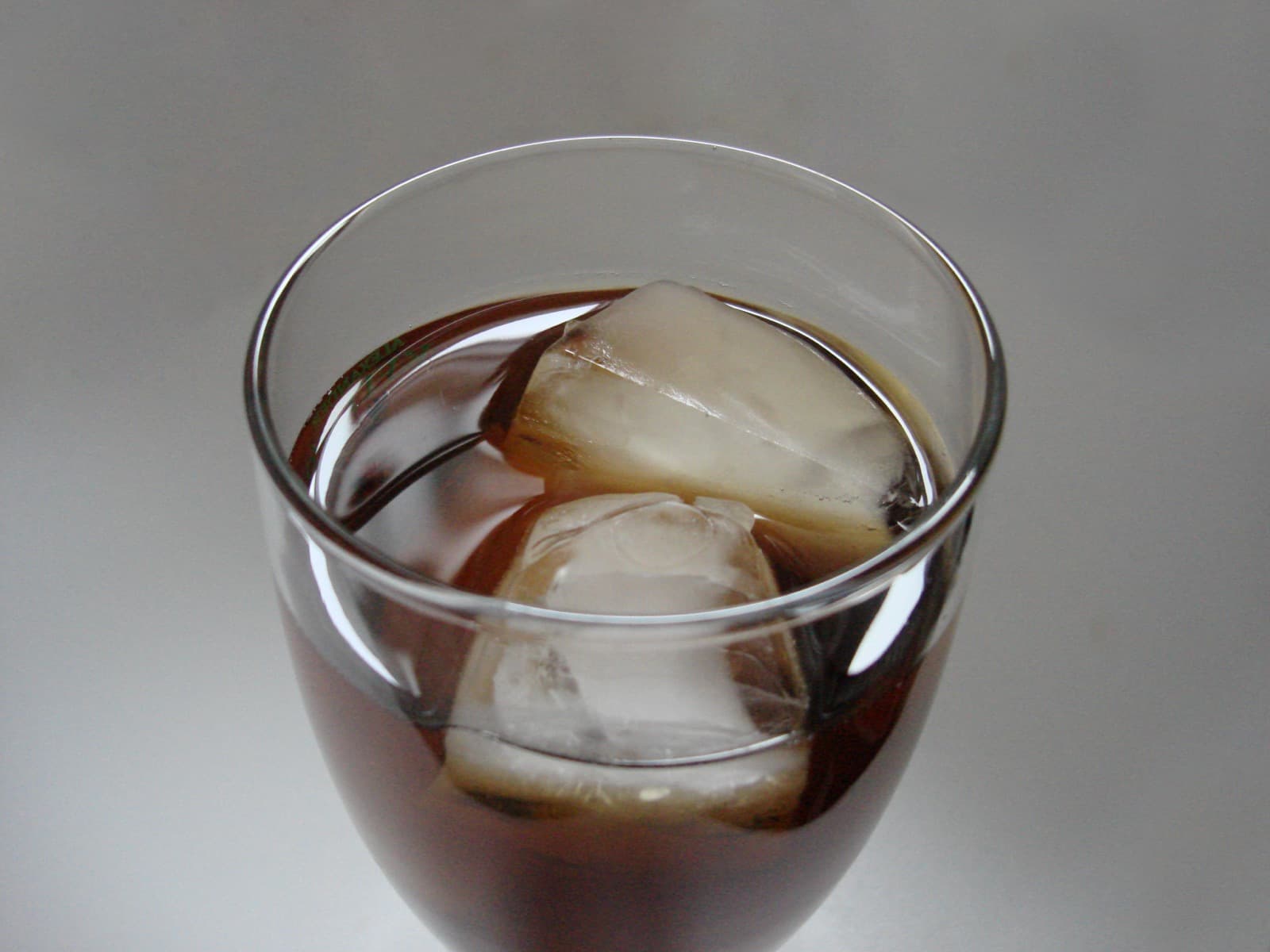
How to size an ice order for an event
Short answer: ice is the first thing to run out at any event. The safe way to size it is to add up all three needs — ice served in glasses, ice sacrificed in the shaking tin, and ice used to chill bottles and ingredients — then add a melt allowance on top.
Every figure in the table below is an OPERATIONAL ESTIMATE based on how we plan bars. It is NOT research data and carries no academic source. Treat it as a starting point and adjust it to your own venue.
Three factors blow the ice budget fastest, in our experience: (1) an outdoor daytime event, where melt loss can exceed the ice that actually reaches glasses; (2) a self-service station, where guests scoop freely and per-glass portions stop meaning anything; (3) non-insulated containers — a thin plastic tub left in the sun can lose most of its ice before guests arrive.
One simple operational habit: SEPARATE the serving tub (ice going into guests' glasses) from the chilling tub (ice packed around bottles and ingredients). Chilling ice touches bottle exteriors, pooled water and hands, and must never be reused in a glass. This is the single most common mistake at self-organised parties.
Finally, schedule ice deliveries in waves rather than all at once. Ice delivered four hours before doors open, sitting in a non-insulated tub, will almost certainly be short at peak service.
| Item | Estimate | Operational note |
|---|---|---|
| Ice per serve, in the glass | About 150–200 g (roughly two thirds of the glass) | Tall glasses and ice-heavy builds sit at the upper end |
| Serves per guest | 2–3 serves for a 2-hour event; 4–5 for a 4-hour event | Add one serve for outdoor events |
| Ice for shaking and stirring | About 50–70% of the serving-ice volume | This ice is strained out and never reaches the guest |
| Ice for chilling bottles and ingredients | Budget separately, roughly 5–8 kg per chilling tub | NEVER reuse this ice in a guest's glass |
| Melt allowance, indoor air-conditioned event | Add about 20% | Insulated tubs, lids on |
| Melt allowance, outdoor daytime event | Add 50% or more | Provide shade and deliver ice in waves |
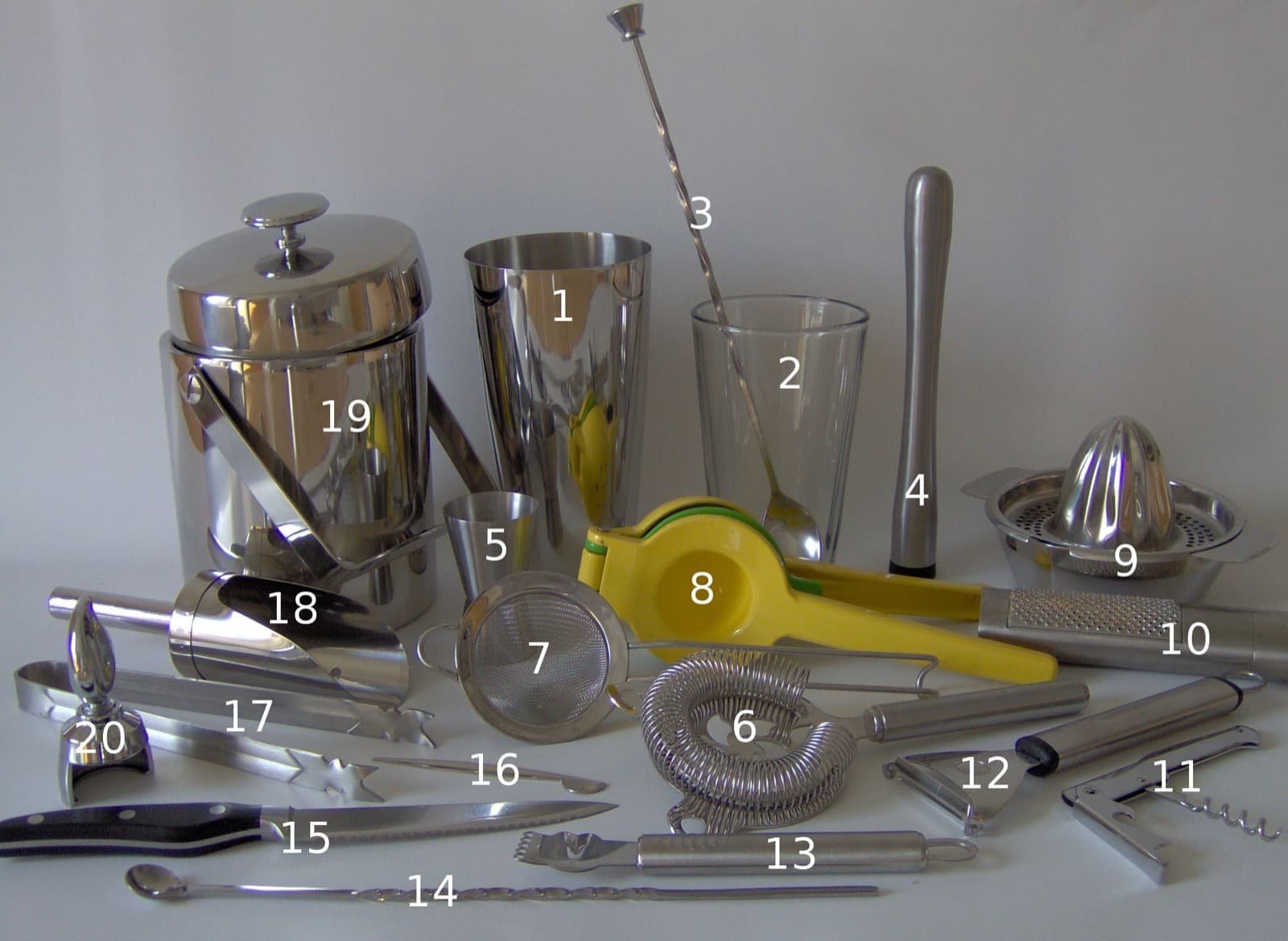
How dirty is ice, really? Measured data
Short answer: microbial contamination of ice is far more common than consumers assume, and the main cause is usually not the source water but hygiene during production, transport and handling.
The evidence closest to Vietnamese readers is a 2019 field study in Binh Phuoc province, published in Environmental Health Insights. Researchers collected 79 edible ice samples from 45 ice-producing premises. The result: 51.9% (41/79) of samples were contaminated, with 49.4% (39/79) carrying Escherichia coli and 12.7% (10/79) carrying total coliforms. Read the full text of the study on edible ice quality in Binh Phuoc.
The most striking part of that study is not the contamination rate but the risk factors. The authors identified four dominant drivers: poor staff hygiene practices (odds ratio around 19.5), inadequate flooring (around 5.4), structural deficiencies in the premises (around 4.3) and substandard materials (around 4.2). In short: the risk sits with PEOPLE and PREMISES.
This is not only a Vietnamese issue. An Italian survey published in the International Journal of Environmental Research and Public Health in 2020 took 99 ice samples directly from the storage compartments of ice machines in public and collective catering establishments. Only 54 samples (54.5%) complied with the mandatory parameters, while 45 (45.5%) did not. Among the non-compliant samples, coliforms appeared in 82.2%, enterococci in 40% and E. coli in 24.4%; separately, fungi were isolated from 95.8% of all samples. See the survey of food ice in Italian catering establishments.
The ice-machine detail is worth pausing on: those samples came from INSIDE the machines, that is, after the water had already passed through the establishment's own system. An ice machine that is never deep-cleaned is a damp, dark space with standing water — ideal conditions for biofilm and fungal growth. Clean incoming water cannot rescue a dirty machine.
Why be this strict? Because the downstream consequences are not small. According to the World Health Organization, microbiologically contaminated drinking water can transmit diseases such as diarrhoea, cholera, dysentery, typhoid and polio, and is estimated to cause about 505,000 diarrhoeal deaths each year. See the WHO drinking-water fact sheet. Ice is water in another phase.
In fairness: these figures are survey results from specific places and moments, not universal contamination rates for every venue everywhere. But they are enough to support one conclusion — you cannot assume ice is clean just because it is cold and looks clear.
| Hazard | Where it happens | Prevention |
|---|---|---|
| Contamination from hands | Scooping ice by hand, gripping glass rims | Use tongs or a dedicated scoop only; store the scoop outside the ice |
| Broken glass in the ice tub | Using a glass as a scoop | Forbid it outright; if breakage is suspected, dump the entire tub |
| Biofilm and fungi in the ice machine | Storage bin, tubing, drip tray | Clean and sanitise on a fixed schedule with a written log |
| Reused chilling ice | Bottle-chilling tub shared with serving ice | Keep chilling and serving tubs strictly separate and labelled |
| Standing water in the tub base | Tubs without a drain | Use draining tubs; empty and dry at end of service |
| Cross-contamination from garnishes | Fruit, straws or cloths stored in the ice | Ice holds ice only; keep garnishes separate |
Correct ice handling behind the bar
Short answer: nearly every ice-related risk disappears if you follow three rules — never touch ice with hands, never use a glass as a scoop, and clean the ice machine on a schedule.
The FDA gives very compact guidance for end users in the same packaged-ice document: handle ice with clean, non-breakable utensils such as tongs or an ice scoop; avoid touching ice with dirty hands or glasses; and store ice in clean containers that are safe for storing food. See the FDA consumer tips section.
The FDA also notes that it does not inspect food service establishments that make ice for direct use, which are instead regulated by state and local authorities, and that the FDA Food Code — the model for most state and local food regulations — contains provisions on the safe and sanitary production and handling of ice. The responsibility at venue level is therefore real, not advisory.
We build the checklist below into the opening and closing routine of our event bars. It is short, but it removes most of the failures listed in the hazard table above.
Four mistakes we see most often
Short answer: the most common ice failures all come from saving in the wrong place — saving on ice, saving on tools, saving on cleaning time.
Mistake one: using less ice to be economical. A glass with little ice warms faster, melts that ice faster, and hands the guest a warm, watery drink. A glass packed with ice stays cold longer and melts MORE SLOWLY, because a large mass of ice shields itself from heat.
Mistake two: reusing bottle-chilling ice. That ice has touched bottle exteriors, meltwater, hands and dust. It is no longer clean food.
Mistake three: forgetting the ice machine. It is the only appliance in the kitchen that produces a directly consumed product yet rarely has a cleaning schedule of its own. The Italian survey shows what that neglect looks like.
Mistake four: assuming clear ice means clean ice. Clarity only reflects how the water froze, never its microbiological quality.
If you remember one sentence from this article, make it this one: ice is the last food to touch a guest's mouth without any further cleaning step — so it deserves the most careful handling behind the bar, not the cheapest.
FAQ
Is ice legally a food?
Yes. The FDA regulates packaged ice as a food, just like other foods, and requires that the water used be safe — for example meeting U.S. EPA drinking-water standards. Ice made from tap, spring or purified water is all treated as food.
Is clear ice cleaner than cloudy ice?
No. Clarity only reflects how the water froze — freezing in one direction pushes out air and minerals, giving a clear block. It says nothing about microbiological quality. Clear ice melts more slowly, which helps slow-sipped drinks, but safety depends on the water and the process.
Does filling a glass with more ice dilute the drink faster?
The opposite. A glass packed with ice holds a low, stable temperature and the mass of ice melts more slowly, so the total meltwater added is usually LESS than in a glass with a few cubes swimming in warm liquid.
Can bottle-chilling ice be reused in guests' glasses?
No. Chilling ice has touched bottle exteriors, hands and pooled water, so treat it as waste. Always keep serving and chilling tubs separate and labelled.
How do I size an ice order for an event?
Add three components — ice in the glass, ice for shaking, ice for chilling — then add a melt allowance: about 20% for an indoor air-conditioned event and 50% or more for an outdoor daytime one. These are operational estimates, not research figures.
References
All sources below were checked as reachable (HTTP 200) and read directly on 27/07/2026.
1. U.S. Food and Drug Administration — FDA Regulates the Safety of Packaged Ice (Food Facts): fda.gov
2. Tran Thi Tuyet Hanh, Mac Huy Hanh — Hygienic Practices and Structural Conditions of the Food Processing Premises Were the Main Drivers of Microbiological Quality of Edible Ice Products in Binh Phuoc Province, Vietnam 2019, Environmental Health Insights, vol. 14, 2020: pmc.ncbi.nlm.nih.gov
3. Caggiano et al. — Food Hygiene Surveillance in Italy: Is Food Ice a Public Health Risk?, International Journal of Environmental Research and Public Health, vol. 17, no. 7, 2020: pmc.ncbi.nlm.nih.gov
4. World Health Organization — Drinking-water (fact sheet): who.int
Note on unsourced figures: the latent heat of fusion of water (about 334 J/g) is presented as a standard physics textbook constant. All event ice quantities and the relative melt-speed ranking of ice formats are internal OPERATIONAL ESTIMATES with no research source attached.
Images: (1) Nattu / Wikimedia Commons, CC BY 2.0; (2) Editor at Large / Wikimedia Commons, CC BY-SA 2.5; (3) Mangomix / Wikimedia Commons, CC BY-SA 3.0.
Planning an event?
Get a free quote
Tell us about your event and our team will recommend the right package and send a detailed quote — no commitment.